Idris Amara
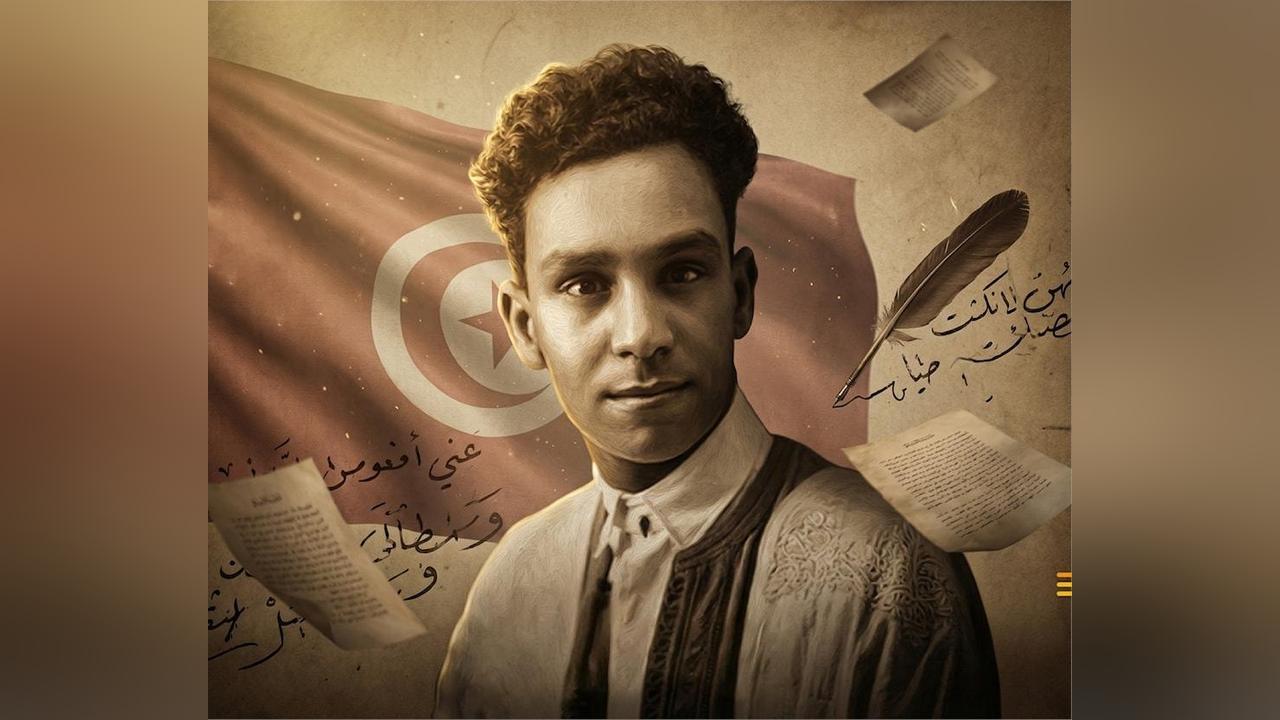
Africa-Press. Abu al-Qasim al-Shabbi is regarded as one of the greatest poets of Tunisia and the Arab world in the modern era. His distinctive poetic voice brought together romanticism, a revolutionary spirit, and a love of life, while his words carry a deep philosophical dimension.
Al-Shabbi left an enduring mark on literary and cultural consciousness. His uniqueness lies in blending profound romanticism with a spirit of defiance and an embrace of life and humanity. His poems became spaces of renewal and challenge, calling for peoples to be freed from constraints. Many wrote about him, and singers set his verses to music, turning him into a symbol of beauty, meaning, and the human experience—between will and destiny, beauty and the love of life.
Quoted lines:
If I aspired to a goal, I mounted my wishes
and forgot all caution;
I did not avoid the rugged mountain passes,
nor the dome of blazing fire.
And whoever does not love climbing mountains
will live forever among pits and holes.
Then the blood of youth surged in my heart,
and other winds roared within my chest.
I bowed my head, listening to the crash of thunder,
the music of the winds and the footsteps of rain.
Birth and upbringing
Abu al-Qasim ibn Muhammad al-Shabbi was born on 24 February 1909 in the village of al-Shabbiyya in Tozeur governorate, southern Tunisia, into a religious and educated family. His father, Sheikh Muhammad al-Shabbi, was a scholar and judge. He studied at al-Zaytuna, then at al-Azhar in Cairo. Al-Shabbi traveled with his father as he moved between Tunisian cities, which gave him a strong knowledge of the country and its landscapes—something that later echoed in his poetry, alive with motion and vivid meaning. He absorbed what he saw—oases, fields, mountains, nature—and turned it into symbols of life and freedom.
Quoted lines:
I am going to the forest heights;
in the heart of the woods I will bury my misery.
Then I will forget you as much as I can—
for you are not worthy of my wine or my cup.
Beneath the pine, green and sweet,
the torrents will carve the hollow of my grave;
birds will chatter above my tomb,
and the breeze will sing over me in whispers.
Between romanticism, love, and revolution
One of al-Shabbi’s most famous poems is “The Will to Live” (also known as “The Melody of Life”). In one of its best-known passages he says:
If the people one day choose to live,
then fate must answer;
the night must inevitably clear,
and the chain must break.
These words became a powerful call to determination and a source of inspiration for many national and revolutionary movements—from the colonial period to the present day.
Al-Shabbi was nicknamed “the Poet of the Green (Tunisia)” and “the Voltaire of the Arabs,” for his celebration of absolute freedom. He also stands out for the depth with which he portrays emotions, rendering them fresh and brimming with life. He writes in captivating beauty:
With you, life becomes sweet to me,
and the morning of hope fills my soul.
In my chest, gentle roses grow,
and lean toward my burning heart.
I am enchanted in you by the surge of life,
and by that tender, intoxicated youth;
and I am enchanted by the magic of those lips
around which kisses flutter.
He also says:
A mother kisses her child and holds him close—
a sacred sanctuary of heavenly beauty.
Thoughts grow reverent beside him,
and souls return pure in that place.
A sanctuary of life, in its purity and tenderness—
is there any sanctuary more noble, more sacred?
Blessed are you, sanctuary of motherhood and childhood:
in you life is completed and made holy.
Education and cultural formation
Al-Shabbi began his education in Qur’anic schools, memorizing the Qur’an at the age of nine. In 1920 he moved to Tunis to continue his studies at al-Zaytuna when he was not yet twelve. He showed early excellence and brilliance, earning in 1927 the Zaytuna “completion” certificate, then the highest qualification. He later joined the Tunisian School of Law and graduated in 1930.
He did not confine himself to traditional lessons: he pursued independent reading with passion, frequented the al-Sadiki and al-Khallounia libraries, read classical and modern Arabic literature, and also explored translated European literature.
Illness and the beginnings of suffering
Al-Shabbi suffered from a heart condition since childhood, though it only became clearly apparent later. Despite doctors’ warnings, he did not give up his intellectual and writing activity. He was filled with a love of life, with a striking determination to endure—triumphing over pain and sorrow:
Quoted lines:
I will live despite illness and enemies,
like an eagle above the lofty peak.
I gaze at the shining sun, mocking
clouds, rain, and storms.
I do not look at the bleak shadow, nor do I see
what lies in the depths of the black abyss.
I walk through the world of feelings, dreaming,
singing—such is the poets’ happiness.
I listen to the music of life and its inspiration,
and melt the spirit of the universe into my verse.
I heed the divine voice
that revives in my heart the echoes long dead.
And I say to fate, which never bends
from waging war on my hopes through every trial:
the waves of sorrow and the tempests of disgrace
will not extinguish the blazing fire in my blood.
So tear down my heart as much as you can—
it will be like solid rock,
knowing no servile complaint or weeping,
nor the pleading of children and the weak.
It will live mighty, always staring
toward dawn—toward the beautiful distant dawn.
He turned his physical and psychological pain—especially after his father’s death—into deep poetic energy. In words that blend grief over his father with his clinging to life and hope, he rises above his sadness:
Quoted lines:
I never thought, after your death, my father,
with my feelings blinded by sorrow,
that I would still thirst for life and drink
from its blazing, intoxicated river.
That I would return to the world with a beating heart
for love, joys, and melodies,
and for all that the universe holds
of images of longing, strange passions, and sorrows.
Then the years moved, and came
the temptations of life with their enchanting magic—
and here I am still a child, enthralled
by chasing lights and colors.
And pessimism toward life and rejecting it
is only slander and delirium:
for the human being, deep within,
is life’s devoted servant, of sincere faith.
He likely blended all of this with memories of childhood and youth, when his heart illness deprived him of play and carefree joy—portraying a stubborn, defiant attachment to life, almost as a struggle or a contest with it.
Literary and intellectual path
Al-Shabbi began writing poetry at an early age. He was influenced by poets such as Lord Byron, John Keats, and Percy Bysshe Shelley, and by Mahjar writers—especially Gibran Khalil Gibran and Elia Abu Madi. This appeared in his tendency to celebrate the self, his fascination with nature, freedom, and humanity, and his rejection of rigid poetic molds.
In 1929 he delivered his famous lecture, “Poetic Imagination among the Arabs,” in which he called for renewing Arabic poetry and opening it to imagination. Conservatives attacked him fiercely and accused him of departing from what was familiar, which left a deep psychological impact on him.
Poetry and revolution
Al-Shabbi’s poetry is both emotional and revolutionary: he is the poet of the collective as much as he is the poet of the self. He called for revolt and for absolute freedom—not only political freedom, but also a revolution against rigidity, surrender, and negative fatalism. In his poem “To the Tyrants of the World,” he says:
Quoted lines:
O unjust, arrogant tyrant,
lover of oppression, enemy of life,
you mocked the groans of a weak people,
and your hand is stained with their blood.
You drove shepherds’ soldiers
to build your palaces upon skulls,
and their lights shine in the sky
like a sun that blinds eyes from the dark.
Slowly… do not be deceived by spring,
nor by clear skies and pure clouds:
for on the horizon lies a vast, heavy gloom,
and fierce, crashing thunder roams.
Beware… you have stirred the ash and awakened the flame;
whoever sows thorns reaps wounds.
And whoever plants poison in the earth
will harvest it as fire that lights up disgrace.
Death
Despite his short life, Al-Shabbi left a substantial legacy of more than 130 poems and articles. His collection “Songs of Life” was published after his death in 1955 and translated into several languages.
Lines from “The Will to Live” were included in the Tunisian national anthem. His name was given to streets, schools, and cultural halls; his image appeared on postage stamps and banknotes.
Abu al-Qasim al-Shabbi remains present in Arab cultural memory—a lasting symbol of willpower, freedom, and faith in life.