Africa-Press. The Terekeka County, one of the counties of the Central-Equatoria State that includes Juba, the capital of South Sudan, located about 60 kilometers to the north, hosted the annual Mandari tribe festival, considered the largest cultural event since the beginning of the year.
The event offered a vibrant display of Mandari costumes and pastoral rituals, along with cultural contributions from across the country, celebrating richness and diversity while promoting heritage tourism and instilling hope.
The third festival, which began on Saturday, January 16, 2026, attracted large crowds of South Sudanese citizens from communities outside the Mandari cultural group, alongside extensive official participation.
Participants included the Governor of Central-Equatoria State, Emmanuel Adel, the Vice President of the Republic and representative of President Salva Kiir, Rebecca Nyandeng Mayar, as well as the President’s special programs envoy, Adut Salva Kiir, in addition to ministers, parliament members, and diplomats.
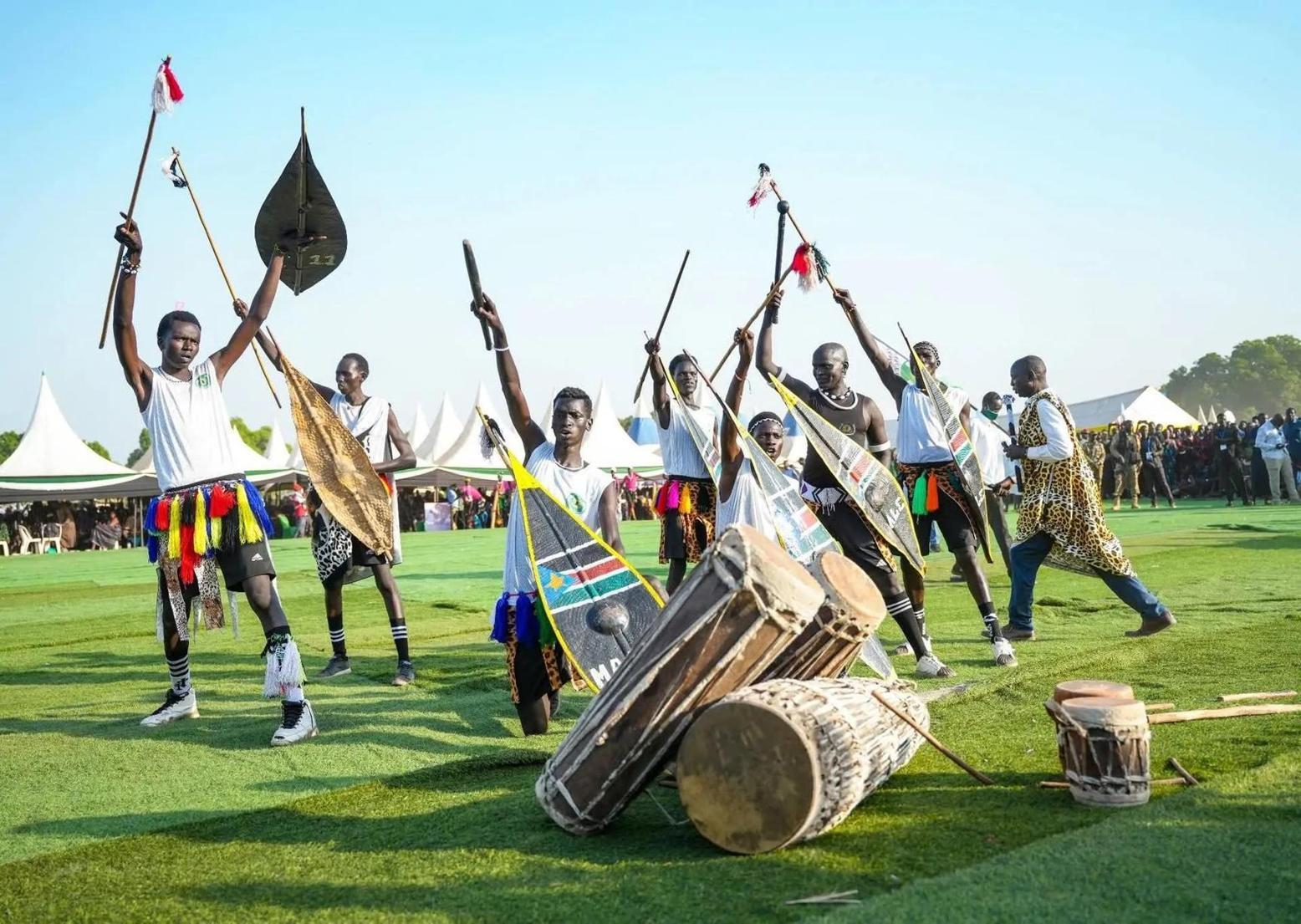
The square was also filled with thousands of young people celebrating culture in the Mandari style, with their colorful attire and distinctive robes, transforming the celebration into a lively space full of energy.
Cattle form the core of Mandari identity, symbolizing resilience and traditional knowledge that has endured across generations.
Who are the Mandari?
The Mandari are a Nilotic group living in the floodplains of the Nile in South Sudan, known for their deep relationship with their long-horned cattle, which represent their wealth, status, and spirituality.
They are primarily located in Terekeka and Tali counties in Central-Equatoria State, bordering the Dinka Bor communities in Jonglei State and the Yeirol in Lakes State, where they share numerous cultural practices related to cattle herding and traditional conflicts.
The Mandari life revolves around pastoralism and mobility across fertile lands. Their daily practices include using cattle dung ash as mosquito repellent and sun protection, along with rituals such as tattooing and traditional wrestling, and of course their famous distinctive dance.
Cattle remain central to Mandari identity, symbolizing resilience and traditional knowledge despite modern conflict challenges, and their annual festival reflects this deep heritage and close connection to nature.
Objectives and scope of the Mandari Festival
The third Mandari cultural festival (2026), which included broad participation from cultural groups representing other communities such as the Mali group (reflecting Nuer culture), a group from the Shilluk community in Upper Nile, the Toposa from Eastern Central-Equatoria State, and many others, aims to promote peaceful coexistence by spreading values of peace and social harmony among South Sudan’s diverse communities.
The festival also focuses on heritage preservation, celebrating Mandari traditions and protecting them from extinction, affirming their importance as a reference for national identity, and fostering social cohesion by providing a platform for mutual understanding and connection between communities. Culture is used as a bridge linking generations and different groups.
The festival, under the slogan: “Bigger and better… Come celebrate our rich culture, communicate, learn, build peace, and enjoy together,” aims to strengthen peaceful coexistence and promote culture as a tool for mutual understanding.
Social impact and role in peace
The Mandari Festival represents a new window of hope for overcoming tribal divisions and intercommunal conflicts in South Sudan.
President Salva Kiir Mayardit, via Rebecca Nyandeng de Mayar, stated that the Mandari Festival is an embodiment of national identity and a clear call to reinforce unity and peace among all components of society.
He added that culture is not merely heritage but a “means to build peace” and restore communication among communities, emphasizing the importance of supporting cultural events as a tool to reject violence and instill values of respect and understanding.
Festival activities included artistic performances and dances from participating groups, transforming the square into a large collective dance reflecting the heartbeat and diversity of South Sudan.
The event also displayed tangible Mandari heritage, including traditional foods, dairy products, and preparation methods. Attendees enjoyed fish directly caught from the nearby river, as the festival is held on the banks of the Bahr al-Gebel.
Culture Minister Nadia Arop highlighted in her speech that culture forms a bridge for unity and plays a key role in supporting peaceful coexistence. She affirmed that celebrating heritage reinforces mutual respect and rebuilds national spirit, making the festival a platform for exchange and reaffirming shared identity.
Journalist Simon Atir told Al Jazeera: “The third Mandari Festival is not an ordinary event in the national popular celebrations calendar; it is a profound celebration of identity. What happens here is not merely a gathering of dances and costumes, but a revival of a long pastoral history and a reorganization of symbols essential to understanding collective consciousness and showing the world who we are and how we live.”
Atir added: “Beyond its importance, the festival is a rare space for cultural encounters and exchanges, where people meet not for political or personal interests but through rhythm, color, and storytelling. Here, culture becomes a gentle tool of peace, reinforcing unity and opening windows to accept the other. In times of heightened divisions, such gatherings are crucial—not just for entertainment but as a practical step toward building a closer, more cohesive society, where diversity is seen not as conflict, but as a richness that can become a strength.”
In summary, the Mandari Festival represents a new beacon of hope to overcome tribal divisions and intercommunal violence in South Sudan, proving that culture can open spaces for rapprochement and coexistence.
Alongside the Fajolu, Orbab, and Dierk festivals, this event forms part of a network of cultural activities that reshape the horizons of peace, unity, and reconciliation, confirming that the path to coexistence begins with respecting diversity and celebrating heritage as a bridge connecting everyone.