
Africa-Press. The German government announced its official support for the ambitious Sila Atlantik project, which aims to transmit renewable energy from Morocco to Germany via a 4,800-kilometer subsea cable.
The project is seen as a strategic step to deepen the energy partnership between Morocco and Europe, reviving earlier ambitions for cross-continental power interconnection after similar projects failed over the past two decades.
German media outlets, including Handelsblatt, reported that Germany’s Federal Ministry for Economic Affairs and Energy has shown strong interest in the initiative, citing its “significant potential and growing ambition.”
German State Secretary for Economic Affairs Frank Wetzel sent an official letter to Morocco’s Minister of Investment Karim Zidane, welcoming the project and praising ongoing coordination between the two countries. He said the German backing reflects confidence in the project’s feasibility and its ability to strengthen Europe’s energy security.
Sila Atlantik is based on building solar and wind facilities in Morocco with a combined capacity of up to 15 gigawatts, enabling the export of around 26 terawatt-hours of electricity annually—roughly 5% of Germany’s total electricity consumption.
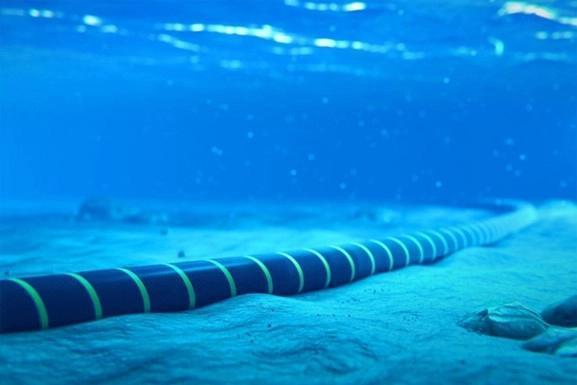
Power would be transmitted through a high-voltage direct current (HVDC) subsea cable running along Europe’s coasts via Portugal, France, Belgium, and the Netherlands before reaching Germany. The system would be supported by battery storage capable of supplying more than 20 hours per day of clean electricity, boosting grid flexibility and helping meet peak demand.
Estimates put the required investment at €30–40 billion, making it one of Europe’s largest renewable-energy projects in terms of spending and strategic impact.
Major German companies such as E.ON and Uniper are involved. Deutsche Bahn, Germany’s largest electricity consumer, has also signaled its willingness to use power imported from Morocco, viewing large volumes of solar and wind electricity as an attractive option for its needs.
This aligns with the company’s goal of operating entirely on renewable energy by 2038, while maintaining high levels of operational reliability.
The project faces several challenges, notably securing approvals from European coastal states whose waters the subsea cable would cross, as well as addressing supply-chain constraints for subsea cables and wind turbines.
In light of these hurdles, project leaders are considering establishing a cable manufacturing plant in Germany to meet demand and reduce reliance on external suppliers.
Sila Atlantik is part of broader efforts to relaunch energy cooperation between Morocco and Germany, especially after the UK government rejected a similar UK-focused interconnector project in June 2025.
The initiative benefits from sharply lower renewable generation costs and technological advances in undersea power transmission, and is being guided by experts from major energy groups such as EnBW and Ørsted to ensure technical and delivery success.
Germany’s support underscores its commitment to the clean-energy transition and stronger European energy security, while offering Morocco a strategic opportunity to expand renewable exports and reinforce its role as a regional energy hub.