What You Need to Know
Rwanda is rapidly becoming a significant player in the global tungsten market, with its Nyakabingo mine tripling production in two years. The country aims to reshape its mining image and establish itself as a reliable supplier for defense industries, despite facing challenges related to conflict minerals and sourcing legitimacy.
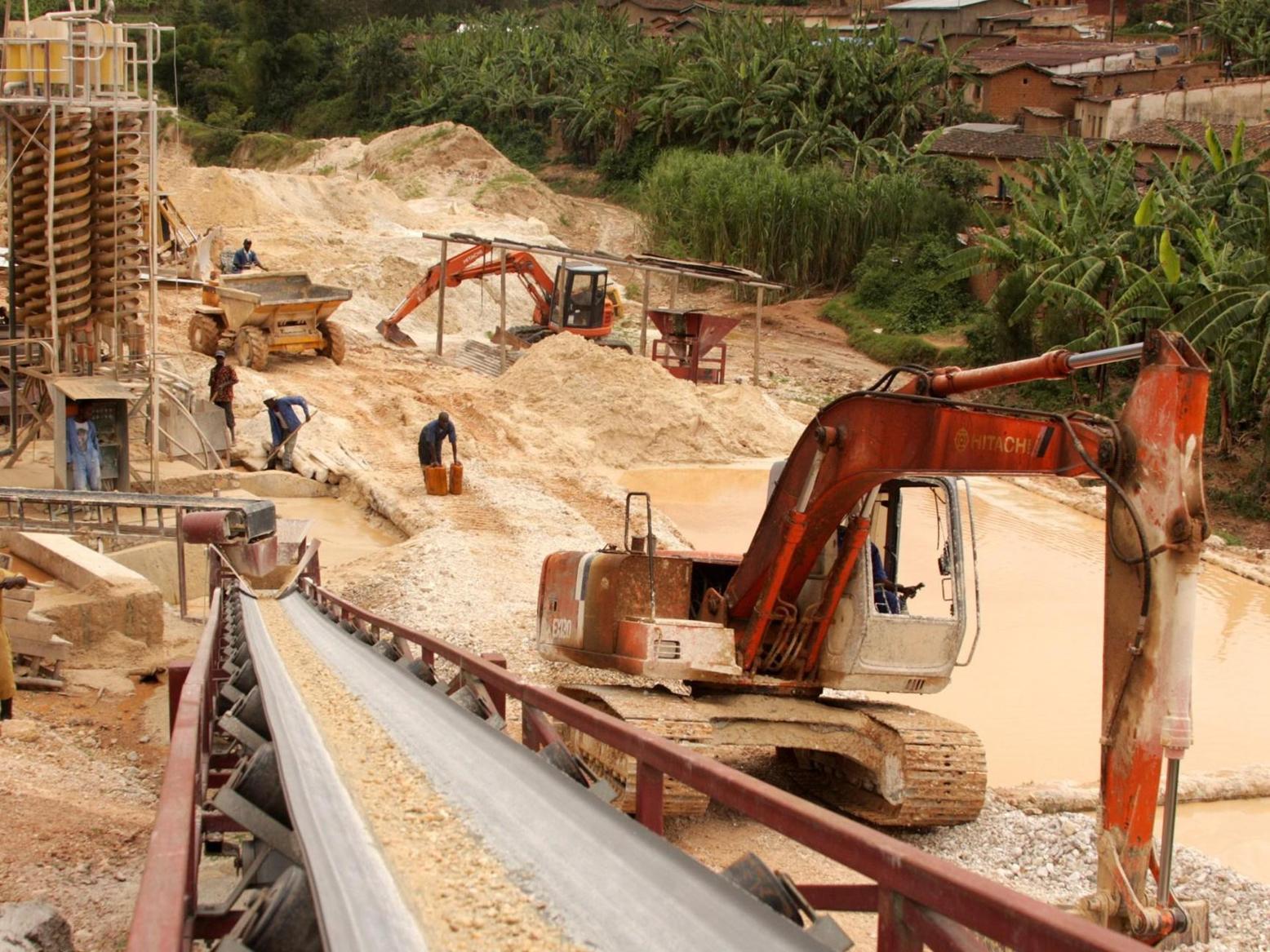
Africa. Under the hills of the Nyakabingo region in northern Rwanda, hundreds of workers extract a mineral used in the production of bombs and bullets, which plays a central role in the global race for control over vital minerals. This scene reflects Kigali’s efforts to reshape its image in international mining markets, according to a report by a local source.
The Nyakabingo mine, acquired by Trinity Metals in 2022, has tripled its production in just two years, becoming Africa’s largest tungsten exporter with an output exceeding 1,200 tons annually of high-quality concentrates.
Shane Ryan, the group’s operations manager, stated from inside one of the mine’s tunnels, “It is a relatively important part of mining on a global scale.”
Strategic Supplier in U.S. Defense Chains
Following China, Russia, and North Korea, Rwanda has emerged as one of the largest tungsten suppliers globally, a mineral prized by defense and technology industries for its high density, conductivity, and melting point.
Last September, Trinity sent its first shipment under a long-term contract directly to Global Tungsten & Powders in Pennsylvania, a move described as a symbolic breakthrough—albeit limited—in the U.S. efforts to reduce China’s dominance, which controls over 80% of the global tungsten market.
Sean McCormick, the group’s chairman, remarked, “Rwanda is now a direct part of the U.S. defense supply chain,” noting that China’s restrictions on mineral exports earlier in 2025 have heightened Washington and Europe’s urgency to seek alternatives.
The Battle to Prove Mineral Sources
However, the expansion of industrial mining in Rwanda is not without political challenges, as the country still faces accusations of being a transit route for minerals smuggled from the Democratic Republic of Congo, where armed conflicts have persisted for decades.
The local source emphasizes that companies operating in Rwanda are making extraordinary efforts to prove the source of their minerals and comply with international tracking regulations aimed at preventing the trade of conflict minerals.
At Trinity’s mines, a “closed pipe” system is implemented, where every bag of ore is tracked from the extraction site to the end user, avoiding purchases from tens of thousands of artisanal miners, despite the rapid production expansion this could provide.
Yet, these measures have not quelled rising suspicions. UN experts noted in a report released in July that the mixing of minerals from areas controlled by the M23 armed group in eastern Congo with Rwandan production has reached “unprecedented levels.”
Data from the International Tin Supply Chain Initiative indicates a 213% annual surge in tantalum exports from Rwanda, coinciding with the rebels’ expanding control over Congolese mines, the local source reports.
These accusations have prompted Apple to urge its suppliers to cease purchasing any tantalum from Rwanda and Congo, despite the two countries accounting for about 60% of global production.
Ambition to Become a Regional Mineral Processing Hub
Despite the allegations, Rwandan authorities assert that the country is moving forward with modernizing its mining sector and building local added value. Alice Awasi, the CEO of the Rwanda Mines, Oil and Gas Board, stated, “We want to elevate our way of working,” highlighting plans to transform Rwanda into a regional mineral processing hub to support broader manufacturing.
Some progress has already been made, with a Polish company building one of the only tin smelters in the region, while a British firm has begun operating Africa’s first tantalum refinery. Trinity is also seeking to raise $60 million to build a tungsten processing plant.
If a U.S.-backed peace initiative in the Great Lakes region succeeds, officials and investors believe that cross-border trade in minerals could be formally regulated, allowing for revenue sharing between Rwanda and Congo.
Ray Power, founder of the tantalum refinery, stated, “In a stable Great Lakes region, ore can come to Rwanda, be processed, and then exported to Europe and America… everyone will get their share of the pie.
Rwanda’s mining sector has evolved significantly over the past few years, with the government focusing on increasing production and establishing a reputation in international markets. The Nyakabingo mine, acquired by Trinity Metals, has become Africa’s largest tungsten producer, reflecting Rwanda’s ambitions to become a regional hub for mineral processing.
However, the country faces scrutiny over allegations of being a transit point for conflict minerals from the Democratic Republic of Congo. Efforts to ensure traceability and compliance with international standards are ongoing, as Rwanda seeks to balance growth in its mining sector with ethical sourcing practices.