What You Need to Know
Dr. Magdy Mohamed Mahmoud Adam presents in this summary an analytical vision of Special Economic Zones in Sub-Saharan Africa, explaining their concept, objectives, development, distribution, types, and governance models. He assesses their economic and social impact, highlighting both successes and challenges (regional integration, employment, governance), and proposes a forward-looking vision linking them to the African Continental Free Trade Area, green industrialization, and national strategies—emphasizing that their success depends on sound design, transparency, and strong local supplier linkages.
Africa. Special Economic Zones (SEZs) are among the most prominent modern tools used by Sub-Saharan African countries in their development policies to achieve industrial growth, diversify the economy, create jobs, and improve exports.
These zones constitute a distinct regulatory and investment environment that differs from the rest of the national economy. They provide financial and tax incentives and advanced infrastructure, making them platforms for attracting foreign direct investment (FDI) and laboratories for piloting new industrial policies prior to nationwide rollout.
Africa’s experience began in the 1970s, influenced by successful Asian models such as China and South Korea. Mauritius, Senegal, and Liberia were among the first to adopt the idea. Since then, implementation has rapidly expanded to more than forty African countries. Results, however, have been mixed: some countries succeeded in attracting capital and creating jobs, while others fell short due to weak infrastructure, policy inconsistencies, and poor governance.
The Nature and Functions of Special Economic Zones
1. Concept and Foundations
SEZs are geographically defined areas within a sovereign state that operate under distinct economic and legal rules, including tax and customs exemptions and simplified procedures to facilitate investment and trade.
They include:
– Export Processing Zones (EPZs)
– Free-trade zones
– Free ports
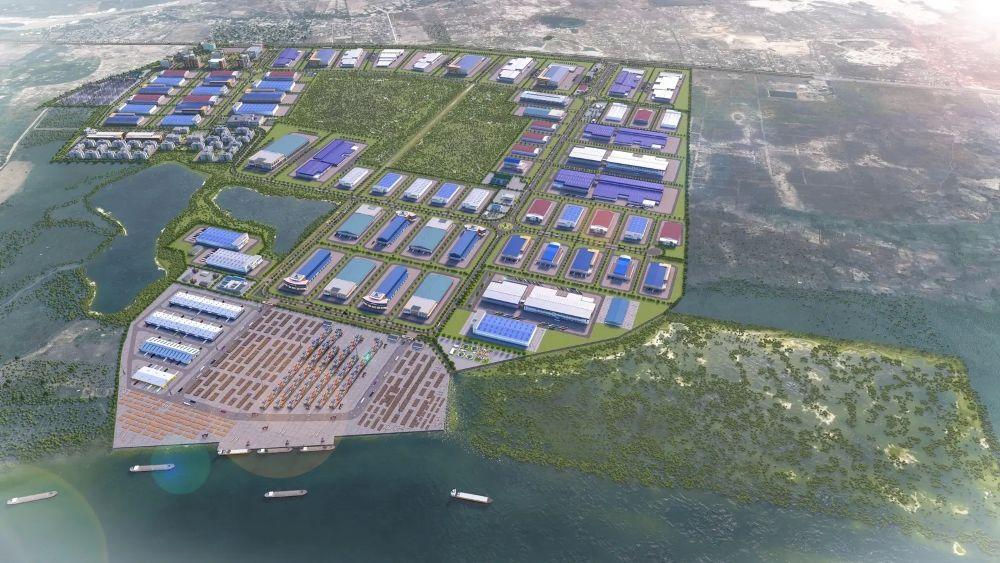
– Industrial parks and complexes
Their aims are to stimulate industrialization, expand exports, attract investment, and transfer technology to local firms, while providing integrated industrial clusters that create economies of scale and enable concentrated infrastructure provision.
2. Key Actors and Governance Structures
SEZ governance typically involves five core actors:
the government, the zone authority (regulator), the developer or investor, the operator, and the licensed firms operating within the zone.
Institutional models vary:
– Public model (42%): state ownership and management
– Public–private partnership (PPP) (30%)
– Private model (28%): fully private financing and operation
This diversity reflects differing financial and institutional capacities across African countries.
3. Economic Objectives
SEZs are used to achieve six main objectives:
1. Attract FDI through fiscal and regulatory incentives
2. Diversify the economic base and reduce dependence on primary commodity exports
3. Expand and diversify manufactured exports
4. Create jobs and develop human capital
5. Increase foreign-exchange reserves
6. Pilot new economic policies in a controlled setting before nationwide adoption
Evolution and Distribution of SEZs in Africa
The continent has experienced rapid growth in SEZs since the 1980s. Globally, there were 176 zones in 47 countries in 1986, rising to over 3,500 by 2006.
Africa entered relatively late, yet the number of zones rose from 20 in 1990 to over 230 by 2020, spread across 47 of 54 countries.
As of 2021, Africa had 203 SEZs, 73 of which were under development. Five countries account for 93% of these zones: Morocco, Nigeria, Egypt, Ethiopia, and Kenya.
Key concentrations include:
– Kenya (61 zones)
– Nigeria (38)
– Ethiopia (18)
– Egypt (10)
– Tanzania, Uganda, Botswana, Cameroon (9 each)
– South Africa (8)
– Morocco (6)
Drivers of growth include:
– Partnerships with China in infrastructure development
– Expansion of national SEZ programs in leading countries
– Adoption of SEZs as a core industrial policy instrument for structural transformation
Types and Models of SEZs in Sub-Saharan Africa
Statistics indicate that 89% of African SEZs are multi-activity, combining industries such as food processing, textiles, and light manufacturing. Only 10% are sector-specific (e.g., aerospace in Morocco, pharmaceuticals in Ethiopia), while 1% are logistics hubs near ports and airports.
Illustrative examples:
– Burundi: an SEZ aimed at boosting exports with substantial tax incentives
– Kenya: EPZs under a government authority since 1990, focused on export-oriented investment
– Rwanda: an SEZ program addressing private-sector constraints in infrastructure, energy, and administrative procedures
– Uganda: free zones managed by an authority under the Ministry of Finance to diversify the economy and attract FDI
– Tanzania & Zanzibar: zones overseen by the EPZA, targeting labor-intensive projects and export growth
Economic and Social Feasibility Assessment
1. Benefits
Studies—particularly by the French Development Agency (AFD)—indicate that countries with SEZs:
– Achieve greater diversity in exports with higher technological content
– Integrate more effectively into global markets
– Undergo structural transformation toward industrialization
Examples:
– Tanger Med (Morocco) has become a regional hub for automotive exports
– Ethiopia’s industrial parks have attracted global textile manufacturers since the mid-2010s
Social impacts:
– Households living near SEZs see improvements in income and access to basic services (electricity, sanitation)
– Expanded opportunities for women, facilitating a shift from subsistence agriculture to formal industrial jobs
Broader economic impacts:
– A positive relationship between FDI inflows and GDP growth
– Significant contributions to export diversification (e.g., Ghana: USD 1.25 billion from four zones in 2019)
– Job creation and skills training in smaller economies like Benin and Togo
– Increased investment stocks in countries such as Gabon and Nigeria
2. Challenges and Constraints
Despite successes, African SEZs face several limitations:
– Weak integration into regional value chains, with many zones outward-oriented beyond the continent
– Limited impact on creating entirely new product lines
– Job creation below expectations due to capital-intensive operations
– Underrepresentation of women in managerial roles
– Enclave effects, with some zones remaining isolated from local economies
Sixth: Structural and Organizational Challenges
Three principal challenge areas:
1. Tracking social impact
Data gaps hinder accurate measurement of community outcomes. Land-use conflicts may arise between investors and local populations, threatening sustainability. SEZs often spur rapid urbanization, requiring balanced urban planning.
2. Economic diversification
Many countries still rely on traditional sectors (wood, textiles). Moving toward more complex manufacturing and higher value added is essential. Gabon shows how wood waste can be upcycled into secondary products (e.g., particle boards), creating additional industrial activities and revenues.
3. Employment and community inclusion
Africa’s youthful labor force is a major asset, but companies must adopt transparent hiring and fair wage policies. Women should be promoted into supervisory and managerial roles—with Togo and Benin showing relative progress.
Future Outlook for SEZs
The future of African SEZs hinges on their ability to evolve from isolated enclaves into engines of national and regional development. Three strategic trends stand out:
1. Integration with the African Continental Free Trade Area (AfCFTA)
Countries such as Kenya and Rwanda are working to harmonize customs and logistics procedures, paving the way for cross-border African value chains in agribusiness and light industry.
2. Green and inclusive industrialization
Newer zones embed environmental sustainability:
– Tanger Med has invested in renewable energy and waste reduction
– Naivasha Industrial Park (Kenya) supports MSMEs to link them to larger supply chains, enhancing inclusion
3. Embedding SEZs in national master plans
Zones are increasingly tied to major infrastructure corridors and long-term industrial strategies:
– Suez Canal Economic Zone (Egypt) is part of a national logistics corridor
– Ethiopia’s parks are integrated with rail and power networks to ensure industrial coherence
General Conclusions
SEZs have contributed to significant economic and social shifts in Africa by:
– Modernizing industrial infrastructure
– Enhancing workforce skills
– Increasing exports and investment
– Deepening Africa’s integration into the global economy
However, they are not a silver bullet. Success depends on sound governance, careful planning, and strong linkages with local economies.
To become genuine engines of development, countries should:
1. Improve governance and transparency in licensing and contracting
2. Design smart incentives that balance investor attraction with resource protection
3. Strengthen linkages between foreign investors and local firms to facilitate technology transfer
4. Invest in off-site infrastructure to ensure economic and social integration
5. Build trust with local communities and ensure they benefit from opportunities
6. Launch supplier-development programs and vocational training within zones
Conclusion
Africa’s SEZ experience shows these zones can be powerful levers for inclusive and sustainable development when carefully designed and managed, and when aligned with national and regional policies.
Successful cases in Morocco, Ethiopia, and Kenya demonstrate how SEZs can evolve into advanced manufacturing and logistics hubs. The continent’s major challenge is to convert quantity into quality—transforming the growing number of zones into high-performing models that create local value and support African integration, in line with the Agenda 2063 vision for sustainable development.