What You Need to Know
A recent report highlights three African cities—Cairo, Kigali, and Nairobi—that are emerging as key players in attracting foreign investment. These cities have implemented financial reforms, improved infrastructure, and expanded transportation networks, significantly contributing to their national economies and attracting billions in investments through various projects.
Africa. A report by a local source highlights how major capitals and urban centers in Africa are competing to attract foreign investments and enhance their economic standing through financial and tax reforms, infrastructure development, and expanded transportation networks, alongside investments in innovation and social services.
The report indicates that these cities have transformed into key drivers of national economies, significantly contributing to GDP and attracting billions of dollars through numerous investment projects.
It also emphasizes the role of political stability, streamlined administrative procedures, and tax incentives in creating a more attractive business environment, alongside large-scale projects in clean transportation, health, and education.
Despite challenges related to governance and the increasing demand for essential services, these experiences reflect different models of urban development across the continent and confirm that investing in infrastructure and innovation is the path to enhancing economic growth and making African cities more globally competitive.
Cairo: A City That Never Sleeps
According to the report, Cairo tops the list of African cities most attractive to investments, thanks to a surge in capital inflows in recent years.
The Egyptian capital attracted approximately $11.3 billion in foreign direct investment between 2019 and 2023, with $4.3 billion in the last year alone.
The report notes that this funding has financed over 170 projects, including the modernization of the metro network, the establishment of electric charging stations, the construction of five-star hotels and data centers, in addition to the restoration of historical and cultural sites.
Major projects have also been completed, such as the operation of the monorail linking Cairo to the new administrative capital and the opening of the Grand Egyptian Museum.
Hossam Heiba, head of the General Authority for Investment and Free Zones, confirms that the expansion of roads, bridges, and tunnels has significantly improved connectivity within Greater Cairo, while extending the metro and developing high-speed rail networks facilitate transportation and connect the city to new urban centers.
He adds that this boom would not have been possible without tax and financial reforms aimed at attracting investors, despite their impact on the purchasing power of the population.
Agreements with the International Monetary Fund, the European Union, and the World Bank have helped avoid a liquidity crisis in 2024, and today, Cairo contributes 28% of Egypt’s GDP.
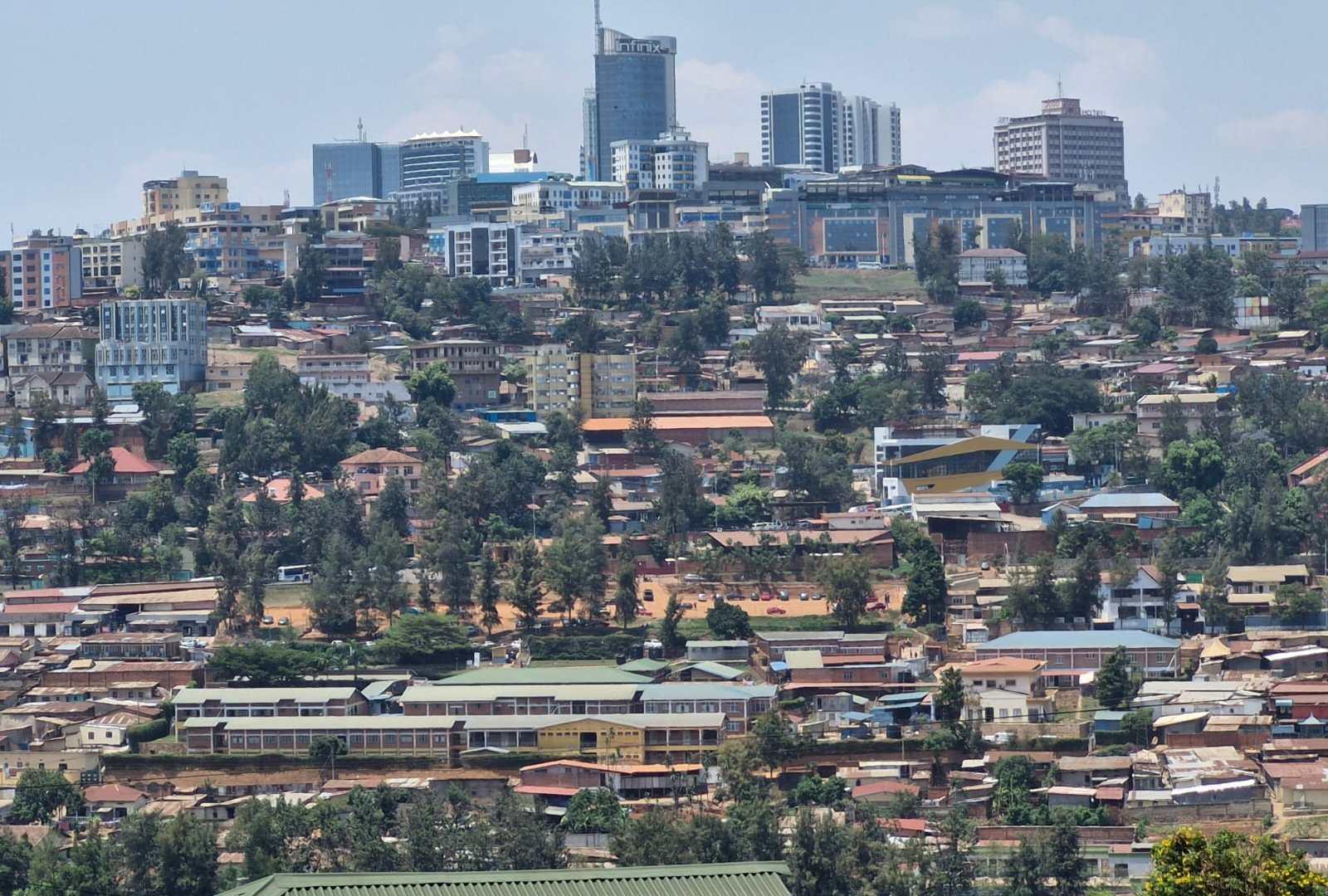
Kigali: A Leader in Simplification
The Rwandan capital ranks second in the Africa Report classification, having attracted nearly $2 billion in foreign investments through 38 projects between 2019 and 2023, representing 41% of the national GDP.
The report highlights that Kigali’s strength lies in its political stability and reliance on digitization and simplification of procedures, providing “one-stop service centers” for investors, along with tax incentives and environmental and urban guarantees.
Merard Mbabwanamuguru, an urban planner and former deputy mayor, states that this integrated system facilitates business operations and reduces approval times.
The city is witnessing massive infrastructure projects, most notably the $2 billion Bugesera International Airport, which will have a capacity of 7 million passengers annually by 2027 and 14 million by 2032.
It is also investing in clean transportation through electric buses and bicycles, bike lanes, and a cable car project.
In the social sector, Kigali is committed to building or upgrading a hospital in each of the three districts of the capital and expanding the education system with new universities, training centers, and innovation incubators.
Nairobi: Connectivity and Innovation
According to the Africa Report, the Kenyan capital has risen to third place after being sixth last year, despite the unrest witnessed since the “Gen Z” protests in June 2024.
Nairobi hosts regional offices for the United Nations and contributes 27.5% of the national GDP, attracting $3.4 billion through 181 projects between 2019 and 2023.
The report indicates that Nairobi has become a hub for major tech companies such as Google, Microsoft, and IBM. It hosts the “Konza Technopolis” known as the “African Silicon Valley.”
Maurice Owughi, head of urban and regional planning at the University of Nairobi, states that the government has prioritized investment in infrastructure to create jobs and stimulate growth, pointing to projects such as the 27-kilometer Nairobi Expressway, the Mombasa-Nairobi Road, and the bus rapid transit system partially funded by the European Investment Bank.
However, this city, with a population exceeding 4.4 million, faces significant challenges, from improving governance and expanding access to water and electricity to building social housing that meets increasing demand.
The “Tatu City” project, a new private city north of Nairobi, stands out as a test of the capital’s ability to innovate new models of urban development.
The competition among African cities for foreign investment has intensified in recent years, driven by the need for economic growth and development. Cities like Cairo, Kigali, and Nairobi have adopted various strategies, including financial reforms and infrastructure improvements, to create more attractive business environments. This trend reflects a broader shift towards urbanization and modernization across the continent, as cities strive to enhance their global competitiveness.