
Africa-Press. In the pottery workshop of the Aliya family in Nabeul, northeastern Tunisia, artisan Habib Ben Othman transforms a lump of clay into a vessel, continuing a craft that has been passed down through the family for nearly 170 years.
For generations, the pottery-making tradition has been handed down within the Aliya family, reaching Muhammad Ben Ahmad Aliya, and then to his sons Adam and Anas, who today participate in the family business alongside their studies.
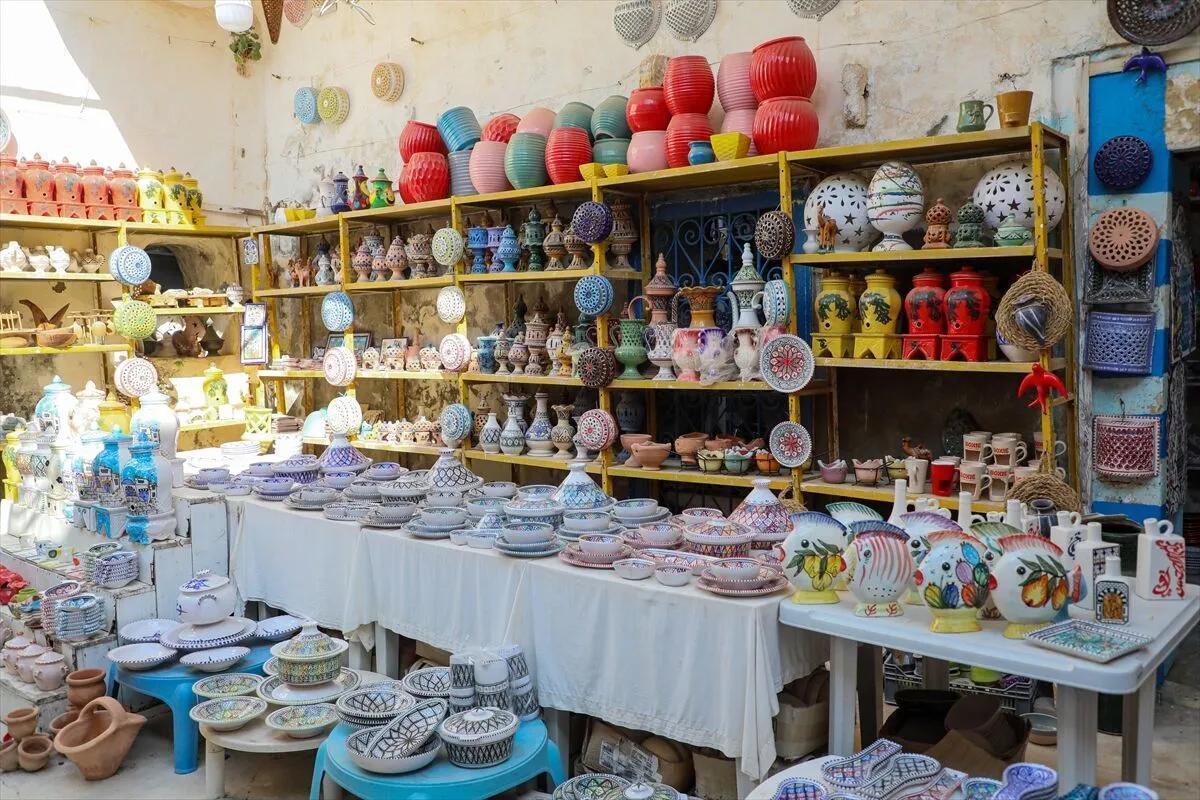
In the old city of Nabeul, the family showcases its products in a building that Aliya claims is over 450 years old, which previously served as a pottery workshop before becoming a sales point.
Currently, production takes place in a workshop near the industrial area, where pieces undergo stages of shaping, decorating, and firing, relying on manual labor and techniques passed down through the family.
Aliya stated, “I learned this craft from my father, my father learned it from my grandfather, and my grandfather learned it from his father; we have a continuous story like this.”
He added that his family’s pottery activity has lasted for about 170 years, and they maintain traditional production methods while diversifying their products.
170 Years Within the Family
The pottery industry in Nabeul has a history that predates the Aliya family’s activity, as the official website of the governorate describes it as one of the pottery capitals in Tunisia, alongside the island of Djerba and the city of Mkennes.
According to the same source, pottery production in the region dates back to ancient times when jars were made for storing oil and vessels for fetching water.
The industry flourished at the end of the 16th century with the arrival of artisans from the island of Djerba in southeastern Tunisia, before evolving under the influences of Andalusian artisans and others from the capital, Tunis.
In the Aliya workshop, the family produces plates, bowls, and kitchen utensils, as well as vases, plant pots, and decorative pieces.
Aliya noted that Nabeul pottery is known for its distinctive decorations, especially in blue and white, while some products from the workshop employ different techniques for raised engraving.
From Nabeul to International Markets
The family’s handmade products reach markets outside Tunisia, as the family has maintained and developed this activity alongside traditional production methods.
Aliya mentioned, “We send our products to Italy, France, and the United States, and the handmade nature gives the products a unique character.”
He added that consumers in countries like Italy and Germany prefer products made by traditional methods over machine-made items.
The revenues from the traditional crafts sector in Tunisia exceeded 160 million Tunisian dinars (about 55 million dollars) during 2024, according to data from the National Office of Traditional Industries reported by the official Tunisian news agency.
Exports from the sector reached 81 million dinars (about 27.8 million dollars) in the first half of 2025, according to the office’s data.
A New Generation at the Pottery Wheel
The pottery craft in the Aliya family has transitioned to a new generation, as Adam and Anas participate in the family business alongside their studies, while nine people work in the workshop and sales point, including three family members.
Adam Ben Muhammad Aliya, 24 years old, continues his university studies in media while working in the workshop, particularly in painting and decorating products.
He stated, “I started pottery since my childhood; we first prepare the products with a layer of white material, then we decorate them with different colors.”
He added that preparing and decorating some pieces takes about a week, and that traditional production methods require a great deal of precision and patience.
After painting and decorating, the products are transferred to the kiln, where they are fired at a temperature of about 1024 degrees Celsius before becoming ready for use or sale.
His brother Anas, 16 years old, participates in the family business after school and during holidays, working mainly at the historic sales point, and occasionally assisting in production within the workshop.
45 Years Between Clay and the Pottery Wheel
In addition to family members, artisan Habib Ben Othman works in the Aliya workshop, bringing nearly 45 years of experience in pottery making.
Ben Othman stated that he began working at the age of 16, helping artisans transport materials and drying products under the sun, before learning to shape clay and various stages of production until the craft became a source of livelihood for him and his family.
He said, “I grew up with this craft, raised my children with it, taught them, and provided our livelihood through it.”
He added that over the years, he has taught several young people the craft of pottery, and some of them now run their own projects.
The clay used in the workshop is transported from the surrounding mountains of Tabarka in the Jendouba governorate in northwestern Tunisia to Nabeul, a journey of about 243 kilometers.
The clay arrives at the workshop in rolls weighing about 12 kilograms each, then it goes through a machine for kneading and separating unwanted parts, before being softened with water until it reaches the right consistency for shaping.
After that, the artisan sits at the pottery wheel and shapes the clay by hand according to the type of piece to be produced, before moving on to the stages of decoration, painting, and firing.
“I Don’t Want Our Craft to Disappear”
Ben Othman continues to pass on his expertise to younger artisans, hoping for the continuation of the profession that he has spent most of his life in.
He said, “I want young people to learn this craft and to rely on themselves; I don’t want our traditional craft to disappear.”
The official website of the Nabeul governorate indicates that authentic pottery in the city previously faced the risk of extinction, before efforts were made to revive the craft and support those working in it.
In the Aliya workshop, the transfer of expertise continues from generation to generation; Muhammad practices what he learned from his father, while his sons Adam and Anas enter the craft practiced by their ancestors.
After nearly 170 years of pottery-making being passed down through the family, pieces of clay continue to spin on the pottery wheel in the family workshop in Nabeul.