
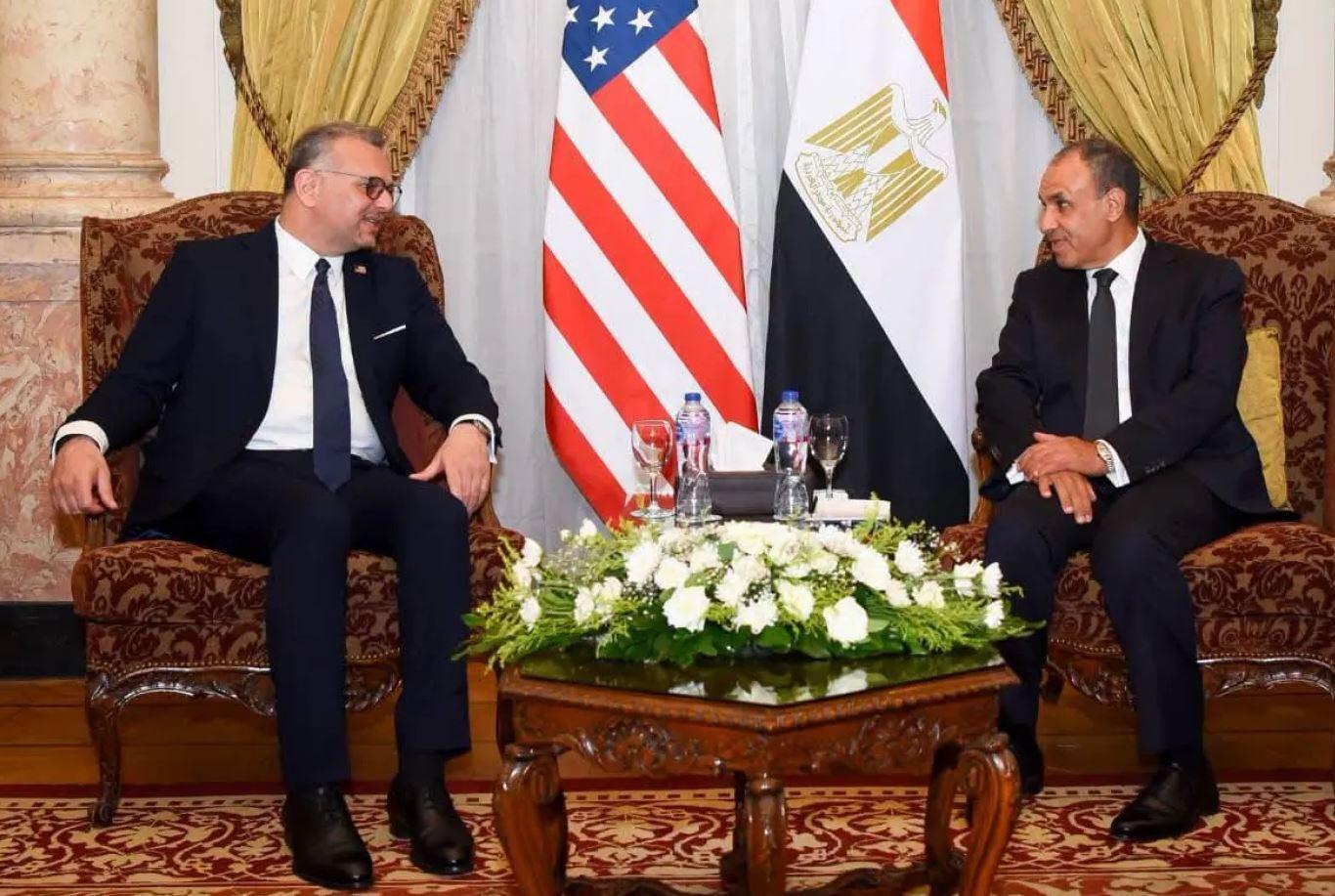
Africa-Press. Egypt has announced its rejection of “unilateral actions in the Horn of Africa, including maritime access by force,” during a phone call between Foreign Minister Badr Abdel-Aty and the senior advisor to the U.S. president for Arab and African affairs, Massad Boulos, amid Ethiopian efforts to secure a port.
This rejection carries, according to an expert in African affairs, a decisive message from Egypt to Washington regarding its cooperation with Ethiopia, aimed at preventing any violations of international law.
It is anticipated that Cairo’s positions and actions with the international community will not allow Addis Ababa to access the sea by force, and that negotiations are the only path to stability in the region.
Escalating Tensions
Tensions between Egypt and Ethiopia are escalating due to sharp disagreements over water issues and maritime access. Cairo opposes Addis Ababa’s construction of any new dams on the Nile and has hinted at its “right to legitimate defense” of its water rights. Furthermore, Egypt rejects Ethiopia, a historically landlocked country, gaining any access to the Red Sea, as it is not a legal right.
The Egyptian Foreign Ministry stated that the phone call between Abdel-Aty and Boulos addressed developments in the Horn of Africa.
Abdel-Aty emphasized the “necessity of respecting the sovereignty, unity, and territorial integrity of the countries in the region, and refraining from any unilateral actions that threaten regional peace and security or seek to impose maritime access by force in violation of international law.”
Both sides affirmed the importance of continuing coordination and consultation regarding developments in the Horn of Africa, and intensifying regional and international efforts aimed at supporting political and diplomatic solutions to crises, contributing to enhancing security and stability in Africa.
Abdel-Aty did not name the countries involved, but he stated in remarks during October 2025 that “Egypt rejects Ethiopia’s involvement in governing the coasts of the Red Sea.”
Ethiopia has been a landlocked country since 1993 when Eritrea gained independence after a three-decade war, relying on the ports of its neighbors, particularly the port of Djibouti.
A Strong Message
The expert in African affairs, Asmaa El-Husseini, confirmed that the talks between Abdel-Aty and Boulos come at a crucial time following discussions about a defense agreement between Washington and Addis Ababa, where Egypt’s complete rejection of the idea of maritime access by force sought by Ethiopia in the Horn of Africa was firmly reiterated.
She pointed out that Egypt is striving to convey a strong and firm message to all parties in the region, the international community, and the Ethiopian government itself, indicating that the current developments will not succeed, as they stir unrest in the region and cause significant damage that will inevitably lead to destabilization of security and stability.
She emphasized that these developments affect not only the Horn of Africa, the Nile Basin, and the Red Sea but also harm international interests due to Ethiopian actions, “which create a state of disturbance and tension that could lead to unprecedented conflicts and disputes in the regional atmosphere.”
Egypt’s rejection of Ethiopia’s access to the Red Sea has been reiterated. During Abdel-Aty’s meeting in May with Yemeni Prime Minister Sha’if Al-Zandani in Cairo, the issue of Red Sea security and the Gulf of Aden was discussed. Abdel-Aty stressed at that time Egypt’s “categorical rejection of any attempts to internationalize or militarize the Red Sea and the Gulf of Aden, as well as the rejection of the involvement of any parties not bordering it in arrangements concerning it.”
During his visit to Asmara last May, the Egyptian minister met with Eritrean Foreign Minister Osman Saleh, emphasizing that the security and management of the Red Sea “remain the exclusive responsibility of the bordering countries, and Egypt rejects any attempts by non-bordering parties to impose arrangements or security roles in this context,” according to a statement from the Egyptian Foreign Ministry at that time.
The Ethiopian Foreign Ministry spokesperson, Nebiat Gitaachu, stated last May that the Egyptian government is trying to encircle and obstruct his country’s access to the Red Sea. He did not provide details but confirmed that his country would continue to work diligently to obtain maritime access through peaceful and sustainable means.
Since taking office in April 2018, Ethiopian Prime Minister Abiy Ahmed has sought access to the Red Sea through what is termed “port diplomacy.” In February, Abiy Ahmed linked the stability of the Horn of Africa to his country’s obtaining maritime access.
Days ago, the Ethiopian News Agency revealed an Ethiopian-American defense cooperation agreement following high-level bilateral consultations conducted by Ethiopia and the United States at the U.S. Department of Defense.
In light of Egypt’s rejection and Ethiopia’s insistence and actions in the region, El-Husseini believes that Egypt will not remain idle regarding these Ethiopian actions, which aim not only to undermine Egypt’s water security, as in the case of the “Renaissance Dam,” but also to affect the unity and stability of the countries in the region.
She sees the importance of international powers – led by the United States – taking more positive and balanced positions toward Ethiopian actions, and not aligning with them in military cooperation that could be interpreted as a reward for Addis Ababa. She expects that strong Egyptian, regional, and international positions will compel Ethiopia to reconsider its stance and seek negotiated and legal solutions.