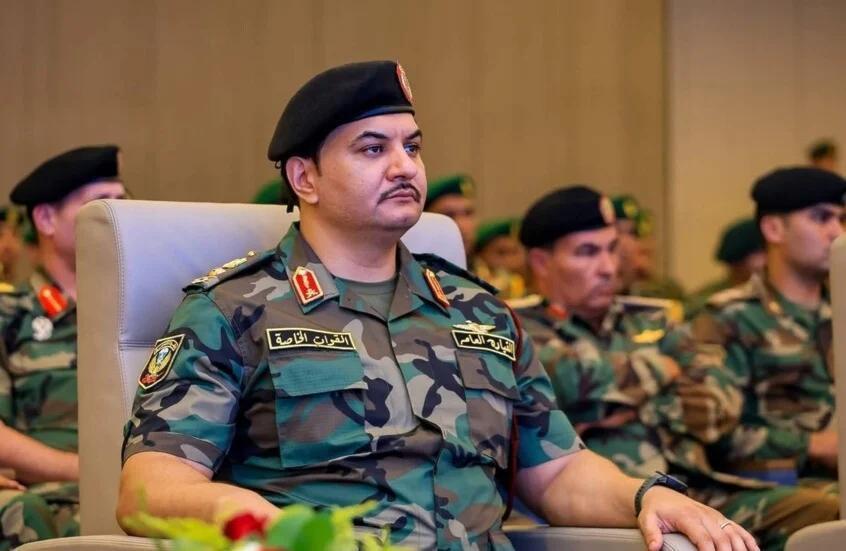
Africa-Press. A report published by a local source indicates that, Saad al-Haftar, Deputy Commander of Eastern Libya Forces, is leading a regional initiative to strengthen his influence in southern Libya and weaken the ruling military council in Niger led by General Abd al-Rahman Tiani, by solidifying his alliance with the Chadian president, Mahamat Idriss Déby.
According to the report, Haftar aims to rally support from rebel groups opposed to Tiani based in Libya and Chad, benefiting from their rear bases in the “Salvador” corridor in northern Niger.
In this context, Haftar visited N’Djamena on July 26 and discussed with Déby the enhancement of the joint force and a plan to act against the Nigerien authorities. He also proposed the establishment and securing of a corridor linking Kufra in southeastern Libya to Am Jars in northeastern Chad to facilitate the flow of goods away from the “Sahara” border triangle between Libya, Egypt, Sudan, and Chad.
The report noted that “Am Jars” represents a historical stronghold for the Déby family and a logistical center through which equipment is sent to the “Rapid Support Forces” in Sudan, which are supported by the Chadian president in their war against the Sudanese Armed Forces.
Utilizing Opposition and Security Escalation
The report mentioned that Haftar is seeking to capture, Muhammad Wardogo, leader of the “Southern Liberation Operations Room,” who has taken refuge in the “Salvador” corridor, while Déby is working to dismantle Chadian opposition groups, primarily the “Chadian Change and Accord Front” and the “Military Council for the Salvation of the Republic.”
On June 22, Khalifa Haftar released Nigerien opposition leader, Mahmoud Saleh, head of the “National Liberation Front,” after Niamey freed 18 Libyan citizens, including officer Badr al-Din Sheridi Mahdoun. According to the report, Haftar offered Saleh to resume armed action against the Nigerien military council.
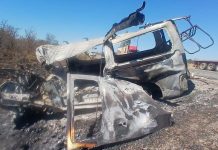
This coincided with a rise in attacks on Niamey, as Moussa Konai, a supporter of the ousted Nigerien president, Mohamed Bazoum, claimed responsibility for an attack targeting a National Guard camp in Sigiden in northeastern Niger on August 15, which his movement stated resulted in the deaths of 15 Nigerien defense and security personnel. The “Wardogo” group also attacked the Al-Wigh airbase in southern Libya on July 12, seizing equipment and capturing several members of the eastern forces.
Increased Pressures Within Haftar’s Camp
Tensions within Haftar’s camp escalated following the assassination of the head of military intelligence in eastern Libya, Fawzi al-Mansouri, who was killed by a car bomb near his home in Benghazi on August 10. “Africa Intelligence” concluded that these movements reflect a realignment of alliances in the border triangle between Libya, Chad, and Niger, with Haftar shifting from previous rapprochement with Niamey to supporting its adversaries and strengthening his partnership with Déby.
These movements come amid rising security and political competition in the border triangle between Libya, Chad, and Niger, where cross-border armed groups are active and local authorities’ interests intertwine with regional powers. They also reflect a shift in Saad al-Haftar’s relationship with Niamey, moving from previous closeness with its military leadership to betting on its opponents, alongside strengthening his partnership with Chadian President Mahamat Idriss Déby.