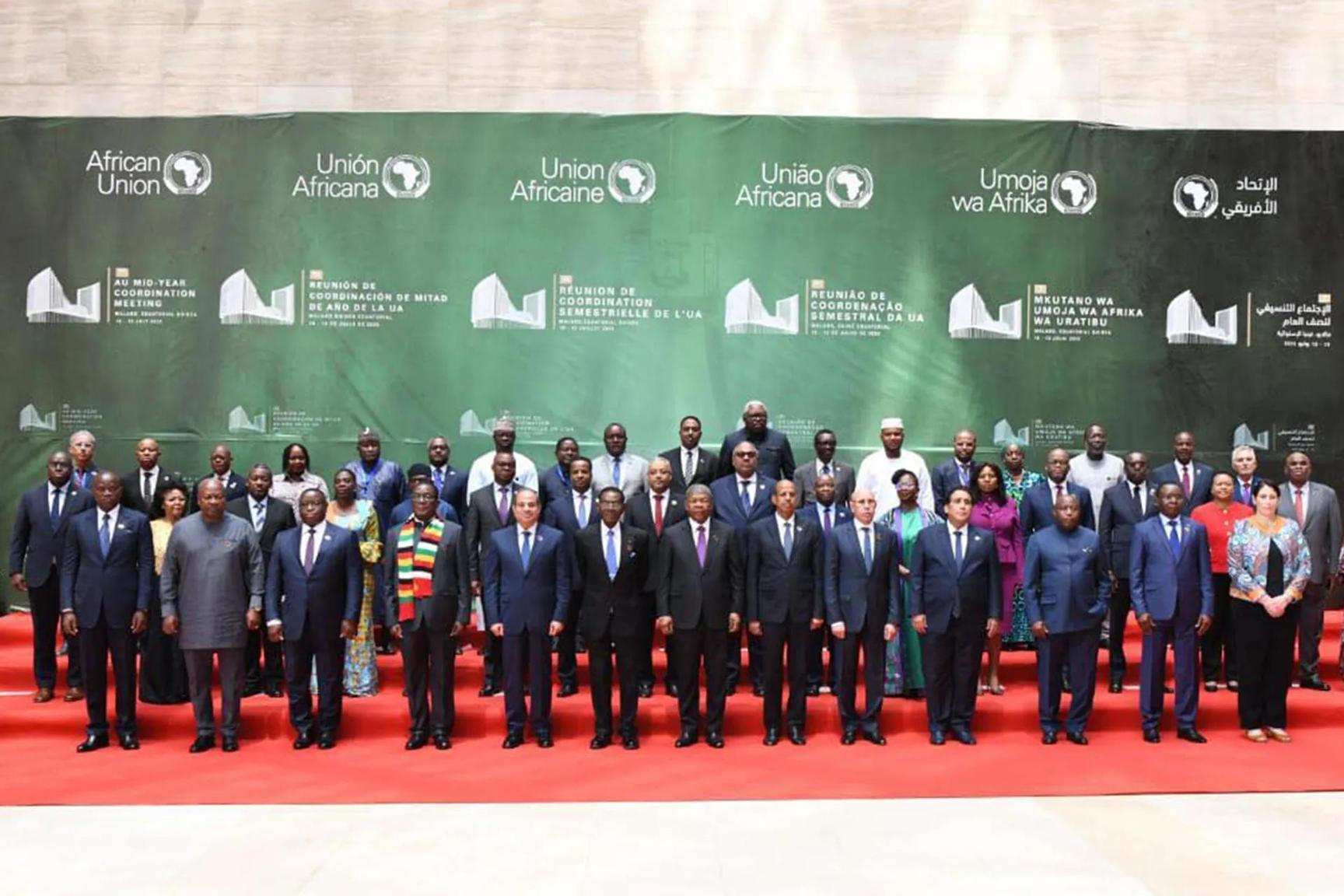
Africa-Press. As the world faces a pivotal political, economic, and climate moment, the 39th African summit is being held on February 14–15 to discuss security and climate issues and to try to halt internal conflicts that have held back a continent rich in resources—and in conflicts as well.
Water security, sanitation, the African Continental Free Trade Area, and the debt burden weighing on the continent top the summit agenda. Other issues related to security instability in Sahel countries and the Horn of Africa are also expected to feature prominently.
The wars in Sudan and the Sahel will be on the leaders’ table as they seek solutions to these crises, which Ambassador Mohamed El-Amin Soueif, director of the office of the chairperson of the African Union Commission, says are obstructing the continent’s Agenda 2063 sustainable development plan.
Leaders will work to find settlements acceptable to all parties to these conflicts, especially in Sudan. The AU has taken advanced steps toward lifting Sudan’s membership suspension, but it is being pressed to take further measures that end the war and move the dispute to negotiations.
The AU has already lifted the suspension of Guinea (Conakry) and Gabon after both countries held elections that ended periods in which military leaders seized power by force.
The dilemma of external interference
The AU has often tried to resolve the continent’s conflicts, but it has repeatedly run into external interference that fuels some of them—such as in Sudan, where Soueif said the warring parties receive weapons from outside the continent.
The Union also seeks to work jointly with the United Nations, the Arab League, and the Organization of Islamic Cooperation—provided the AU remains in the lead, because these are ultimately African issues, Soueif said.
Ahead of the current summit, the AU’s Peace and Security Council met and discussed the files of Sudan and the Sahel so that leaders could propose solutions to these crises. Soueif stressed that these crises “will never end through weapons,” but rather by bringing all parties to the dialogue table.
The AU previously played an important role in ending similar crises in Sierra Leone and Liberia, which went through civil wars. But today it faces a challenge in Sudan and the Horn of Africa because non-African actors are fueling conflicts there, the African official said.
The issue of borders inherited from the colonial era is the biggest problem the continent faces, according to African affairs expert Moussa Cheikho, because it has long been—and remains—a driver of conflict.
For that reason, Cheikho believes leaders may be able to ease some files at this summit but will not be able to resolve them fully, expecting these conflicts to “remain on the table of many summits in the future.”
The summit is not very different from previous ones, except that it is taking place at a time when the United States is entering the continent through gateways such as Sudan and Nigeria, among others—alongside other political, security, and climate crises that require decisive action for Africa’s present and future.