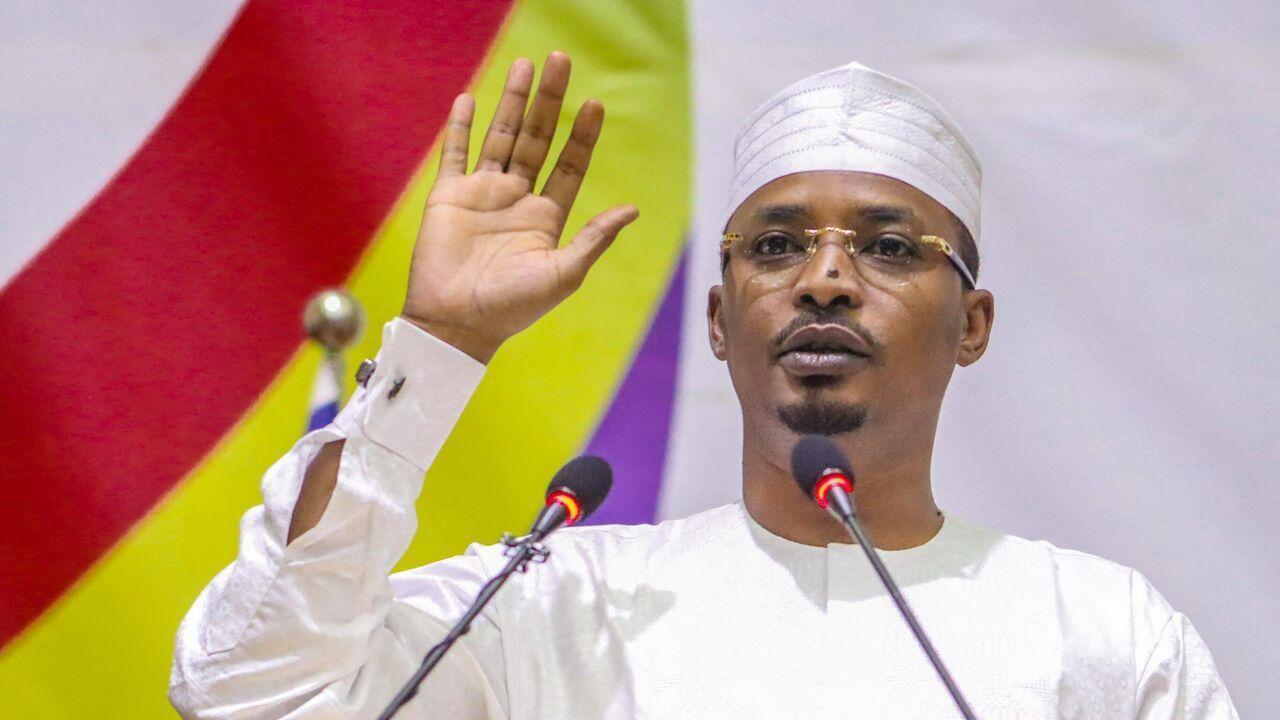
Africa-Press. The spokesperson for the Chadian government and Minister of Communication, Qasim Sharif Muhammad, stated that the issue of forming a national unity government or power-sharing is “not on the table at all” at this time, following the recent release of former Prime Minister and prominent opposition figure, Suksis Masra, under a presidential pardon.
Chadian President Mahamat Idriss Deby issued a pardon for Suksis Masra and eight other opposition members, a move that authorities said is part of efforts to ease political tensions and open the door for reconciliation and peace in the country.
Qasim Sharif Muhammad explained that the authorities welcome the decision of the pardon, considering it reflects the President’s desire to “de-escalate political tensions” and prepare the conditions for national reconciliation.
Regarding Suksis Masra’s proposal to form a national unity government, the government spokesperson stated that President Mahamat Idriss Deby confirmed, in a message sent on Sunday, August 16, his renewed confidence in the current government and Prime Minister Alamai Halina.
He added that the President’s agenda does not currently include any direction towards forming a national unity government or power-sharing, explaining that Deby was elected by the Chadian people based on a political program, and the government is required to implement this program over the next five years.
The Chadian official emphasized that Suksis Masra, as a Chadian citizen, enjoys his political and civil rights and can exercise these rights, but he also affirmed that this does not mean he has the authority to impose his political agenda or dictate the timing of government actions.
The government spokesperson rejected the characterization of Suksis Masra as the leader of the Chadian opposition, asserting that this description is no longer accurate. He clarified that Masra was Prime Minister before his imprisonment, while former Prime Minister Albert Pahimi Padacké currently holds the position of opposition leader and participates in the political dialogue that includes parties from both the opposition and the majority.
Qasim Sharif Muhammad questioned the basis on which Masra presents himself as a representative of the opposition or claims to monopolize its representation, pointing out that the opposition is represented in the National Assembly and the Senate through deputies and senators, as well as representatives in regional and municipal councils.
He considered the proposal for a national unity government under the current circumstances to be “unrealistic,” asserting that the authorities do not see that Masra has the political legitimacy to impose this option.
Regarding the next steps following the issuance of the pardon decisions, the spokesperson noted that there are political voices calling for a general amnesty, explaining that the presidential pardon differs from a general amnesty, as the pardon does not annul the criminal conviction nor erase the effects of the ruling.
He stated that the issue of issuing a general amnesty will be studied by the President, who will make a decision at the appropriate time. Qasim Sharif Muhammad confirmed that the government expects the opposition members who received the pardon to participate in the national reconciliation process and return to their political roles.
He added that the Chadian government is open to criticism and opposition, provided that the opposition is “constructive” and presents ideas that can contribute to the country’s progress. He also warned against political rhetoric characterized by insults, extremism, or regional and sectarian tendencies, asserting that such positions should change, in light of what he described as a nascent Chadian democracy working to strengthen its institutions.
He emphasized the need to be cautious of hate and divisive rhetoric, confirming that establishing political stability requires avoiding speeches that could increase divisions within society.
The government spokesperson also addressed Chad’s decision to withdraw from the International Criminal Court, which was announced at the end of July 2026.
He explained that the decision came after a review conducted by the government over several years regarding the effectiveness of the International Criminal Court for Chad and Africa in general.
He stated that the Chadian government believes the court treats African countries unfairly, noting that African leaders have, according to the government’s assessment, been at the forefront of cases that resulted in judgments against heads of state.
The Chadian official framed the decision within what he described as a growing sovereign trend in Chad and the Sahel region, alongside what he considered a response to new colonial influences.
He pointed out that this trend is not limited to Chad but is also present in several countries in the Sahel region, asserting that the rise of sovereignty and anti-new colonialism has become influential factors in the orientations of governments and societies in the region.
In response to a question about the mechanisms available to victims who wished to resort to the International Criminal Court, Qasim Sharif Muhammad confirmed that his country has an independent judicial system and that the government is working to enhance judicial independence.
He noted that the President of Chad no longer appoints the head of the highest judicial authority, considering that this reflects the independence of judicial institutions.
He also called for strengthening the role of judicial mechanisms affiliated with the African Union, specifically mentioning the African Court of Justice as a mechanism that can be developed to address the issues and challenges facing African countries and communities within the continent.