Africa-Press. Uganda has confirmed a case of the Ebola virus in a Congolese man who died in the Ugandan capital, Kampala, and was tested posthumously.
The Ugandan Ministry of Health stated that the man was admitted to a hospital in the capital three days before his death, while officials confirmed that the case was imported from outside the country and that Uganda has not recorded any local infections so far.
The ministry explained in a statement reported by a local source that samples taken from the patient were tested after his death on Friday, following the announcement of a new outbreak of the Ebola virus in the neighboring Democratic Republic of the Congo, confirming that he was infected with the virus.
The ministry added that all contacts of the infected man have been placed in quarantine, including a high-risk contact who is a relative of the deceased. The body of the deceased has been returned to the Democratic Republic of the Congo.
The Ugandan Ministry of Health described the case as “imported” from Congo, noting that Uganda “has not yet confirmed any local infections.”
In this context, the African Centre for Disease Control and Prevention called for urgent regional coordination following the outbreak of the Ebola virus in Ituri Province of the Democratic Republic of the Congo and the recording of a case in Uganda.
The centre clarified that urgent measures include activating an incident management support team, involving all partners, as a regional coordination mechanism, and adopting a 72-hour action plan covering the response of the Democratic Republic of the Congo and Uganda, along with supporting the readiness of South Sudan.
The measures also include deploying multidisciplinary support teams to assist the Democratic Republic of the Congo and Uganda in areas where the disease has been confirmed, alongside supporting the readiness of neighboring countries.
The centre indicated the establishment of a specific workstream for countermeasures to assess needs for diagnostics, personal protective equipment, treatments, vaccines, and cold chain requirements, pending the final results of genetic sequencing operations.
The centre tasked a team for science, innovation, and research and development to follow up on genetic sequencing work, review evidence, product options, research protocols, and coordinate with partners.
A regional coordination meeting for partners is scheduled for May 16 at 3 PM Geneva time, involving the Democratic Republic of the Congo, Uganda, South Sudan, the World Health Organization, the African Medicines Agency, and technical and financial partners.
A press briefing is also set for the same evening at 6 PM Geneva time to inform the media about the developments of the outbreak.
The centre noted the escalation of political engagement through the president as the African Union champion for pandemic prevention, preparedness, and response, alongside the chairperson of the African Union Commission and the Union’s office, to ensure high-level support for facilitating access and coordination.
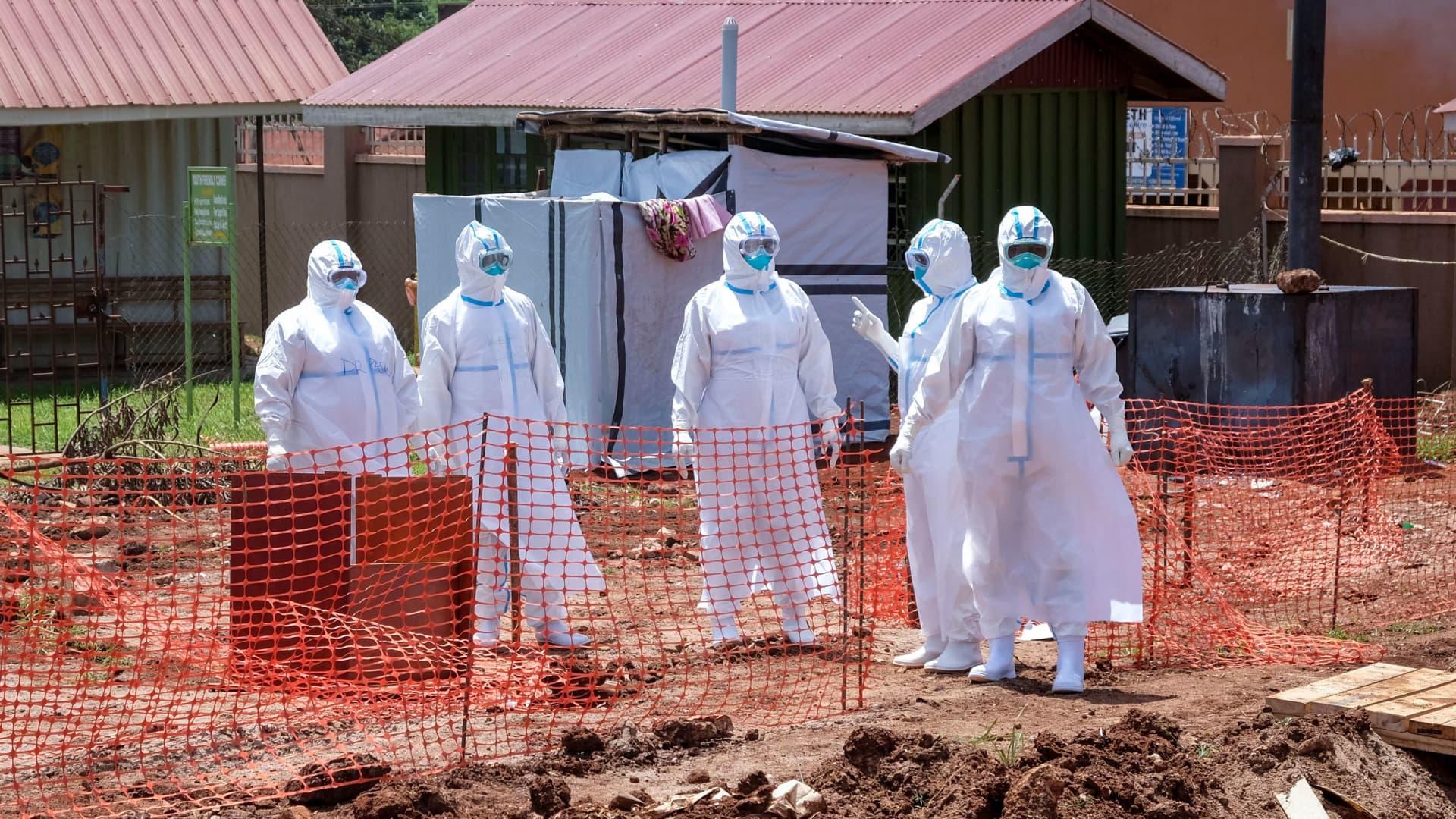
The African Centre for Disease Control and Prevention urged local communities in affected and at-risk areas to follow the guidance of national health authorities, report symptoms immediately, avoid direct physical contact with suspected cases, refrain from touching bodily fluids or contaminated materials, maintain hand hygiene, and support response teams working to protect communities.
Health facilities and health workers were also urged to maintain a high level of suspicion, implement infection prevention and control measures, and report suspected cases immediately through approved national channels.
The centre confirmed that the Ebola virus disease is serious and often fatal, transmitted through direct contact with the bodily fluids of infected individuals, contaminated materials, or the bodies of those who have died from the disease.
It explained that early detection, rapid isolation, healthcare, contact tracing, infection prevention and control measures, community engagement, and safe and dignified burials are essential elements to stop the transmission of the virus.
The African Centre for Disease Control and Prevention stated that it will continue to provide updates as more information becomes available, including genetic sequencing results, updates from national health authorities, and outcomes from the regional coordination meeting.
African health authorities announced a new outbreak of the Ebola virus in eastern Democratic Republic of the Congo on Friday, prompting relevant parties to raise the level of regional preparedness amid growing concerns about the transmission of the virus to neighboring countries in a region experiencing armed conflicts and high population mobility among mining workers.
The African Centres for Disease Control and Prevention, part of the African Union, stated in a statement that about 246 suspected cases and 65 deaths have been recorded so far, most of them in the mining areas of Mongwalu and Ruambura, located about 100 kilometers north of Bunia, the capital of Ituri Province in eastern Democratic Republic of the Congo.
The agency added that four deaths have been recorded among confirmed laboratory cases, while preliminary analyses conducted by the National Institute for Biomedical Research in Kinshasa found the virus in 13 out of 20 samples tested.
Health officials indicated that genetic sequencing of the virus is still ongoing, but initial indicators suggest that the current strain does not belong to the Zaire variant, which caused previous widespread outbreaks in the country.
Additional suspected cases have also been reported in Bunia, a densely populated urban center near the borders with Uganda and South Sudan, raising the likelihood of regional cross-border transmission.
Ebola is one of the deadliest viral diseases, transmitted through direct contact with the bodily fluids of infected individuals or contaminated materials. Symptoms typically begin with fever, fatigue, and muscle pain, before developing in some cases into vomiting, diarrhea, and internal bleeding.
Infected individuals do not become contagious until symptoms appear, following an incubation period ranging from two to 21 days.
The Ebola virus was first discovered in 1976 near the Ebola River in what is now the Democratic Republic of the Congo, with the first outbreaks recorded in remote villages in Central Africa near tropical rainforests.
Ebola is considered a severe viral disease and often fatal in humans, transmitted to humans from wild animals such as fruit bats, and then spreading among humans through direct contact with the blood, secretions, organs, or other bodily fluids of infected individuals, as well as through surfaces and materials contaminated with these fluids.
Symptoms include fever, fatigue, headache, muscle pain, sore throat, vomiting, and diarrhea, with severe cases potentially leading to bleeding, multiple organ failure, and death.
The average fatality rate for Ebola is around 50%, but this rate has varied in previous outbreaks between 25% and 90%, according to World Health Organization data.
Over the past five decades, Ebola has caused an estimated 50,000 deaths across various parts of Africa, while health authorities currently face a new challenge in containing the latest outbreak and preventing it from escalating into a widespread regional crisis.
The World Health Organization emphasizes that engaging local communities is a critical factor for the success of any containment efforts, alongside providing clinical care, enhancing surveillance systems and laboratory services, implementing infection prevention and control measures in health facilities, ensuring safe and dignified burials, and using vaccines when possible, in addition to social mobilization campaigns.