Africa-Press. Ethiopia is holding parliamentary and regional elections on Monday, and analysts expect Prime Minister Abiy Ahmed’s party to achieve a landslide victory, despite significant unrest across much of the country.
More than 50 million Ethiopians have registered to participate in the elections, but voting will not take place in the northern Tigray region, which the electoral commission attributed to “unfavorable conditions” following the civil war that occurred between 2020 and 2022 and ongoing political unrest.
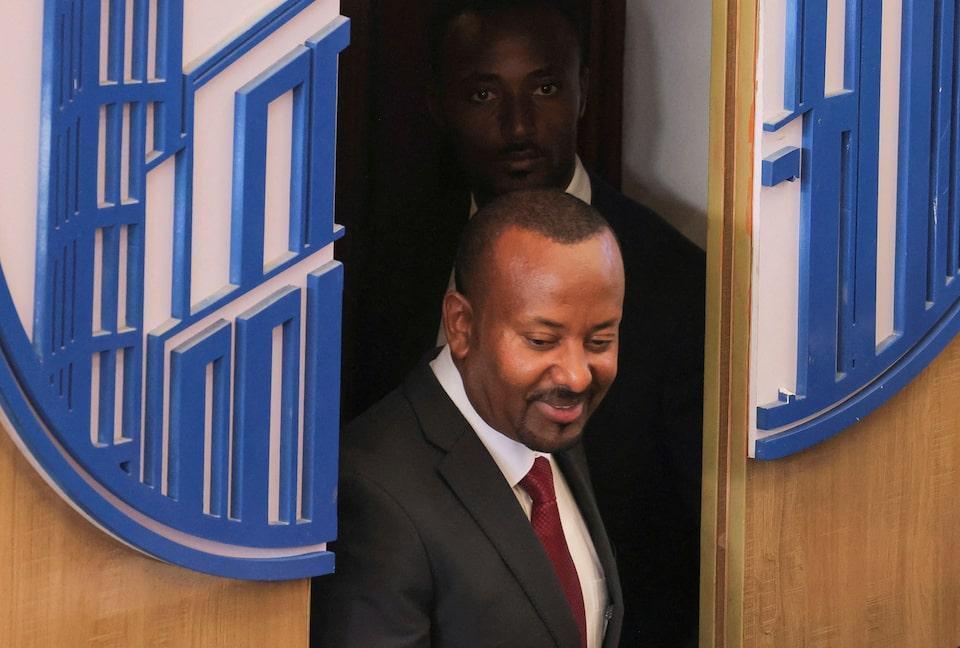
Abiy, 49, is seeking to strengthen his grip on national politics. He was appointed prime minister in 2018 following massive protests against the long-ruling Ethiopian People’s Revolutionary Democratic Front coalition, and his newly formed party, the Prosperity Party, won 410 out of 484 seats in parliament in the 2021 elections.
Prosperity Party candidates have focused their election campaigns on the government’s economic achievements, citing improvements in food security and economic growth in the second most populous country in Africa, which officials expect to exceed 10% by 2026, one of the fastest growth rates on the continent. Those under 18 make up nearly half of Ethiopia’s population of 135 million.
Abiy Ahmed faces rebellions in the country’s two largest regions, linked to grievances from various ethnic groups regarding what they claim is marginalization within the Ethiopian federal system.
In his home region of Oromia, located in the south, clashes between government forces and the separatist Oromo Liberation Army have resulted in hundreds of deaths over the past few years.
In the neighboring Amhara region, a militia known as “Fano” has taken control of vast areas of rural land since 2023. As a result, elections will not be held in at least eight electoral districts out of 138 in Amhara.
Although the 2022 peace agreement ended the civil war in Tigray, which researchers say caused the deaths of hundreds of thousands, a move by the main political party there to reassert control over the region’s political administration has led Ethiopian officials and analysts to warn of the risk of new unrest.
Nevertheless, the Prosperity Party is expected to dominate the elections amid a fragmented opposition weakened by internal conflicts. Results are expected to be announced by June 11.
Opposition parties accuse the federal government of undermining them by arresting their leaders and imposing legal obstacles on their political activities, allegations that the government denies.
Since taking office in 2018, Abiy Ahmed has embarked on liberalizing Ethiopia’s tightly controlled economy, releasing journalists, activists, and other political prisoners. He was awarded the Nobel Peace Prize in 2019 for ending hostilities with neighboring Eritrea.
His opponents and human rights activists accuse his government of undermining these gains in recent years by arresting journalists, closing civil society organizations, and overseeing military campaigns marked by atrocities.
The government has denied committing systematic human rights violations, stating that its actions are necessary to protect national security. Following a rapprochement with Eritrea, hostilities have renewed in recent years, partly due to Abiy’s repeated statements that landlocked Ethiopia has the right to access the sea.
Eritrea, which gained independence from Ethiopia in 1993, views these statements as an implicit threat of military aggression. Abiy Ahmed has stated that while access to the sea is an existential issue for Ethiopia, he intends to pursue it through dialogue.