What You Need to Know
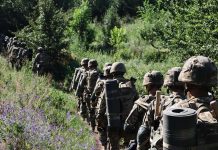
The Fano Movement has issued a statement denying reports of a peace agreement with the Ethiopian government or the Amhara regional government. The group emphasized that their interactions are limited to field operations, with no direct or indirect negotiations. They called on the African Union and regional bodies to clarify the recent claims surrounding these allegations.
Africa. The Fano Movement has issued a statement denying reports that it signed any peace agreement with the Ethiopian government or the Amhara regional government. The statement, released by two factions of the Fano Amhara Popular Movement on December 4, 2025, emphasized that these claims are unfounded and that their dealings with these parties are limited to field operations only, without any direct or indirect negotiations.
The movement called on the African Union, IGAD, and relevant regional bodies to issue an official statement clarifying the facts surrounding the recent allegations.
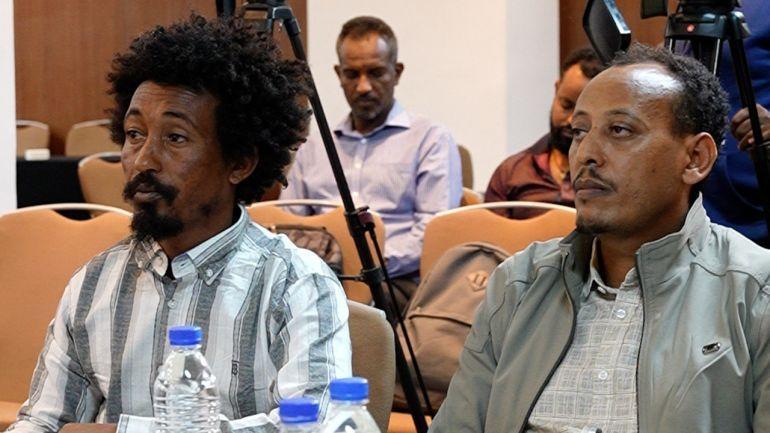
Ethiopian activist and Fano militia leader, Eskinder Nega, stated in a voice message broadcast on social media, “I want to inform all Ethiopians and the international community that the claim of a permanent peace agreement between the Fano organization and the Amhara regional government, in the presence of representatives from the African Union and IGAD, is completely false.”
According to Eskinder Nega, the individual who claimed to have signed the agreement on behalf of Fano, Captain Masresha Tesfaye, is a former official who was publicly dismissed from his position and expelled from Fano earlier in the week for betraying the organization’s objectives.
Earlier, the African Union welcomed what it termed a significant step towards lasting peace in Ethiopia with the signing of a sustainable peace agreement between the Amhara regional government and the Amhara Fano Popular Organization (FANO-AFPO).
The signing ceremony, held in Addis Ababa, was attended by Salma Melika Hadadi, Deputy Chairperson of the African Union Commission, who represented the continental body, and Mr. Mohamed Abdi Wari, Deputy Executive Secretary of IGAD.
In her remarks during the event, Deputy Chairperson Salma Hadadi praised the parties for their commitment to dialogue and peaceful resolution, asserting that this agreement represents a significant achievement not only for Ethiopia but for the entire African continent.
Salma Melika Hadadi stated, “Every peace agreement brings us one step closer to achieving our goal of silencing the guns in Africa.” She added, “On behalf of the African Union, I congratulate the parties on achieving this important milestone. This achievement demonstrates the power of African-led solutions to address African challenges,” and the African Union reaffirms its steadfast commitment to supporting the implementation of this agreement and broader peace in Ethiopia.
The term “Fano” emerged in 2016 during youth protests in the Amhara region and played a prominent role in the political changes that ousted the Tigray People’s Liberation Front in 2017.
As conflicts escalated, military factions of Fano began to form in 2019, gaining influence during the Tigray War with official logistical support, raising concerns for both the federal and regional governments.
After the signing of the Pretoria Agreement and the end of the Tigray War, the Ethiopian government announced in 2023 its decision to integrate all irregular forces under a centralized command, a move that Fano unanimously rejected. Despite its military presence, Fano lacks unified leadership or a broad coalition, and its relationship with both the regional and federal governments remains tense.
The Amhara region is characterized by its sensitive geographical position, bordering Eritrea and Sudan, as well as the Tigray, Afar, Oromia, and Benishangul regions, placing it at the heart of Ethiopia’s complex balances.
The Fano Movement emerged in 2016 amid youth protests in the Amhara region, playing a significant role in the political changes that led to the ousting of the Tigray People’s Liberation Front in 2017. As conflicts escalated, military factions of Fano began to form in 2019, gaining influence during the Tigray War with official logistical support, raising concerns for both federal and regional governments.