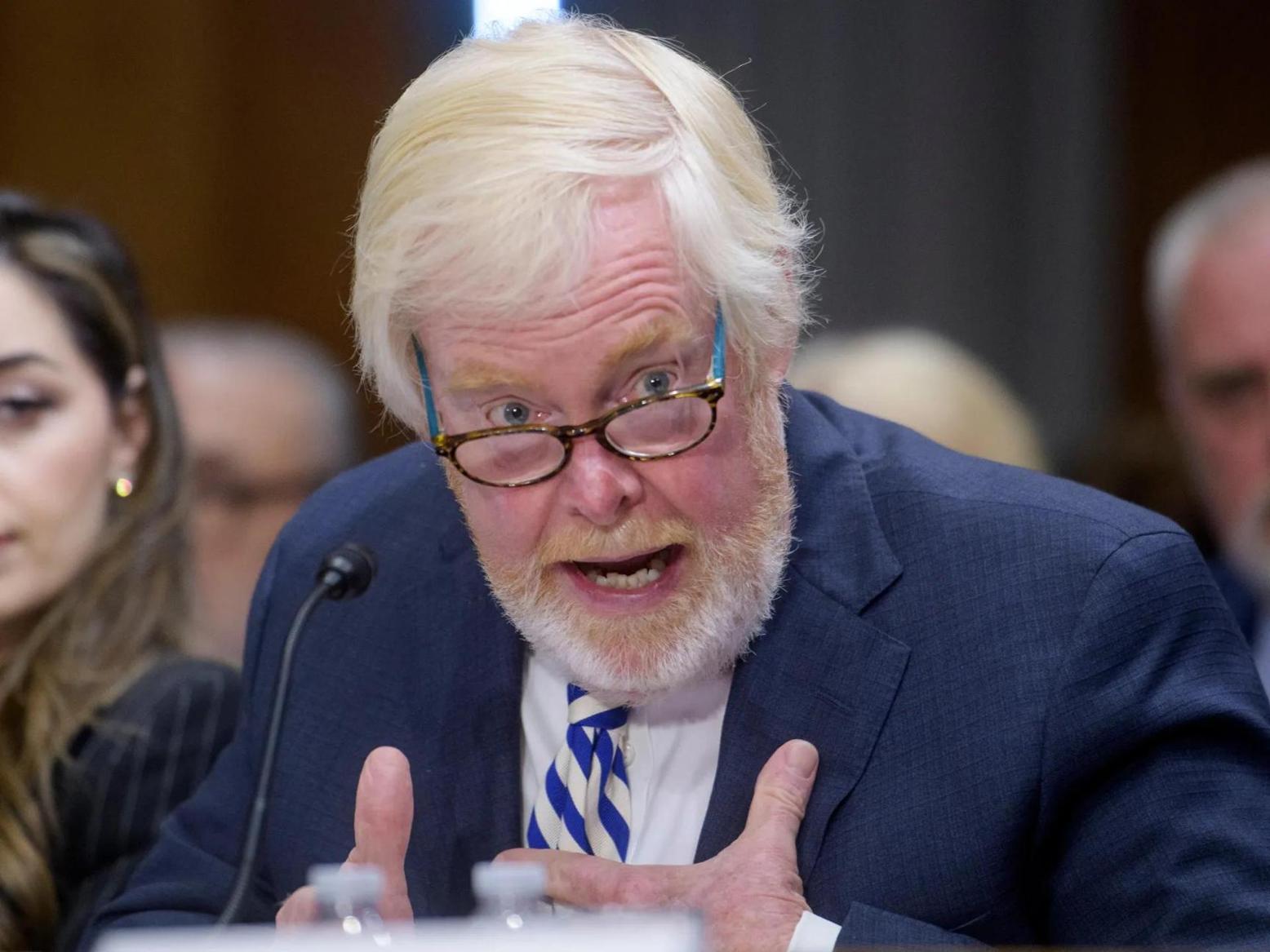
Africa-Press. Statements by the U.S. ambassador to South Africa, Leo Brent Bozel III, have reignited diplomatic tensions between Pretoria and Washington. He criticized South Africa’s so-called policy of “non-alignment” on the platform X, arguing that it is, in reality, a political “choice.” The Department of International Relations and Cooperation responded by reaffirming the independence of its foreign policy.
Bozel wrote that “the South African government rolls out the red carpet for the Iranian Deputy Foreign Minister, while the Deputy President Mashatile in Beijing deepens relations with China. Pretoria calls this non-alignment, and we call it what it is: a choice.” He added that “the South African people deserve an honest discussion about which side their government chooses to stand with.” In another post, he stated that “South Africa cannot claim the mantle of non-alignment while it is effectively courting America’s adversaries.”
These posts coincided with a working visit by Deputy President Paul Mashatile to Beijing, where he delivered a speech at the China International Supply Chain Expo on June 22, reaffirming his country’s commitment to a comprehensive strategic partnership with China. He also met with Chinese Vice President Han Zheng. Simultaneously, Deputy Minister of International Relations Tandi Moraka met with Iranian Deputy Foreign Minister Saeed Khatibzadeh in Pretoria.
A spokesperson for the Department of International Relations and Cooperation, Crispin Vermeulen, stated that the department took note of Bozel’s posts, adding that “the South African government does not engage in public disputes with resident ambassadors, but these statements warrant a clear reaffirmation of our guiding principles.” He clarified that the country “pursues an independent foreign policy rooted in the principle of non-alignment,” emphasizing that “non-alignment should not be confused with neutrality; we refuse to be drawn into geopolitical rivalries or be pressured to align with one side.”
Vermeulen pointed out that the country “retains the right to build bilateral relations with various international parties,” highlighting the “inconsistency in facing public scrutiny for engaging with Iran and China, the same countries that the United States itself continues to engage with.” He added that the country is committed to using established diplomatic channels.
Context of the Disputes
Bozel’s remarks come months after a warning from President Cyril Ramaphosa in April during the presentation of credentials in Pretoria to Bozel and 19 other ambassadors, urging them to rely on “calm and constructive diplomacy” and to avoid publicly criticizing the host country in a confrontational manner. The appointed ambassador had previously received a note of protest from the department for downplaying a South African court ruling.
Relations between the two countries deteriorated after Donald Trump’s second term began, as he accused Pretoria of allowing a “genocide of whites” based on farm killings, a claim South Africa rejected. Trump also boycotted the G20 summit hosted by South Africa in 2025, and Washington pressured France to withdraw Ramaphosa’s invitation to the G7 summit. Additionally, Washington expelled South African ambassador Ibrahim Rasool, declaring him persona non grata in March 2025.
In a related matter, the U.S. administration recently proposed a 12.5% tariff on South African exports due to rules related to “forced labor,” while the Senate is threatening to review the country’s privileges under the African Growth and Opportunity Act (AGOA). South Africa’s Minister of International Relations, Ronald Lamola, views non-alignment as “strategic independence” rather than an anti-West stance.