What You Need to Know
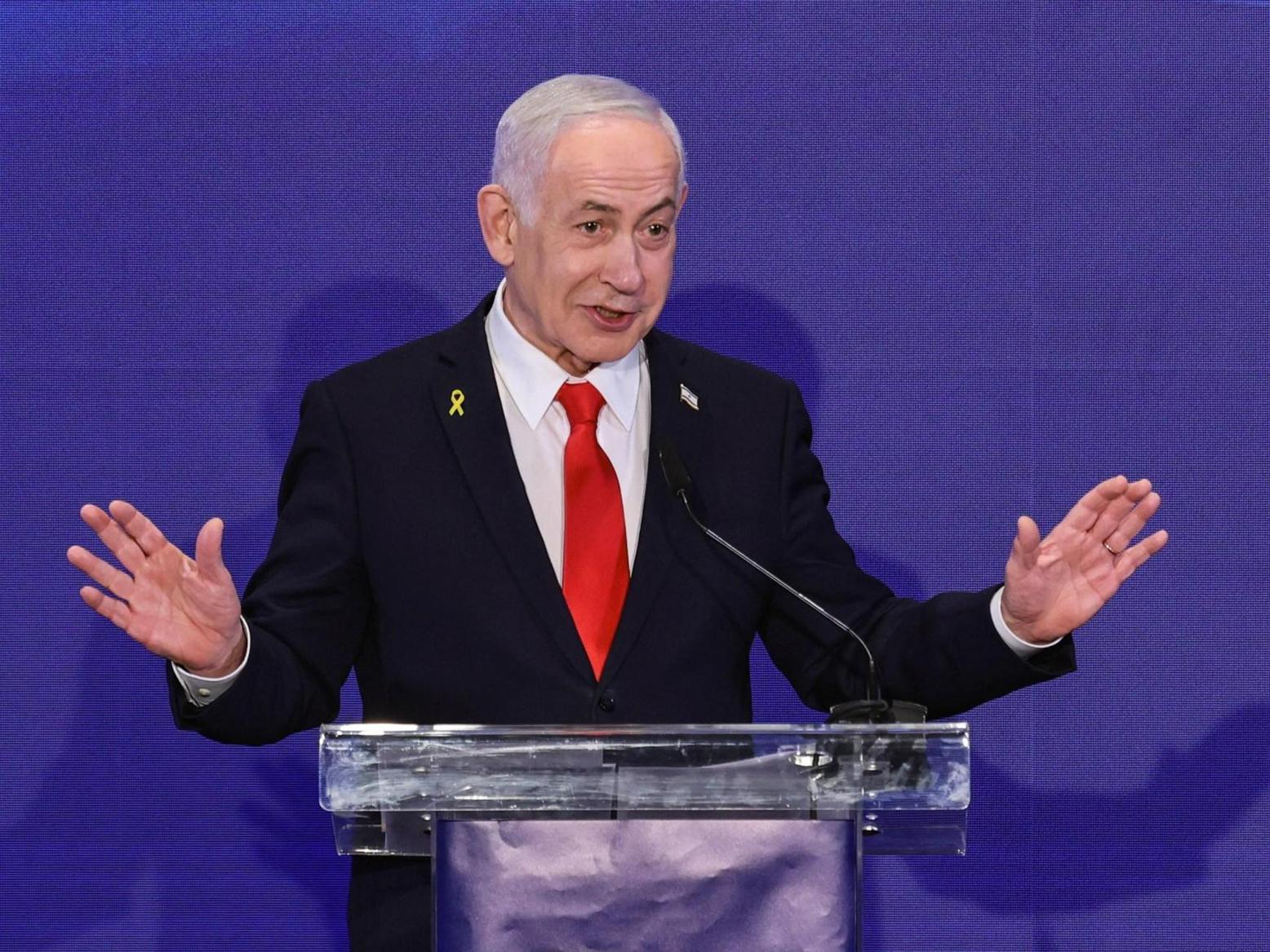
Israeli Prime Minister Benjamin Netanyahu announced the official recognition of Somaliland as an independent state, prompting swift condemnation from Egypt, Saudi Arabia, and other nations. The recognition aligns with the Abraham Accords and aims to enhance cooperation in various sectors. The move has been met with significant backlash, highlighting ongoing tensions in the region.
Africa. Israeli Prime Minister Benjamin Netanyahu announced on Friday the official recognition of Somaliland as an independent and sovereign state, prompting swift condemnation from Egypt, Saudi Arabia, the Gulf Cooperation Council, Turkey, and the African Union.
Netanyahu’s office clarified that the announcement was made through a joint signing between Netanyahu, Foreign Minister Gidon Sa’ar, and Somaliland President Abdirahman Mohamed Abdullahi, in line with the Abraham Accords initiated by former U.S. President Donald Trump.
The Israeli office indicated that Israel would immediately work to expand its relations with Somaliland through cooperation in agriculture, health, technology, and the economy.
In turn, Israeli Foreign Minister Gidon Sa’ar stated that he spoke with the President of Somaliland, confirming the signing of “mutual recognition and the establishment of full diplomatic relations,” which includes appointing ambassadors and opening embassies in both countries. He emphasized that he directed his ministry to work immediately on “institutionalizing relations in various fields.”
The Somaliland regional government welcomed Israel’s recognition of Somaliland as a sovereign state, considering it an important step toward enhancing its international legitimacy.
The regional government stated in a press release that the recognition would pave the way for diplomatic relations with Israel, expressing its desire to join the Abraham Accords to promote peace and stability in the Middle East and Africa.
Arab and International Condemnation
The Israeli announcement sparked widespread rejection, with Egypt quickly condemning the move.
The Egyptian Foreign Ministry, in a statement following phone calls from Foreign Minister Badr Abdel Atti with his Somali, Djiboutian, and Turkish counterparts, stated that recognizing “the independence of parts of the territories of states” constitutes “a dangerous precedent and a threat to international peace and security and the established principles of international law and the United Nations Charter.”
The statement emphasized that the foreign ministers of the four countries affirmed “full support for the unity, sovereignty, and territorial integrity of Somalia, and complete rejection of any unilateral actions that could undermine Somali sovereignty or compromise the foundations of stability in the country.”
Saudi Arabia also viewed the move as a consolidation of separatist unilateral actions, reaffirming its commitment to Somali unity and sovereignty.
The Saudi Foreign Ministry expressed in a statement its “full support for the sovereignty of the sister Federal Republic of Somalia and the unity and territorial integrity of its lands.”
The Palestinian Foreign Ministry regarded the Israeli announcement as a threat to regional and Arab security.
In a statement, the ministry expressed its full support for the unity, sovereignty, and political independence of Somalia, ensuring the Somali people their right to live in dignity, security, and stability, in accordance with international law and the decisions of Arab and international consensus and the Organization of Islamic Cooperation.
For his part, the Secretary-General of the Arab League, Ahmed Aboul Gheit, deemed Israel’s recognition of Somaliland a provocative and unacceptable step, constituting a blatant violation of the principle of territorial integrity and state sovereignty.
The Gulf Cooperation Council also rejected Israel’s recognition of Somaliland’s independence, considering it a serious violation of international law and a blatant infringement on Somalia’s sovereignty.
This was stated in a statement by the Secretary-General of the Council, Jassem Al-Budaiwi, who expressed his strong condemnation and denunciation of the Israeli occupation forces’ announcement recognizing what is called Somaliland.
In Ankara, Turkey condemned Israel’s recognition of the separatist Republic of Somaliland, viewing this step as “a blatant interference in Somalia’s internal affairs.”
The Turkish Foreign Ministry stated in a statement that “this step by Israel, which continues its expansionist policy and does everything in its power to prevent the recognition of a Palestinian state, constitutes a blatant interference in Somalia’s internal affairs.”
The African Union Commission also rejected any move aimed at recognizing Somaliland as an independent entity, affirming its commitment to the unity and sovereignty of Somalia.
Commission President Moussa Faki Mahamat called in a statement for respect for African borders, stating, “Any attempt to undermine the unity and sovereignty of Somalia and the integrity of its territories… threatens to set a dangerous precedent with far-reaching implications for peace and stability across the continent.”
Somaliland and Gaza
The Associated Press reported in March that the United States and Israel offered officials in three African countries the resettlement of Palestinians from Gaza on their territories.
The agency mentioned that communication occurred with officials from Sudan, Somalia, and the separatist Somaliland regarding the proposal.
Sudanese officials stated they rejected the American proposal, while officials from Somalia and Somaliland indicated they were unaware of any communications in this regard.
Additionally, the Israeli newspaper Haaretz reported that the Israeli government “expressed interest in using Somaliland’s territory to attack the Houthis in Yemen, given the geographical proximity between them.”
An Israeli source, according to the newspaper, confirmed that recognizing Somaliland is not a provocative step but rather an “acknowledgment of an existing reality.”
The source added: “Somaliland has effectively operated as a state entity for over 30 years, characterized by civil governance, elected institutions, relative security, and peaceful power transitions.”
The source cited by Haaretz did not address the timing of the recognition or the potential connection to Netanyahu’s upcoming visit to the United States next week.
Somaliland is located in the northwestern tip of Somalia, covering an area of 175,000 square kilometers. It declared unilateral independence from Somalia in 1991 but has not received recognition from the international community.
Somaliland declared independence from Somalia in 1991 but has not received international recognition. The region has maintained a relatively stable government compared to the rest of Somalia, which has faced ongoing conflict and instability. Israel’s recent recognition of Somaliland marks a significant shift in diplomatic relations, potentially influencing the geopolitical landscape in the Horn of Africa and beyond.