Africa-Press. The White House no longer views Africa as a partner in democratic transition or as a space for human development. Under President Donald Trump’s administration, the continent has instead become a “resource warehouse” and a stage for crude commercial bartering, according to a report published by the Swiss daily Le Temps.
The report — written by Catherine Moran, the newspaper’s correspondent in Abidjan, Côte d’Ivoire’s economic capital — paints a bleak picture of the future of U.S.–Africa relations in 2026. Washington’s “soft power” is in decline, leaving ample room for Chinese and Russian expansion, she says.
The author explains that Trump shows little interest in the African continent, a fact reflected in his deep ignorance of its countries. During his first term, he described African nations as “shithole countries,” a phrase that remains etched in collective memory, according to Moran.
A mining-driven policy
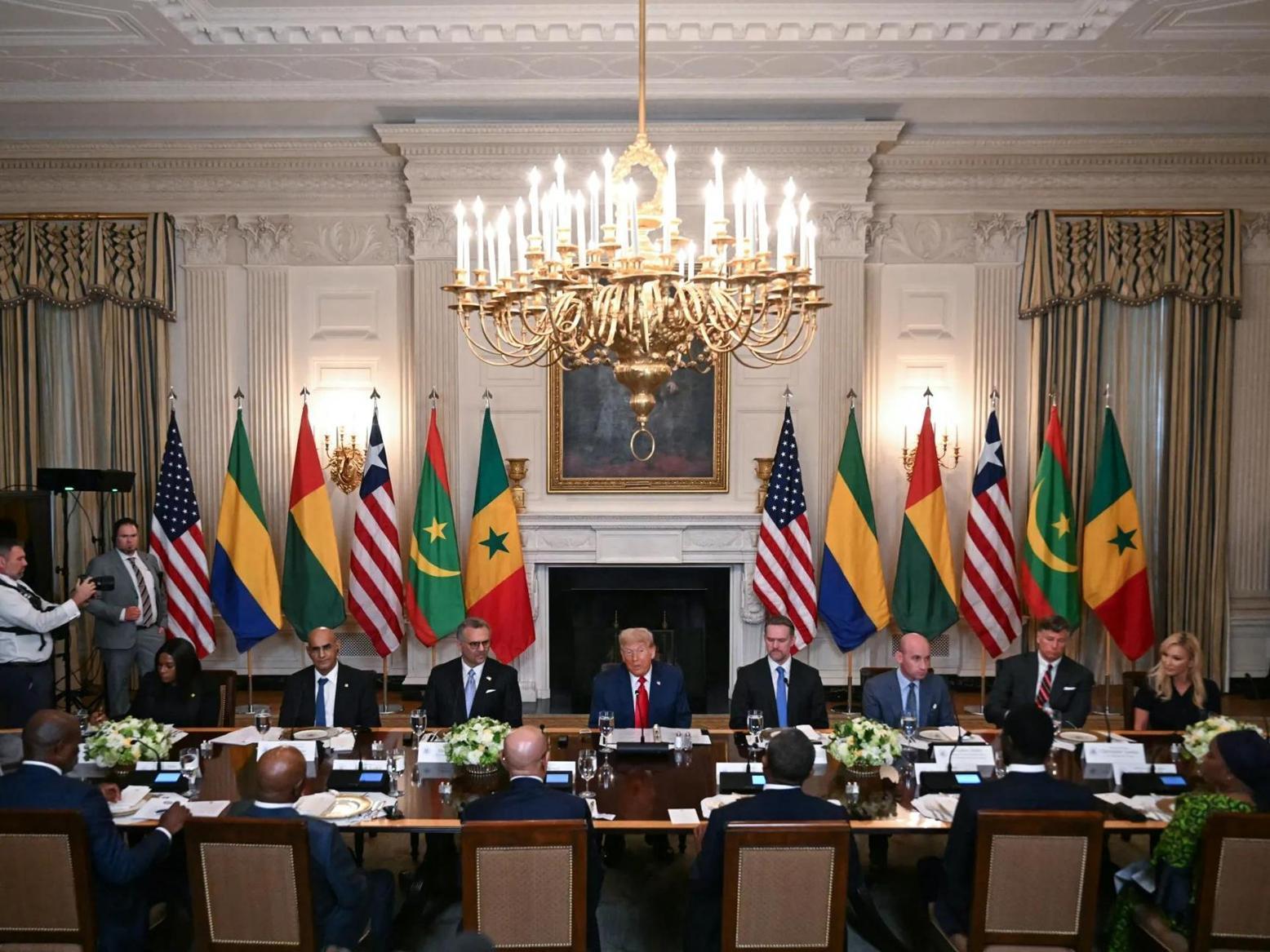
Since returning to power, Trump has shown no interest in visiting African countries he once disparaged, and has yet to set foot on the continent. Instead, he summons African leaders to Washington based on the “underground wealth” of their countries.
The driving objective of the current administration is to secure strategic minerals essential for advanced technology industries in order to counter the “Chinese dragon.” In this context, Washington’s mediation efforts between Rwanda and the Democratic Republic of the Congo are not motivated by concern for civilian lives, but by ensuring U.S. companies’ access to copper and cobalt mines. Gilles Yabi, founder and director of the Dakar-based think tank WATHI, warned that Trump “believes only in the law of the strongest and cares solely about narrow, short-term U.S. interests.”
Humiliating allies
“Hardline diplomacy” was on full display with South Africa, when Trump accused Pretoria of committing “genocide against the white minority,” a claim analysts viewed as retaliatory punishment for South Africa’s legal case against Israel before the International Court of Justice.
This tension prompted South Africa to announce a temporary withdrawal from the G20 during the U.S. presidency, a move described as courageous by academic Kofi Kwako, who said that “Trump does not see Africans as respectable partners, but humiliates leaders to force them into submission.”
Nigeria was not spared either. Trump invoked the “persecution of Christians” to justify drone strikes in areas with no clear terrorist activity, a move widely interpreted as a show of force aimed at appeasing his evangelical base.
A gift to Beijing and Moscow
Within a single year, the Trump administration dealt severe blows to multilateral engagement in Africa through:
– Ending aid: the permanent shutdown of the U.S. Agency for International Development (USAID), which had been a lifeline for millions of Africans since 1961.
– Diplomatic isolation: in a “phone call” on Christmas Eve, 15 U.S. ambassadors to African countries were dismissed, leaving embassies without replacements.
– Trade war: Trump halted the African Growth and Opportunity Act (AGOA), which had granted African countries tariff-free access, replacing it with “fantastical” tariffs of up to 30% on South Africa.
This American retreat triggered a mass African pivot eastward. China swiftly eliminated tariffs on nearly all African countries, while Russian, Turkish, and Saudi influence expanded into the vacuum left by Washington.
Worse to come?
Observers believe the world is entering a troubling phase of “democratic backsliding.” Having a leader in the White House who breaks international rules emboldens authoritarian regimes in Africa to further repress their populations. With tighter visa restrictions imposed on 25 African countries, Washington appears to be building a wall — not only against migrants, but against an entire continent that was once a strategic ally.
In the end, one question remains: does Washington realize that trading values for minerals may secure copper and cobalt today, but cost it Africa forever in favor of its global rivals?