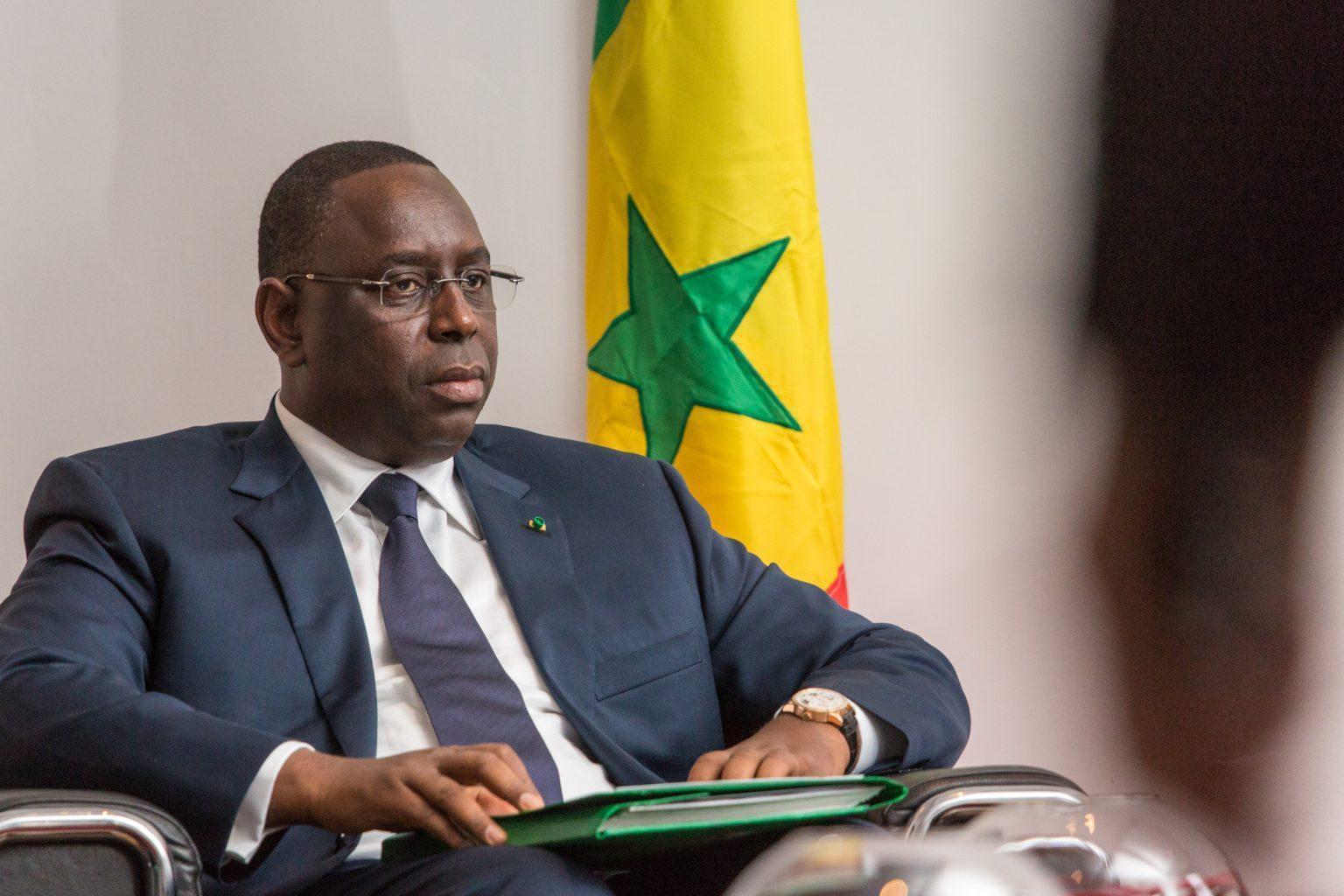
Africa-Press. Former Senegalese President Macky Sall returned to his country on Friday for the first time since leaving office in April 2024, in a visit related to his campaign for the upcoming position of Secretary-General of the United Nations.
Sall is scheduled to meet with his successor, President Bassey Doumay Faye, before departing the capital Dakar immediately after the meeting.
Sall explained in a post on the platform “X” earlier this week that the visit comes “as part of the consultations and visits” he is conducting in light of his candidacy for the position of UN Secretary-General, expressing hope to return to Dakar again to meet with activists and his supporters.
Sall, who served as President of Senegal from 2012 to 2024 and currently resides in Morocco, is seeking official support from the Senegalese government for his candidacy to succeed the current UN Secretary-General António Guterres.
Sall remains a divisive figure within Senegal, following his unsuccessful attempt to postpone the 2024 presidential elections, a move that sparked violent protests before being overturned by the Constitutional Council.
The Senegalese Court of Auditors has reported that Sall’s government provided inaccurate data regarding key economic indicators, including public debt and fiscal deficit, leading to discrepancies that prompted the International Monetary Fund to suspend its funding programs for the country. Sall denies any wrongdoing.
Associations representing the families of victims of the opposition protests that occurred during Sall’s rule expressed their anger at his meeting with President Bassey Doumay Faye, urging the latter to fulfill his promise to achieve justice.
The previous government had passed a general amnesty law in the final weeks of Sall’s term, preventing the prosecution of security forces and protesters for crimes committed during the violent protests between 2021 and 2024, before Parliament last year approved a partial lifting of the amnesty for the most serious crimes.
The Director of Amnesty International in Senegal, Sidi Gassama, stated that Sall’s human rights record should disqualify him from competing for the highest position at the United Nations.
He noted in statements to Radio France Internationale that more than 67 people were killed, saying, “Senegal has not witnessed in its history, even during the era of the first President Léopold Sédar Senghor in the 1960s, such a level of repression. No one should support someone with this disastrous record.”
For his part, Boubacar Sy, head of a group representing “Victims of Sall’s Regime,” expressed shock at Sall’s reception as if nothing had happened.
He added, “Memory cannot be sacrificed at the altar of diplomacy; families are still mourning their loved ones, the injured still bear the scars of repression, and the arbitrarily detained have not received any redress.”
Sall is currently one of five candidates for the position of UN Secretary-General, alongside former Vice President of Costa Rica Rebeca Greenspan, former Chilean President Michelle Bachelet, Argentine diplomat Rafael Grossi, and Ecuadorian diplomat María Fernanda Espinosa.
The United Nations is set to select its tenth Secretary-General this year for a five-year term starting on January 1, 2027.
If elected, Sall would become the third African Secretary-General of the United Nations after Egyptian Boutros Boutros-Ghali and Ghanaian Kofi Annan.
Burundi, which currently holds the presidency of the African Union, has nominated Macky Sall for this position, but he has yet to secure support from his country or endorsement from the African bloc.
In March, around 20 member states of the African Union, including Senegal, refrained from supporting his candidacy.