Africa-Press. The Malian army announced the neutralization of over 200 terrorists and the recovery of important military equipment in response to more than twenty attacks that occurred across the country.
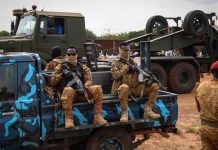
The Chief of Staff of the Malian army, General Oumar Diarra, speaking on public television, stated that the response of the armed forces was “appropriate and proportional,” through operations carried out in almost all targeted locations.
He noted that armed groups are now using military uniforms to infiltrate among civilians and obtain supplies near cities and villages.
The Chief of Staff stated that the comprehensive strategy involves strengthening defensive positions, both in affected and unaffected areas, while maintaining significant operational flexibility. He explained that the main objective of the armed groups is to destabilize the country by exerting continuous pressure on local communities and supply routes.
General Diarra urged the population to remain “calm and vigilant” and to allow the defense and security forces to carry out their mission. He said, “We ask the population to remain calm, not to be swayed by rumors or misleading information, and to rely only on official statements issued by the general staff,” also calling for reporting any suspicious movements to the authorities.
On the international front, France urged its citizens to leave Mali “as soon as possible” following a series of coordinated attacks carried out by separatist fighters and armed groups over the weekend.
France warned its citizens against traveling to Mali, describing the situation as “highly volatile.” The French Ministry of Foreign Affairs, the former colonial power in Mali, stated: “We advise French citizens to make necessary arrangements to temporarily leave Mali at the earliest possible time on available commercial flights.”
The ministry added that while awaiting their departure, they should stay at home, limit their movements, and follow local authorities’ instructions, while keeping their families informed of any updates. It continued: “Travel to Mali remains strongly discouraged, regardless of the reason.”
The United Kingdom also advised against traveling to Mali altogether due to the unstable security situation and requested its citizens to leave. Travel guidance, effective since the weekend, urged British citizens in Mali to “leave immediately on a commercial flight if they deem it safe.”
They were also warned against traveling overland to neighboring countries, considering it “extremely dangerous” due to what was described as “terrorist attacks along national highways.”
The British Foreign Office stated: “If you choose to remain in Mali, you do so at your own risk. You should have a personal emergency plan that does not rely on the British government.”
The U.S. embassy in Mali stated that it continues to “monitor the situation closely” and advised citizens to “stay at home, remain vigilant… and avoid areas that may experience security operations.”
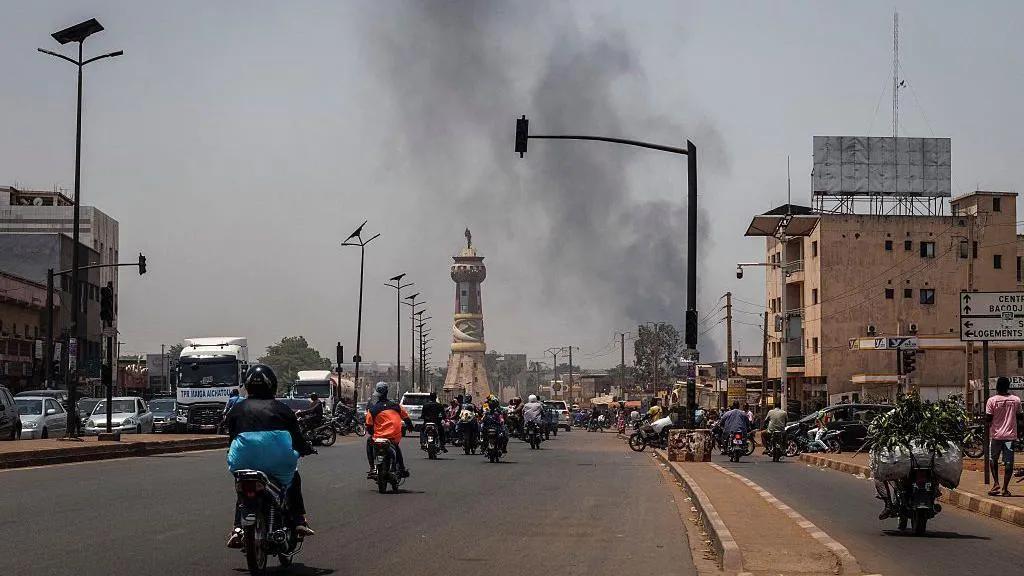
On Saturday, reports emerged of clashes in Bamako and Kati, which houses a major military base outside the capital, as well as in Gao and Kidal to the north, and the cities of Sévaré and Mopti in the center of the country. Reports indicated that clashes continued into Sunday in Kidal and Kati.
Reports suggest that the Azawad Liberation Front, which seeks to establish a separate Tuareg ethnic state, primarily focused its attacks on northern cities, while the Support Group for Islam and Muslims launched simultaneous attacks on multiple sites across the country.
The leader of the Malian army, General Assimi Goïta, stated that the security situation in the country is under control. In his first public appearance on Tuesday evening, he said that the army dealt a “heavy blow” to the attackers and indicated that operations are still ongoing.