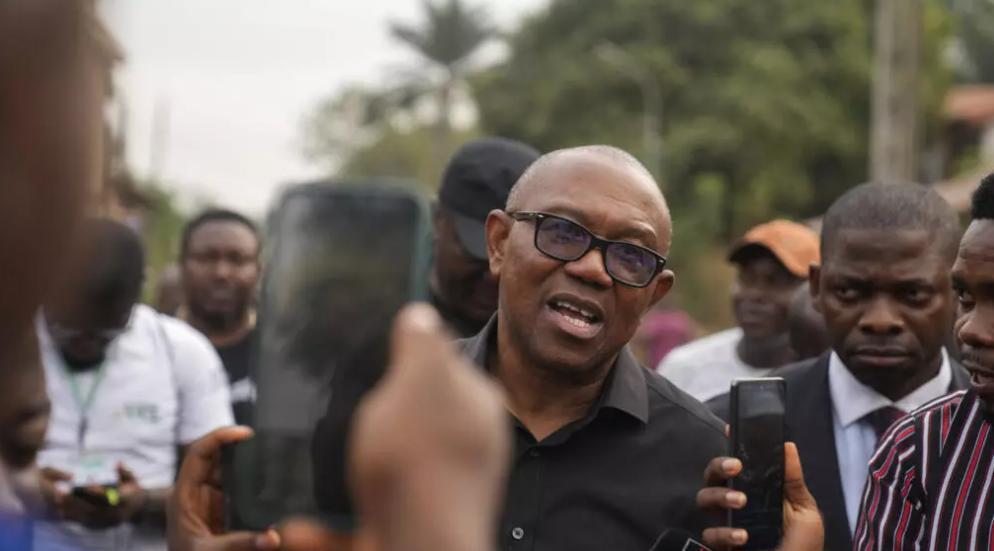
Africa-Press. The Nigerian capital Abuja will host a summit on Monday, August 31, 2026, bringing together political opposition forces and civil society organizations to discuss coordination methods and develop a joint strategy in preparation for the presidential elections scheduled for 2027.
The summit is organized by the G-100 group, a coalition of political figures and civil society organizations, under the slogan: “Division is an option, but cooperation must become a strategy.” This initiative aims to enhance coordination among opposition forces and present a viable political alternative to current President Bola Ahmed Tinubu in the upcoming elections.
The initiative is led by Salihu Lukman, a former member of the ruling party, marking a shift in the opposition’s approach compared to previous meetings. While the idea of agreeing on a single candidate to represent various opposition forces was strongly proposed in past gatherings, this option seems to have diminished as the election date approaches and political movements related to the presidential campaign begin.
The primary goal of the summit is to establish foundations for cooperation and coordination among different opposition factions, rather than focusing at this stage on selecting a single candidate for the elections.
Several prominent opposition political figures are expected to participate in the summit, including Atiku Abubakar, the former Nigerian vice president supported by the African Democratic Congress, alongside Peter Obi, a leading opposition figure currently running under the banner of the National Democratic Congress.
Abubakar and Obi are viewed as significant potential competitors to President Bola Ahmed Tinubu, having finished second and third, respectively, in the last presidential elections.
The summit is also expected to include representatives from four other political parties, in an effort to broaden the coordination among forces opposing the current government.
The Labour Party has declined to participate in the meeting, asserting that it has a strong enough organization and political structure to contest the presidential elections independently.
Discussions are scheduled to last for two days, with participants divided into five specialized working groups addressing various political and strategic issues. These groups will be given four weeks to prepare agreements, joint programs, and strategic plans that could form the basis for an effective political alliance against the current president in the upcoming elections.
However, the outcomes of this process do not appear to be binding on all participating parties, as any agreements or decisions reached will depend on the willingness of different political forces to adhere to them, given the ongoing disparities and individual ambitions among key opposition figures.
The summit reflects a renewed effort to overcome the fragmentation that the Nigerian opposition has experienced in recent years, amid a growing realization that multiple candidates and the dispersion of opposition votes may ultimately benefit the ruling party and President Bola Ahmed Tinubu, who is preparing for a new political battle to maintain his position in power.