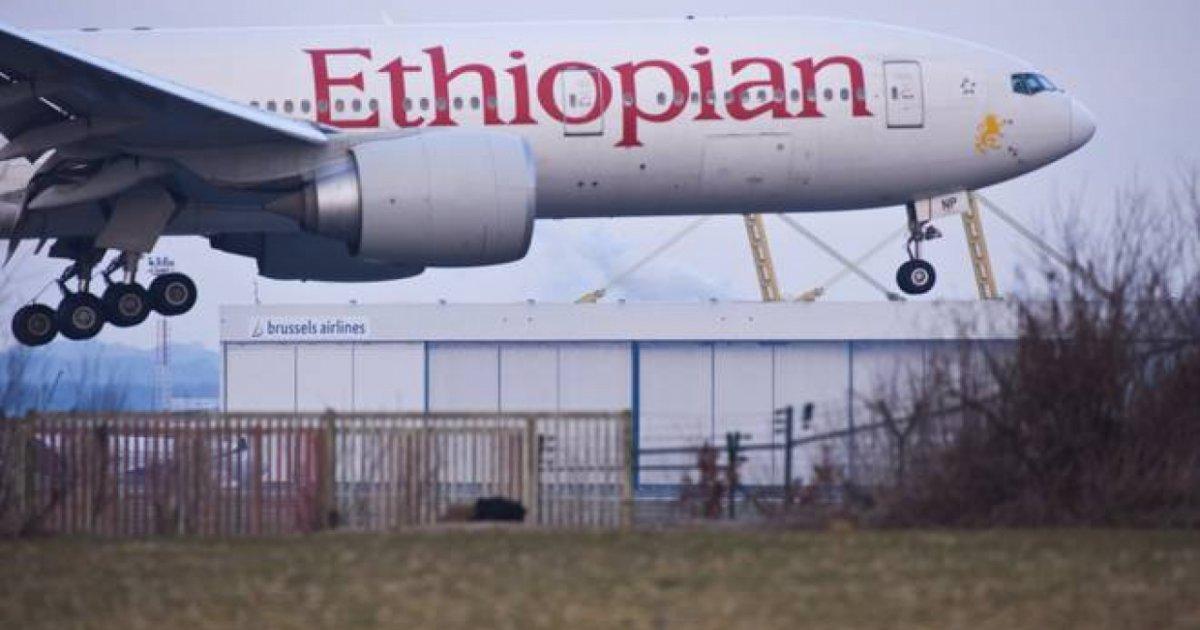
Africa-Press. A new civil trial in the United States has brought renewed attention to one of the most controversial aviation disasters in modern history, as a federal jury in Chicago ordered Boeing to pay $49.5 million to the family of 24-year-old Samia Stumo, who was killed in the Ethiopian Airlines crash involving a Boeing 737 Max 8 in 2019, which claimed the lives of all 157 passengers on board.
The jury issued its decision in the federal civil court in Chicago on Wednesday evening, following sessions that lasted from May 4 to May 13, awarding substantial damages to the family of the victim, who was preparing to start her first professional assignment in public health when she boarded the Ethiopian Airlines flight on March 10, 2019.
According to the details of the ruling, the jury allocated $21 million in compensation for the psychological and physical suffering endured by the victim during the six minutes before the plane’s crash, as it violently ascended and descended due to technical failure.
Additionally, $16.5 million was awarded for emotional damages and loss of affection, along with $12 million for the grief and pain experienced by the family.
The incident caused widespread shock, especially since many passengers on the flight were employees, experts, and international officials heading to participate in the United Nations Environment Assembly held in Nairobi at that time.
Samia Stumo had joined the organization “Think Well,” specializing in public health, and was en route to the Kenyan capital Nairobi for a mission related to her new job, which her family described as a “dream job.”
During the trial sessions, the prosecution team directly accused Boeing of negligence and causing the disaster.
Attorney Shanine Specter stated in her argument that “Boeing was negligent, and the Boeing aircraft was not safe, and this incident could have been avoided.”
The victim’s parents, Michael Stumo and Nadia Milleron, along with her brothers Adnan and Tor, attended the trial sessions, which featured a detailed presentation of the technical failure that led to the plane’s crash.
In contrast, Boeing did not deny its general responsibility for the disaster, as the company had acknowledged since 2019 that an electronic system designed to prevent a stall, known as MCAS, contributed directly to the Ethiopian plane crash, as well as to the crash of Lion Air in Indonesia in October 2018.
The MCAS system automatically pushed the nose of the plane down when it detected a risk of losing aerodynamic lift; however, investigations revealed that the system relied on faulty data from one of the sensors, causing it to activate repeatedly and unnecessarily, leading pilots to lose control of the aircraft within minutes of takeoff.
Both incidents led to a global grounding of the 737 Max aircraft for an extended period and prompted regulatory authorities in the U.S., Europe, and other countries to impose stringent reviews of Boeing’s safety procedures and the certification processes for new aircraft.
In a statement reported by a local source, Boeing expressed its “deep sorrow for all those who lost loved ones on Lion Air Flight 610 and Ethiopian Airlines Flight 302,” confirming that it had reached amicable settlements in most cases related to the two incidents, while emphasizing its respect for the families’ right to present their claims in court.
Despite reaching settlements in most lawsuits, several families still refuse to close the case through amicable agreements, preferring to resort to the courts to uncover more details regarding the development and certification of the 737 Max aircraft, as well as to hold executives and supplier companies legally accountable.
In this context, attorneys Shanine Specter and Elizabeth Crawford, representing the Stumo family, announced their intention to appeal a previous court decision that dismissed the request for punitive damages against some Boeing officials and suppliers associated with the program, a move that could open the door to broader legal claims in the upcoming phase.