Africa-Press. Partial results showed that the Cape Verdean Independence Party (PAICV) won the parliamentary elections held on Sunday, ousting the Movement for Democracy (MpD) and positioning itself for a return to power after a decade in opposition, according to partial results and party statements released on Monday.
The elections were characterized by low turnout, with only 50% of the 415,000 registered voters casting their ballots. This Atlantic archipelago, consisting of ten islands, has a long tradition of power alternation between its two main parties: the Movement for Democracy (MpD), which has governed the country since 2016, and the Cape Verdean Independence Party (PAICV).
The official partial results released by the National Electoral Commission, based on 98.2% of polling stations, indicated that the Cape Verdean Independence Party (PAICV) received 46.7% of the votes, equivalent to 37 seats out of 72, ahead of the Movement for Democracy (MpD), which garnered 43.6%.
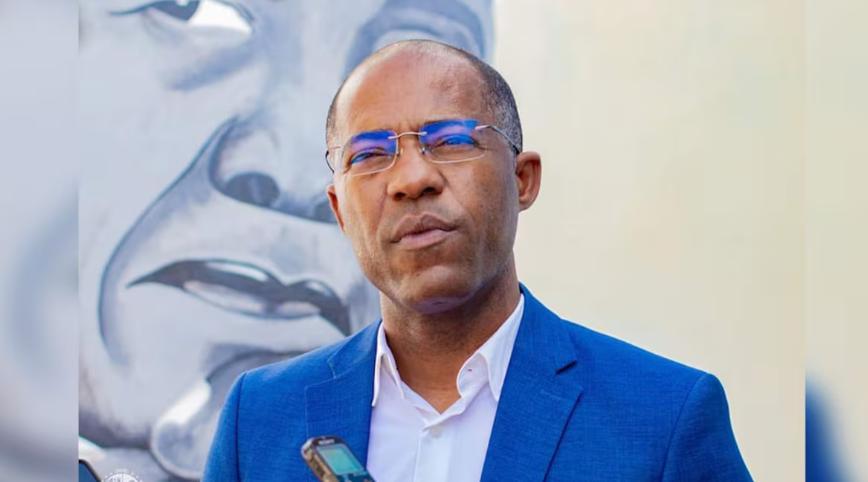
Francisco Carvalho, leader of the PAICV, appeared set to take on the role of Prime Minister after the current president, Ulisses Correa e Silva, acknowledged defeat in his first statement following the elections.
However, Correa e Silva stated that it remains unclear whether the PAICV has achieved an absolute majority, as vote counting is still ongoing.
He said, “It is clear that the results did not meet our goals, which were to win the elections, continue governing Cape Verde, and drive the country forward.” Carvalho praised the outcome as a call for change, stating that voters decisively supported his program.
The National Independent Electoral Commission (CNE) has yet to announce the results for the remaining four seats allocated to expatriates. The commission indicated that the final results of these legislative elections will be announced on May 25.
Thus, Francisco Carvalho, head of the PAICV, will become the new strongman in Cape Verde. The politician, who serves as the mayor of the capital Praia, managed to persuade voters with his program focused on social justice, which includes providing healthcare, higher education, and improving services offered to the islands, stating: “The ‘Cape Verde for All’ project was the best; it is a project built on the needs of the people of Cape Verde and aligns with the project we wish to build.”
Carvalho is now set to share power with President José Maria Neves, who is also from the PAICV. Cape Verde operates under a hybrid parliamentary presidential model, where the Prime Minister, chosen by the National Assembly, heads the government while the president retains significant powers, including veto rights and a mediating role.
In a significant departure from the two main parties, the Independent Democratic Union in Cape Verde (UCID, the Christian Democratic Party), the third largest political force in the country, won two seats, according to these still incomplete results.
Cape Verde, an archipelago with a population of 550,000 in the central Atlantic, located about 600 kilometers from the Senegalese coast, is considered a model of democracy in Africa.
Since the free elections held in 1991, this small country in West Africa has not recorded any incidents or acts of violence related to elections and their outcomes. From 2011 to 2016 and from 2021 to 2026, a government and a president from different political parties coexisted in the country.
The electoral year will conclude in November with the presidential elections, in which the outgoing president, Jorge Maria Neves, supported by the PAICV, is running for a second five-year term.