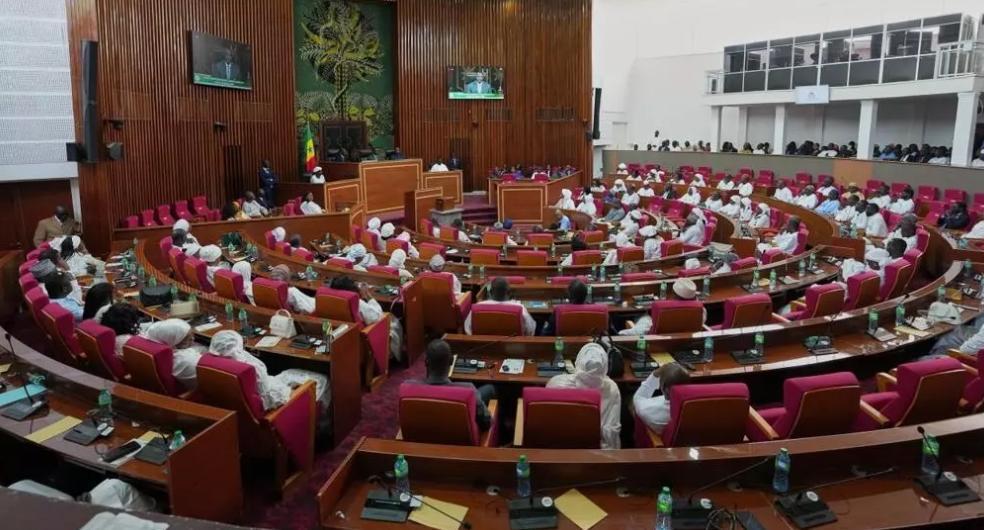
Africa-Press. The Senegalese National Assembly approved an amendment to Article 37 of the Constitution with a majority of 133 votes out of 135 deputies. This amendment mandates senior state officials to submit a second asset declaration at the end of their term, in addition to the declaration made upon taking office.
The amendment was initiated by the parliamentary majority of the Pastef party as part of efforts to enhance principles of transparency and accountability in public administration. The reform stipulates that relevant authorities must provide a new declaration of their assets at the end of their term, allowing for a comparison of their financial situation between the beginning and the end of their tenure.
The principle of the reform received broad consensus within the National Assembly, while a government amendment expanded the obligation to include, alongside the President, the Prime Minister and the President of the National Assembly. The Constitutional Council is expected to announce these declarations.
The amendment is directly linked to principles of transparency, accountability, and clarity in public financial management, which have been priorities for President Ousmane Sonko and former Prime Minister Amadou Ba during their political alliance.
Despite the overwhelming passage of the amendment, it has faced criticism from the parliamentary opposition, which views the move as politically motivated amid rising tensions between President Ousmane Sonko and the President of the National Assembly.
Independent Deputy Thierno Alassane Sall stated that the project reflects, in his view, political disagreements between the two men, arguing that the timing of the amendment represents an attempt to settle political scores. He added, “If they were still with the President, they would not have proposed such an amendment now. It is purely a political trap, and a trivial policy, turning it into constitutional issues, while their only concern is to set traps for President Sonko.”
Conversely, the Pastef party believes that the main challenge lies in completing the legislative process for the reform, following a previous setback for the project. In early July, the Constitutional Council rejected amendments to the higher law, including the clause related to asset disclosure, based on a request from the head of state.
Deputy Amadou Ba, from the Pastef party and the author of the bill, calls for the adoption of the reform without introducing new pathways that could delay its implementation, urging respect for the change that he claims the Senegalese people have demanded.
Ba stated, “Let the radical change we demanded be respected! Let the President remain steadfast in his position and activate this law. Let him avoid delaying it to a potential referendum, which we all know will never take place.”
Members of the Pastef party expect to complete the procedures for the law’s approval before the end of August, a step that would make the dual asset declaration an additional mechanism for monitoring the financial situation of senior state officials during their time in office.