Africa-Press. The Ugandan government has defended the security measures taken following the general elections, including arrests and the suspension of internet services, while denying accusations of political repression and asserting that the actions were aimed at maintaining public order and combating what it described as “criminal gangs.”
Uganda’s Minister of Information, Chris Baryomunsi, rejected claims that the government was using repression against political opponents, arguing that the arrests and restrictions on the digital space were part of a “war against criminal gangs” that, he said, were hiding behind political activity to stir unrest after the elections held on January 15.
Baryomunsi said: “This is not political repression, but the preservation of public order in the face of gangs,” stressing that the state has a responsibility to prevent chaos and protect stability. In his statement, the minister praised what he described as the “calm of the Ugandan people,” while referring to “isolated incidents” that he said could have threatened public order had security forces not intervened.
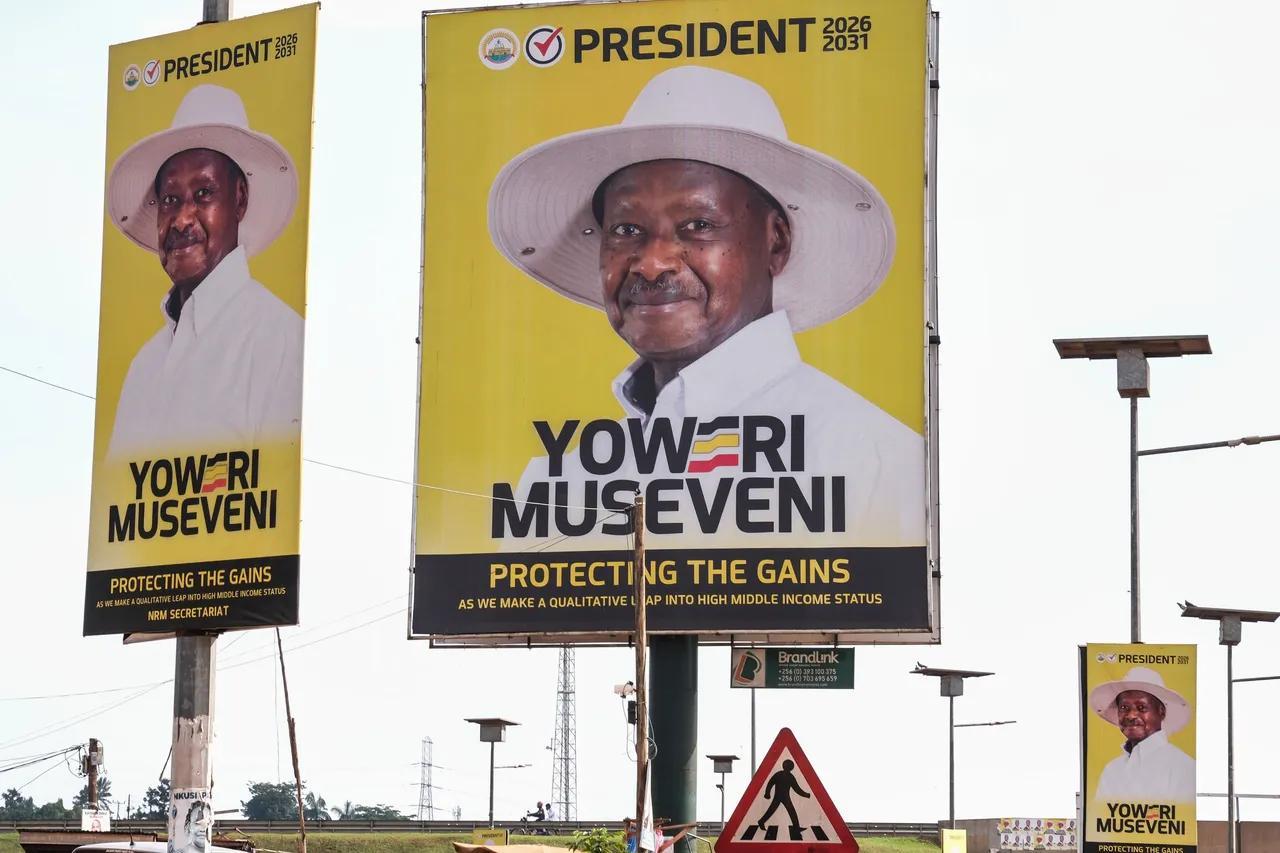
In the same context, the statement congratulated President Yoweri Museveni on his re-election, as well as the ruling National Resistance Movement party on its “landslide victory.” According to observers, the move was intended to reaffirm the legitimacy of the electoral process at a time when opposition forces are challenging the results and local and international criticism over security conditions and human rights in the country is mounting.
The government maintains that “gangs” are operating under the guise of political activity, although the identity of these groups remains disputed. According to the information minister, these gangs consist of criminal groups “masquerading as political activists,” mobilized to “undermine security” and provoke clashes with the police. Observers argue that the official narrative deliberately blurs the line between legitimate political activity, incitement, and organized crime.
Baryomunsi said the government possesses evidence, including images, showing opposition leaders instructing their supporters on how to “overcome” security forces. He added that authorities have already arrested a number of suspects and that further arrests will be carried out “in accordance with the law.”
In this context, the government directly accused the National Unity Platform party, led by prominent opposition figure Bobi Wine, of being behind the violence. The party rejected the allegations, insisting that security forces are systematically targeting its activists and supporters.
The information minister did not specify the number of detainees or the nature of the charges against them. However, other government officials have provided controversial figures in recent days. Uganda’s army chief of staff, Muhoozi Kainerugaba — the president’s son — said that around 2,000 opposition supporters had been arrested, and reported that 30 people had been killed, without clarifying the circumstances of those deaths.
Internationally, the United Nations, through Secretary-General António Guterres, expressed concern over developments in Uganda, urging the authorities to exercise restraint, respect the rule of law, and uphold the country’s human rights commitments.
Regarding digital restrictions, the government stressed that the decision to suspend internet services was intended to prevent incitement and information manipulation. Ahead of the elections, the Uganda Communications Commission (UCC) ordered a temporary shutdown of public internet access and some mobile phone services, based on recommendations from an inter-agency security committee, in order to curb “disinformation,” “electoral fraud,” and the risk of “incitement to violence.”
Human rights organizations, however, condemned the move, describing it as a broad restriction on freedom of access to information and a tool of political control during a sensitive electoral period.
To illustrate what he described as the “human cost” of security risks, the information minister cited incidents in the Butambala region in central Uganda, where election-day violence resulted in several deaths. He argued that the incident confirmed the existence of a real security threat justifying troop deployment and stricter security measures in the post-election period.
The opposition, for its part, denounces what it calls a “strategy of criminalization.” Bobi Wine says he has been under pursuit since the announcement of the election results and claims to be living in hiding for fear of arrest.
Tensions have escalated further in recent days following a raid on the opposition leader’s home. Bobi Wine accused soldiers of attacking his house and assaulting his wife, Barbara Kyagulanyi — known as “Barbie” — who said from her hospital bed that she was attacked by armed men searching for her husband.
For his part, army commander Muhoozi Kainerugaba denied the accusations, stating that the army “does not attack women.” Within the National Unity Platform party, some members have expressed fears that the ongoing security operations could also be used to “plant” or fabricate evidence to incriminate party leaders — allegations that the government firmly denies.