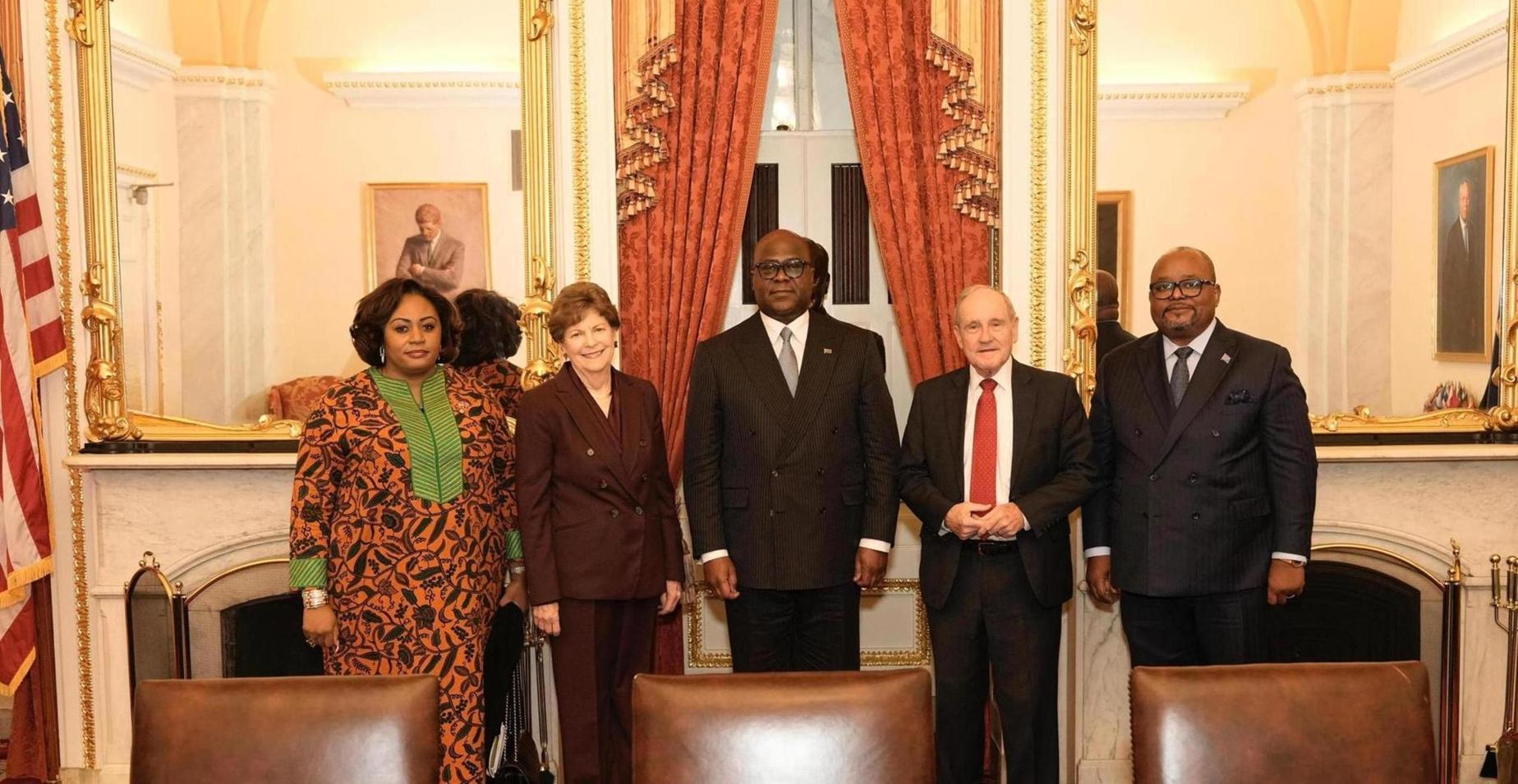
Africa-Press. Members of the US Senate have expressed concern over the continued occupation of parts of eastern Democratic Republic of the Congo by the rebel M23 movement during a meeting with President Félix Tshisekedi, according to a Senate statement.
According to the United Nations and Western countries, the group controls large swathes of territory in the region, including the provincial capitals Goma and Bukavu, which were seized in early 2025.
The remarks were made by Senators Jim Risch and Jeanne Shaheen, chair and member of the Senate Foreign Relations Committee, hours after the “Congo River Alliance” claimed responsibility for last week’s attack on Kisangani Bangoka International Airport in northeastern Congo.
The statement said the meeting with Tshisekedi at the US Capitol focused on the Washington Accords for Peace and Prosperity, as well as the future of bilateral relations between the United States and the Democratic Republic of the Congo.
It added that the committee voiced “concerns about the continued occupation of parts of eastern Congo by the Rwanda-backed M23 group, and the urgent need for the full withdrawal of Rwandan forces from the region if there is to be any chance of genuine and lasting peace.”
The committee said Washington is “prepared to be a stronger partner to the Democratic Republic of the Congo,” and that it “must also take action against those who have already violated their commitments in order to deter further abuses.”
Senators also expressed alarm over the humanitarian crisis in eastern Congo, saying that the suffering of 26 million people facing acute food insecurity is “unacceptable,” and stressing that women, children, and minorities cannot continue to be treated as collateral victims.
The talks also addressed the importance of the bilateral partnership in critical minerals and continued investment in reviving the Lobito Corridor, to boost shared economic growth, regional trade, and long-term cooperation between the United States and Africa.