
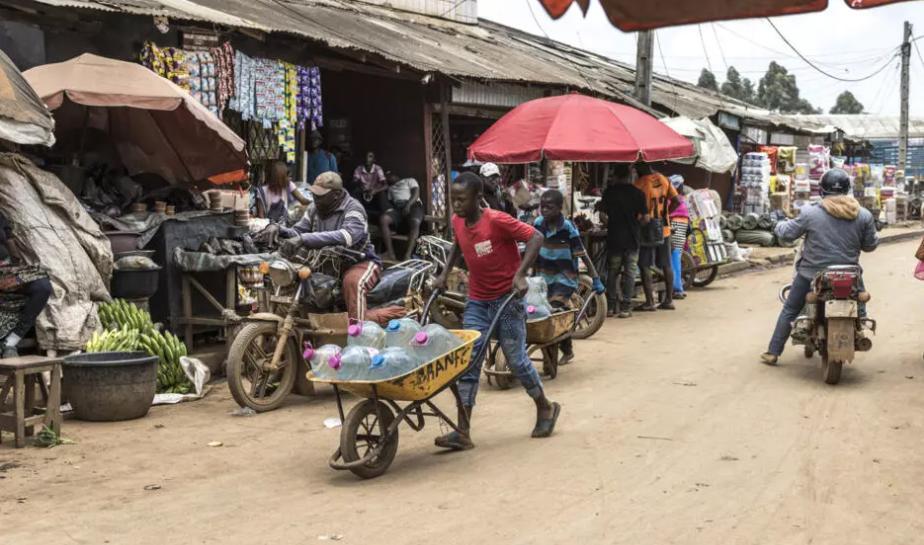
Africa-Press. Warnings have been issued regarding an escalating food crisis in Cameroon that threatens millions of residents.
The representative of a local source in Cameroon, Gianluca Ferreira, stated that the program has been forced to significantly reduce its operations, including the closure of five offices within the country and focusing on specific areas, which has resulted in many beneficiaries being deprived of food assistance.
He added that the operational plan for 2026 aimed to provide assistance to around 600,000 people among the 2.9 million suffering from food insecurity, who are the most vulnerable. However, the program was only able to reach 170,000 people during the period from January to March, and with reduced food rations.
Ferreira noted that the program initially relied on geographic targeting, concentrating efforts in the far north of the country, as it is the most affected area according to food security surveys, which necessitated the closure of offices in the cities of Bamenda and Buea by the end of March.
Areas in the northwest, southwest, and east were excluded from the intervention scope, despite significant needs, including hosting refugees from the Central African Republic.
He confirmed that the program faces difficult choices even within the targeted areas, with expectations of worsening conditions during the second half of the year due to a sharp decline in financial resources.
Regarding funding needs, Ferreira emphasized that the program urgently requires about $40 million to continue supporting 600,000 people in the near term, in addition to $85 million to cover needs for 2026. He pointed out that the available funding currently does not exceed $10 million, reflecting a significant funding gap that hinders humanitarian response.
Cameroon is classified among the “forgotten” humanitarian crises, with the most affected groups including internally displaced persons due to conflicts, refugees from Nigeria and the Central African Republic, as well as the poorest families in rural and urban areas.
Data indicates an increase in the number of hungry people in the country due to a combination of interrelated factors, primarily poverty, recurring climate shocks, escalating violence in English-speaking regions and the far north, alongside waves of internal displacement and rising food prices. The crisis is further complicated by a sharp decline in humanitarian aid funding.