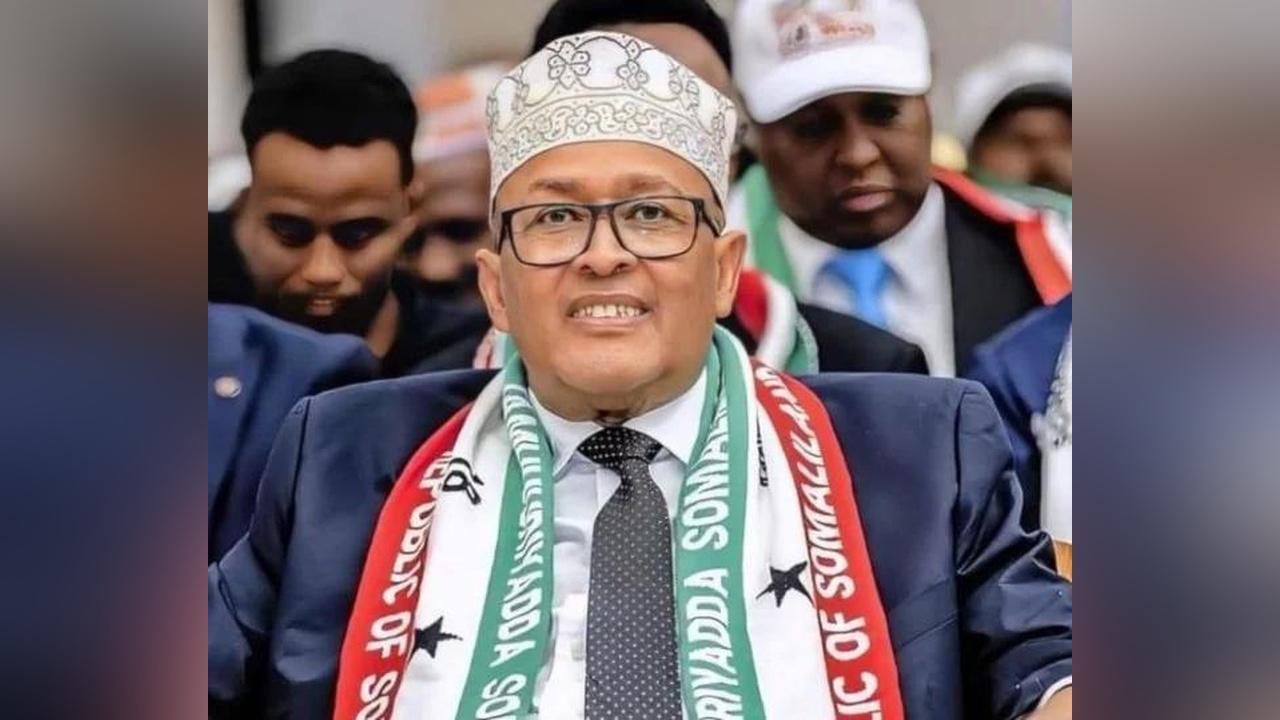
Africa-Press. The President of the Somaliland region, Abdirahman Mohamed Abdullahi Irro, stated that there are discussions between his administration and the United States regarding the issue of recognition, but he confirmed that Washington has not yet made any commitment to official recognition.
Irro explained in an interview with a local source during his visit to Washington that talks with the American side are ongoing, but he cannot say that there is currently any American promise regarding recognition.
Irro’s statements come at a time when Somaliland is intensifying its efforts to gain international recognition, following Israel’s recognition of it last December. In contrast, a local source informed Politico that “there is no change” in American policy towards Somaliland.
This message diminishes the likelihood that Washington will soon follow Israel’s lead, aligning with previous statements from the American president, Donald Trump, last December, when he said he was not ready to recognize Somaliland, although he indicated that the matter would be subject to further study.
Irro is using his visit to Washington to strengthen communications with American officials and members of Congress, presenting Somaliland as an important strategic partner in the security of the Horn of Africa and the Red Sea.
According to members of his delegation who spoke to Politico, Irro was scheduled to meet with Senator Ted Cruz, the chairman of the Senate Subcommittee on Africa, and Representative Brian Mast, the chairman of the House Foreign Affairs Committee.
Irro was also set to meet with the U.S. Assistant Secretary of State for African Affairs, Frank Garcia, and officials at the Department of Defense. Irro stated, “We have been asking the world to recognize us for 25 years. Now the world is starting to see us, and we hope that other countries will follow Israel’s lead.”
Somaliland is seeking to join the Abraham Accords, which led to the normalization of relations between Israel and several Arab countries. Irro said, “We want to be part of the Abraham Accords, and that way we will have more friends.”
Part of Somaliland’s efforts is based on the strategic importance of the port of Berbera and the Gulf of Aden, at a time when the United States is increasingly focused on the security of the Red Sea. Irro also mentioned that he does not rule out the possibility of establishing a U.S. or Israeli security or military presence in Somaliland in the future.
Somaliland Opposition Responds to Plan to Send 2,000 Soldiers to Gaza: “Las Anod Needs Them More”
In another context, the opposition party “Kah” in Somaliland criticized Abdirahman Mohamed Abdullahi Irro’s statements regarding the region’s readiness to send about 2,000 soldiers to participate in an international peacekeeping mission in Gaza.
The party’s spokesperson stated that Somaliland’s forces are needed to address internal issues, particularly to work on recovering their prisoners held in the city of Las Anod, which has now become the capital of the northeastern administration in Somalia.
He added, “The 2,000 soldiers that the president said he would send to Gaza are needed more to recover our prisoners held in Las Anod.”
These statements came as Irro participated in the “MEAD” conference in the U.S. capital, Washington, where he announced his administration’s readiness to contribute troops to the proposed international force to help “stabilize” Gaza.
Irro clarified that “Somaliland is not seeking on its own to send forces to Gaza, but it is ready to do so if it receives an official request from the United States or Israel.”
The position of the “Kah” party reflects its disagreement with the leadership of the Somaliland administration regarding the possibility of sending troops to Gaza, as the party believes there are internal security and political issues that need to be addressed first.
These statements come amid ongoing disputes regarding the city of Las Anod and contested areas, alongside the security and political issues that are priorities for the opposition forces in the Somaliland administration.