Africa-Press. Zimbabwean opposition leader Nelson Chamisa has officially announced his return to political life after nearly two years of absence, a move that could reshape the political landscape as the country heads toward key constitutional deadlines and heated debate over the future of governance.
Chamisa’s announcement comes after his unsuccessful bid in the 2023 presidential election and his 2024 split from the Citizens’ Coalition for Change (CCC), the party he led. At the time, Chamisa accused the ruling Zanu-PF of infiltrating the CCC, allegedly stripping it of its ability to function as a genuine opposition force.
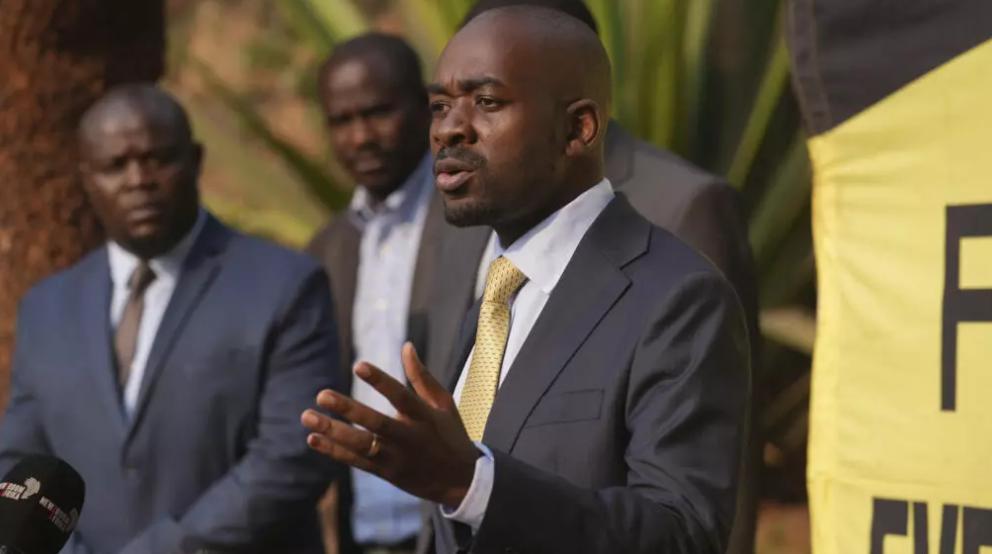
Speaking at a press conference in Harare, Chamisa — a 47-year-old evangelical pastor and former minister of information and communications — said his return was driven by national responsibility, stating:
“I stand before you at a critical moment in our country’s history, after two years away from politics, believing others would take up the task. But no one did. So I felt compelled to return, to serve our nation, our citizens, and our future.”
Contrary to expectations, Chamisa did not announce the formation of a new political party. Instead, he unveiled what he described as a “popular movement” called “Agenda 2026,” without providing immediate details about its structure or political program. The move sparked questions and criticism from analysts who argued that the lack of clear frameworks could weaken its effectiveness.
In response, Chamisa’s former spokesperson Nkululeko Sibanda defended the approach, saying the choice of a movement rather than a party stemmed from a desire to counter political infiltration.
“In my view, he is returning through a movement to address the issue of Zanu-PF penetration. Through this movement, he will be able to identify the right people to work with. Political parties are easier to infiltrate, whereas in movements it is not always clear who does what and when,” Sibanda said.
Chamisa’s return comes as Zimbabwe’s constitution mandates general elections in 2028. Meanwhile, the ruling Zanu-PF faces growing criticism for seeking constitutional amendments that would allow President Emmerson Mnangagwa to remain in office until 2030 — a move the opposition views as an attempt to bypass constitutional term limits and entrench power.
Chamisa’s re-entry signals a potential new phase for Zimbabwean politics, one that may intensify opposition activity amid persistent tensions between government and dissenters, and ongoing debate over the future of democracy and political transition in the country.