What You Need to Know
Algerian footballer Mohamed Amoura faced backlash for a controversial celebration directed at a Congolese fan after his team’s victory. The incident, which involved mimicking the fan’s gesture, led to accusations of disrespect towards a national symbol. Following public outcry, Amoura issued a heartfelt apology, clarifying his intentions were not to offend.
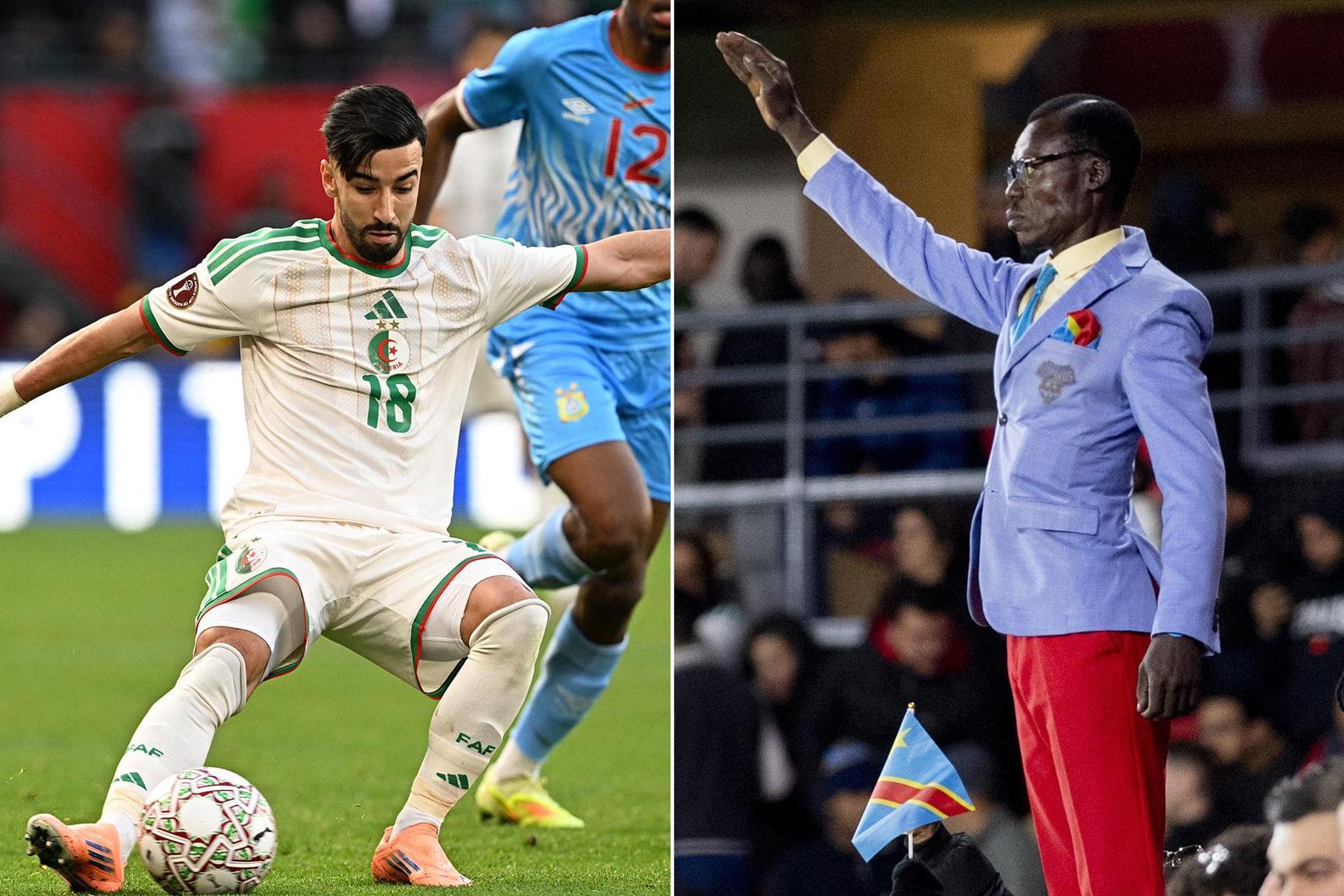
Africa. Mohamed Amoura, an Algerian national team player, sparked widespread controversy and anger on social media after celebrating in front of the well-known Congolese fan, Mbouladinga, also known as the “Lumumba Statue,” following the elimination of the Congolese team from the tournament.
Adil Boulbina scored the only goal of the match in the 119th minute, securing the Desert Warriors a place in the next round after a thrilling encounter that extended into extra time.
A circulating video shows the Algerian player running towards the fan Mbouladinga, who is known for standing still in the stands with his right arm raised, embodying the spirit of his country’s national liberation leader, Patrice Lumumba. Amoura initially mimicked the arm gesture before falling to the ground in a manner perceived by many as mocking, which was seen as disrespectful to the fan and his symbolism.
This fan is recognized for his unwavering stance throughout matches, drawing parallels between himself and Lumumba, a prominent figure in the struggle for independence in the Democratic Republic of the Congo.
The Congolese fan, who remained steadfast in his symbolic stance during his national team’s matches, could not bear the shock of the crushing defeat in the final moments, and was seen crying in a rare moment not previously witnessed.
However, this celebration quickly became a contentious topic on digital platforms, with many users deeming Amoura’s actions as unethical and unsportsmanlike, arguing that they contradicted the values of respect that should prevail in sports competitions.
Others described the player’s behavior as “very bad,” considering it a sign of disdain for a national and historical symbol that carries profound human and revolutionary significance, transcending the boundaries of sportsmanship.
Conversely, some bloggers suggested that the player might be a “victim of ignorance and lack of knowledge” about this symbolic figure, asserting that a person is a victim before being accused.
They pointed out that Amoura is now aware of the significance of this symbol, urging him to issue a clear and strong apology, and even to seek out this fan to honor him, as they believe that apologizing holds great symbolic value and respect for historical figures.
Activists emphasized that this fan deserves all appreciation and respect for bringing back the name of a historical figure who fought for freedom and dignity, courageously standing with colonized peoples, including during the Algerian revolution.
They argued that Amoura’s mistake during the celebration reflects an unintended disregard for a national and cultural symbol, stressing that respecting the symbols of nations and their cultures is a duty for everyone, especially in sports arenas.
They concluded by stating that the fan’s presence was not solely for football but carried a symbolic message against occupation and dominance, evoking Lumumba as an icon of struggle and liberation, which added human and historical dimensions that transcended the confines of the football field.
Apology
In a subsequent development, Amoura expressed his regret for the incident, writing on his Instagram account, “At that moment, I was unaware of what the person or the symbol in the stands represented. I was just joking in a sporting spirit, without any ill intent or desire to provoke anyone.”
He added, “If my actions were misunderstood, I sincerely apologize, as it was never my intention.”
The incident involving Mohamed Amoura highlights the complex relationship between sports and national identity. In many cultures, sports figures often become symbols of national pride, and their actions can resonate deeply with fans. The Congolese fan, known for his tribute to Patrice Lumumba, represents a historical struggle for freedom and dignity, making the celebration’s implications particularly sensitive.
Patrice Lumumba, a key figure in the Congo’s fight for independence, is revered not only in his home country but also across Africa. His legacy as a symbol of resistance against colonialism adds layers of meaning to the actions of athletes and their interactions with fans.