What You Need to Know
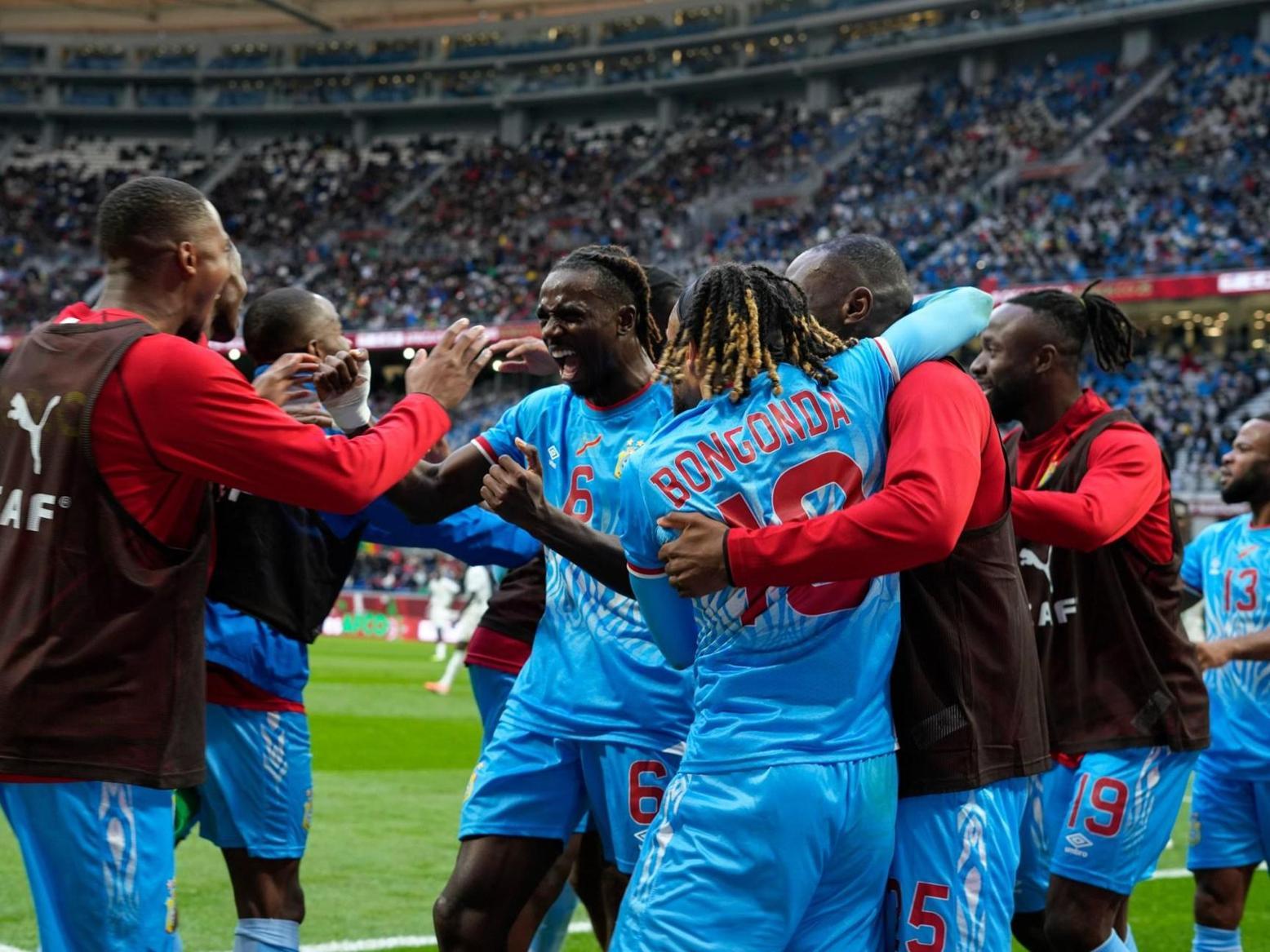
The Democratic Republic of Congo’s national football team has undergone a remarkable transformation, evolving from a struggling side to a competitive force in African football. Under the guidance of coach Sebastien Desabre, the team has regained its stature, showcasing significant improvements and aiming for success in upcoming tournaments.
Africa. The Democratic Republic of Congo’s national football team has transformed from a modest squad into a formidable force in African football, reclaiming its prestigious status on the continent.
The team, which previously won the Africa Cup of Nations twice in 1968 and 1974, experienced many years of stagnation and weakness until the arrival of French coach Sebastien Desabre four years ago.
According to French network RMC Sport, Desabre infused new energy into the team, which is now considered one of the strong sides in Africa.
The Democratic Republic of Congo reached its lowest point after losing to Sudan (1-2) in August 2022, a defeat described as “humiliating” since it came against a team that had not won in its last 13 matches, leading to the dismissal of Argentine coach Hector Cuper.
With the appointment of the relatively unknown Desabre in France, who is well-known in Africa, a better phase in the history of the Democratic Republic of Congo began. After years of living in the shadow of Africa’s giants, the team is now directly competing with them.
The Congolese team finished second in Group D of the current Africa Cup of Nations in Morocco, just behind Senegal on goal difference (7 points for each team).
This significant turnaround is attributed to Desabre’s hard work and dedication, along with the patience he has shown over the years.
Desabre’s Appointment as a Turning Point
Congolese journalist Chris Milosi stated, “Our national team owes a lot to Desabre. He has provided a true philosophy for the national team starting from scratch.”
Another journalist named Genovik Lumbuanadio added, “Desabre has identified the areas that needed improvement over the years, which is evident in the team’s structure and organization both on and off the field.”
He explained, “Previously, the team faced difficulties in travel, accommodation, and gathering players, but with an agency he collaborates with, Desabre has succeeded in establishing a suitable mechanism that helps the team work under excellent conditions.”
Tactical Rigor Leading to Early Success
Desabre, nicknamed “the new white wizard,” is known for his strict tactical discipline, which has significantly helped the Democratic Republic of Congo improve in various skills.
Lumbuanadio noted, “In the past, the Democratic Republic of Congo lacked defensive intelligence, organized attacking ability, and structured defensive lines according to positions. Today, the team can execute all of that against Algeria, Egypt, and all teams in the Africa Cup. It is indeed a successful bet.”
The Democratic Republic of Congo quickly reaped the rewards of Desabre’s work, especially since the declared goal upon his appointment was to qualify for the Africa Cup of Nations 2025. However, he led the team to participate in the previous 2023 edition, reaching the semifinals.
In the past year (2025), the Democratic Republic of Congo has suffered only one defeat out of 14 matches, which was against Senegal (2-3) last September. In the remaining matches, the team won 11 times and drew twice.
Regarding this, journalist Hamza Rahmani from the same French network stated, “The Leopards are now among the top five African teams,” while also highlighting the solid defense that managed to keep a clean sheet in six matches before the current Africa Cup, an achievement few African teams can accomplish.
Experience and Talents Abroad
In addition to Desabre’s significant efforts, two key elements in the resurgence of the Democratic Republic of Congo are players Chancel Mbemba (31 years old) and Cedric Bakambu (34 years old). The former is the captain and the spirit of the team, serving as a link between two generations, while the latter is a striker with a high scoring instinct.
Desabre has also succeeded in attracting many dual-nationality players, convincing several to join his project with the African national team.
Rahmani explained, “This step is embodied in the arrival of young Noah Sadiki, who plays in Belgium and was born there, but has become a Congolese international, as well as the dual-nationality English players Aaron Wan-Bissaka and Axel Tuanzebe.”
He added, “All of this has helped form a highly competitive team in terms of quality, allowing the Democratic Republic of Congo to rely on a group of 18-20 players with similar levels.”
He elaborated, “For example, if Cedric Bakambu is lost, he can be replaced by Veston Mayele (the best local player in Africa 2025), and this applies to most positions.”
The Dream of Returning to the World Cup
Desabre is not stopping there, as he is close to leading the Democratic Republic of Congo to participate in the 2026 World Cup, an achievement that, if realized, would be the first in 52 years.
The Democratic Republic of Congo eliminated Nigeria in the African playoff final and is now awaiting the winner of the global playoff between New Caledonia and Jamaica, hoping to secure a ticket to the World Cup in the United States, Mexico, and Canada.
The Democratic Republic of Congo has a rich football history, having won the Africa Cup of Nations twice in 1968 and 1974. However, the team faced a long period of decline, marked by poor performances and management changes. The appointment of French coach Sebastien Desabre four years ago marked a turning point, revitalizing the squad and instilling a new competitive spirit.
Desabre’s tactical discipline and focus on player development have been crucial in reshaping the team’s dynamics. The inclusion of experienced players and dual-nationality talents has further strengthened the squad, positioning the Democratic Republic of Congo as a serious contender in African football once again.