Mehdi Zaghdidi
What You Need to Know
The Democratic Republic of Congo and Rwanda signed a peace agreement in Washington, D.C., aimed at resolving long-standing tensions and conflict in Eastern Congo. The deal includes mutual security commitments and opens avenues for economic cooperation, particularly in strategic minerals.
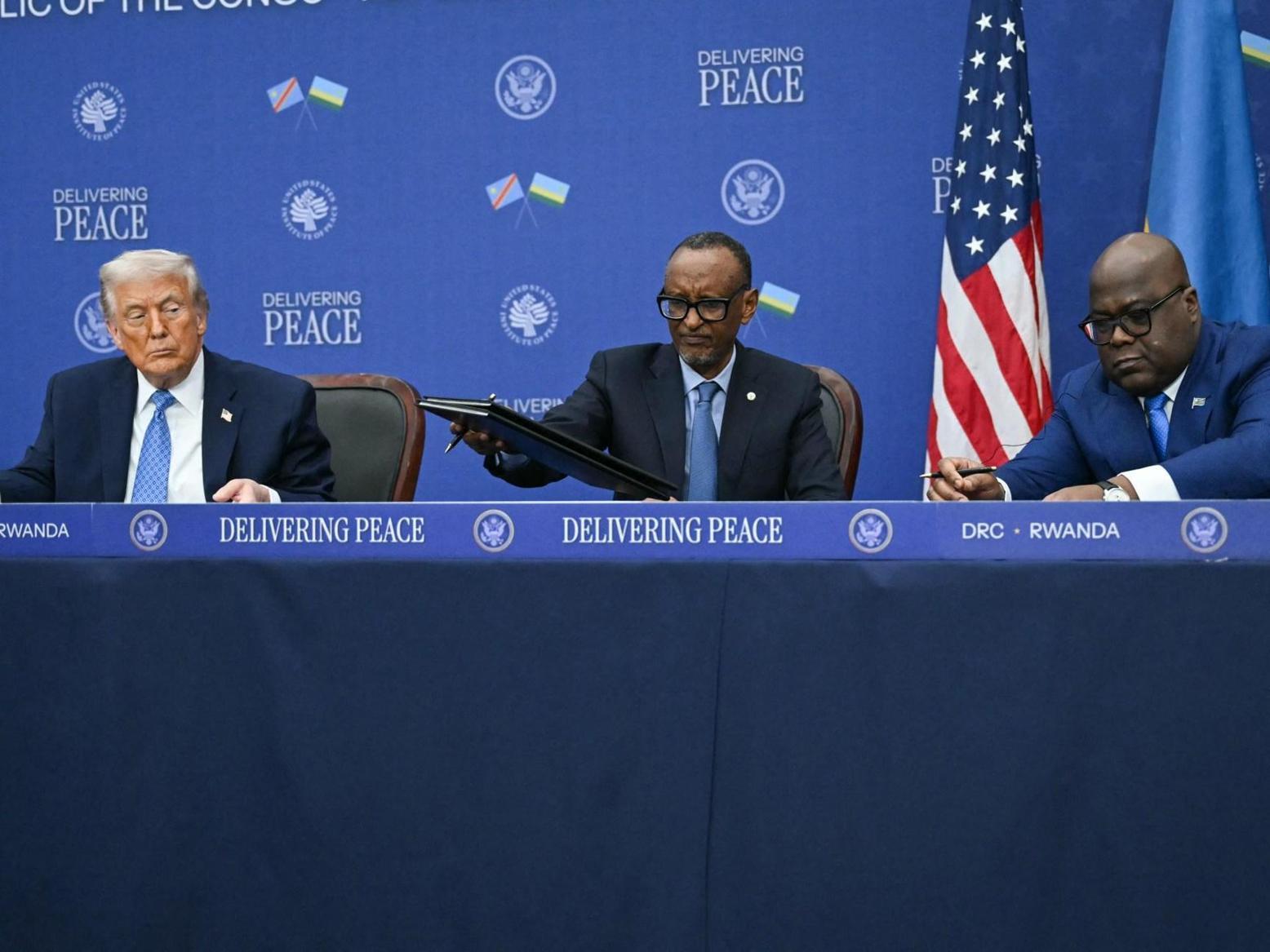
Africa. The Democratic Republic of Congo and Rwanda signed a peace agreement yesterday in Washington, D.C., under the auspices of U.S. President Donald Trump. The agreement aims to end years of tension and conflict in Eastern Congo and opens the door for security and economic cooperation between the two countries, particularly in the field of strategic minerals.
The agreement includes mutual security commitments, with Congo pledging to dismantle Rwandan rebel groups in exchange for Rwanda’s commitment to cease its support for the M23 movement and withdraw its forces from border areas. Additionally, a joint mechanism for intelligence sharing and security coordination will be established.
Political and Regional Reactions
The African Union welcomed the agreement, calling it a “historic step toward stability,” emphasizing that its success depends on the actual implementation of its provisions.
African leaders, including the presidents of Kenya and Angola, praised the role of U.S. and Qatari mediation in bridging the gap between Kinshasa and Kigali, viewing it as an opportunity to rebuild trust between the two nations.
Conversely, political circles in Congo expressed concerns that the agreement might serve as a legal cover for continued Rwandan exploitation of Congolese resources, especially since some provisions allow for cooperation in exporting and processing vital minerals like cobalt and lithium. This raises fears that economic interests may overshadow the core of the security crisis.
Rwandan Foreign Minister Olivier Nduhungirehe stated in a Reuters interview that the peace agreement with Congo represents an important step toward ending the conflict in the eastern part of the country. However, he also stressed that the situation on the ground remains fragile, with ongoing clashes between the Congolese army and M23 rebels.
Human Rights Warnings
Human rights organizations, including Amnesty International, warned that previous agreements have not halted abuses in Eastern Congo, where reports of massacres, rape, and mass displacement continue. They asserted that any peace that does not prioritize civilian rights will remain fragile and prone to collapse.
Civil society organizations in Goma expressed skepticism, noting that the signing took place in Washington without the involvement of Congolese civil society or victim representatives, raising concerns that the agreement may be more aligned with the interests of major powers in strategic minerals rather than addressing the roots of the humanitarian and security crisis.
Media Coverage Highlights
Media outlets covered the agreement from various angles. The South African newspaper “Mail & Guardian” viewed the agreement as reflecting a “failure of African solutions to the continent’s problems,” arguing that resorting to Washington undermines the role of the African Union and regional groups.
In contrast, the Chinese news outlet “CGTN” highlighted the geopolitical dimension, noting that the agreement provides the United States with direct access to Congolese minerals amid growing Chinese influence in Africa.
Congolese media, such as “Radio Okapi” and “Actualité.cd,” focused on the details of the agreement, clarifying that its implementation is contingent on fulfilling security commitments and that it opens the door for a framework for joint economic integration.
Rwandan local media, like “Kigali Press,” presented the peace agreement with Congo as a diplomatic victory for President Paul Kagame and a “historic opportunity for regional prosperity,” emphasizing the security aspect by highlighting Congo’s commitment to dismantling armed Hutu groups as a guarantee for Rwanda’s security.
A Fragile Peace or a Historic Opportunity?
While some African leaders describe it as a historic opportunity for peace, critics argue that the agreement entrenches the interests of major powers and overlooks the roots of the crisis in Eastern Congo. Amid optimism and skepticism, the fate of the agreement hinges on the parties’ commitment to implementing its provisions and the international community’s ability to ensure that peace benefits the people rather than comes at their expense.
The Democratic Republic of Congo has faced decades of conflict, often fueled by regional tensions and competition for resources. The involvement of neighboring countries, particularly Rwanda, has complicated the situation, leading to cycles of violence and instability. Recent diplomatic efforts, including this peace agreement, aim to address these issues and foster regional cooperation.