What You Need to Know
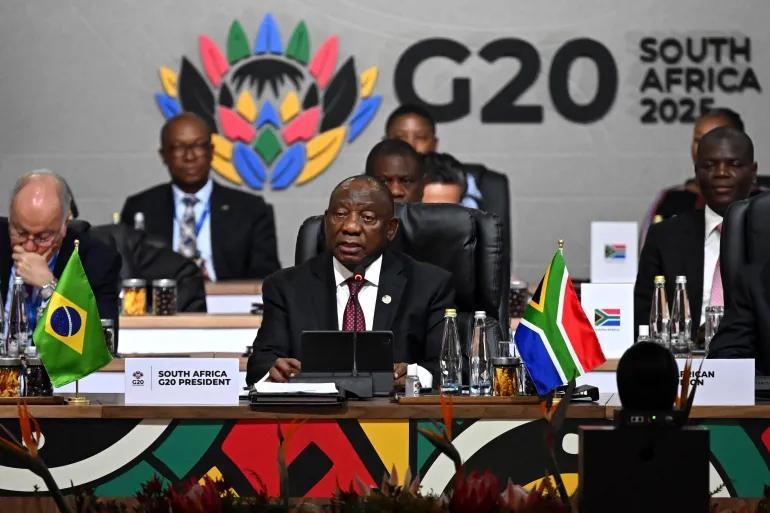
South Africa has been excluded from the upcoming G20 Sherpa meeting scheduled for December 15-16 in Washington. This decision follows the U.S. invitation to all other G20 member states, highlighting tensions over South Africa’s leadership role within the group. President Trump has publicly questioned South Africa’s membership, citing its refusal to transfer the G20 presidency to the U.S. envoy.
Africa. South Africa did not receive an invitation to attend the G20 Sherpa meeting scheduled for December 15-16 in Washington. This exclusion was confirmed after the United States sent invitations to all other member countries of the G20, except Pretoria.
In the G20, the Sherpa team consists of officials who guide discussions and agreements leading up to the final summit of heads of state and government.
U.S. President Donald Trump confirmed that South Africa would not be invited to next year’s meeting. He stated in a post on his social media platform, Truth Social, that “since South Africa refused to hand over the G20 presidency to the U.S. acting ambassador at the Johannesburg summit on November 23, it will not receive an invitation to the G20 summit in 2026 in Miami, Florida.”
Last week, President Trump questioned South Africa’s membership in the G20, stating that South Africa “has proven to the world that it does not deserve to belong to the G20, and we will immediately suspend all payments and financial support to it.”
President Trump also criticized South Africa for its refusal to transfer the G20 presidency to a senior U.S. embassy official who was present at the closing ceremony.
Trump’s absence from this significant summit has drawn widespread ridicule. South Africa’s Department of International Relations and Cooperation spokesperson, Clayson Monyela, stated that “our commitment, as a founding member, to the principles and framework of the G20 cooperation will remain steadfast.”
He added: “We are convinced that all members recognize that the strength and legitimacy of the forum lie in its existing composition and mutual respect for its foundational protocols. Any unilateral departure from this consensus will not only fragment our common agenda but will also set a precedent, adding a new destabilizing factor to the membership standards for every present country.”
The G20, established in 1999, serves as a forum for major economies to discuss global economic issues. South Africa joined the group in 2010, becoming the only African nation in this elite assembly. The G20 meetings are crucial for shaping international economic policies, and membership is often seen as a reflection of a country’s global standing and influence.
In recent years, South Africa’s role within the G20 has been scrutinized, particularly regarding its commitment to the group’s objectives. The current tensions with the U.S. underscore the complexities of international diplomacy and the challenges faced by emerging economies in global governance.