
What You Need to Know
A groundbreaking study has confirmed that ancient humans in South Africa utilized poisoned arrows for hunting approximately 60,000 years ago. Researchers discovered chemical residues on quartz arrowheads from a site in KwaZulu-Natal, indicating the use of toxic plant compounds. This finding sheds light on early human ingenuity in hunting techniques.
Africa. Since ancient times, humans have used spears and arrows for hunting, which have always been useful. However, the early hunter who lived in South Africa tens of thousands of years ago noticed that these spears were not always effective; they could injure prey, allowing it to escape. This is when the idea of coating the spear or arrowhead with poison emerged.
The concept is simple and expected: imagine a small arrow coated at its tip with a plant-based liquid, left to dry like gum, and then used for hunting. If the prey is merely wounded, the poison begins to work slowly within the animal’s body.
The Power of Chemistry
This scene is no longer just a plausible story; it now has clear evidence. According to a study published recently in the journal “Science Advances,” researchers from South Africa and Sweden announced the discovery of the oldest confirmed traces of poison used on arrowheads in the world.
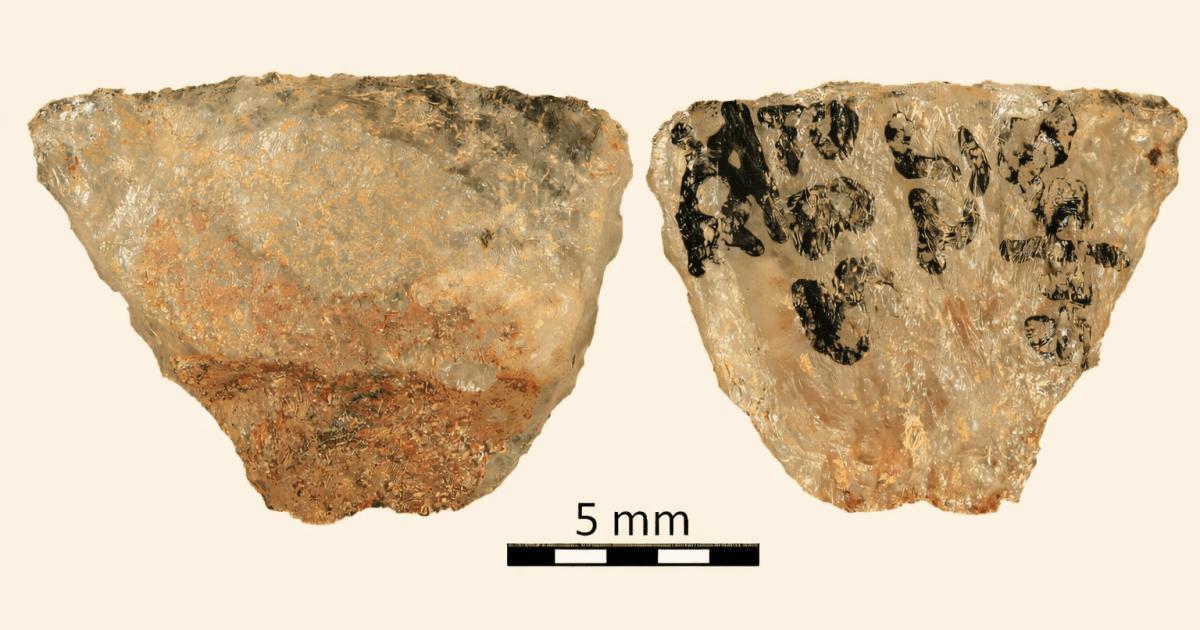
The study found chemical residues on quartz arrowheads approximately 60,000 years old from the “Umhlatuzana Rock Shelter” site in KwaZulu-Natal, South Africa.
The evidence relied entirely on chemical analysis, as the team analyzed ten arrowheads that bore visible residues using “gas chromatography-mass spectrometry” (GC-MS).
Specific Plants
This analysis revealed the presence of toxic plant alkaloids on five of the ten arrowheads, particularly two compounds known to scientists as “bufotenin” and “ipomeanine.”
These compounds only come from plants of the Amaryllidaceae family native to South Africa, with the closest likely source being the plant “Bufo disticha,” locally known as “poison bulb” in these areas.
Researchers studied the extract of this plant and found that it could be lethal in small amounts in tests on rodents within 20-30 minutes, exhibiting severe toxic symptoms in humans when exposed to sufficient doses.
Signature of the Poison
Importantly, the new study did not stop at mere speculation; researchers compared the results with control samples of historical arrows, about 250 years old, preserved in Sweden, and found the same chemical signature. They also analyzed a recent extract from the plant to confirm the matching compounds.
Perhaps by good fortune, these compounds possess a degree of chemical stability that helps them endure, and the conditions of the site itself played a role, as some sediment layers there were less exposed to moisture.
On another note, researchers observed that the distribution of organic residues on one of the arrows was at the edge with the adhesive, indicating a clear intention for use in hunting.
The use of poisoned arrows dates back thousands of years, showcasing early human innovation in hunting practices. Archaeological evidence suggests that various cultures developed methods to enhance their hunting tools, including the application of toxins derived from plants. This practice not only improved hunting efficiency but also reflects the deep understanding of local flora by ancient peoples.