
Muhammad Hasab Al-Rasoul
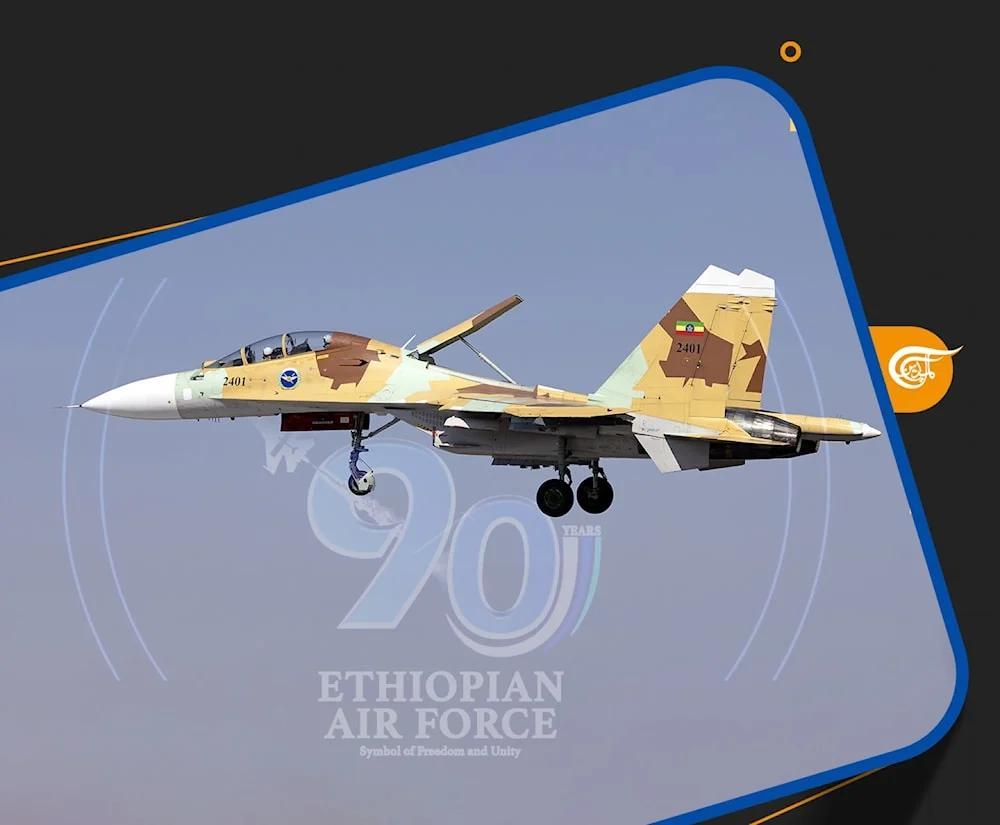
Africa-Press. Ethiopia celebrated the 90th anniversary of its air force from January 23 to 27, 2026, marking the oldest air force on the African continent, during events held at Bishoftu Air Base near Addis Ababa.
The celebrations featured air shows by locally developed aircraft, exhibitions of advanced defense equipment, and an international forum titled “The Future of African Air Forces,” attended by representatives from 20 African countries.
Strong regional and international participation turned the event into a geopolitical platform. Two Arab countries, the United Arab Emirates and Morocco, took part in the air displays alongside Ethiopian forces, featuring Mirage 2000 and F-15 fighter jets and Apache helicopters.
U.S. participation and comprehensive strategic partnership
The U.S. presence was the most prominent, with a delegation led by Assistant Secretary of State Christopher Landau, including AFRICOM Commander General Michael Dagvin Anderson and U.S. Ambassador to Addis Ababa Ervin Massinga.
This participation went beyond protocol, signaling a qualitative shift in bilateral relations. Meetings with Ethiopia’s prime minister and ministers of defense and foreign affairs focused on military and intelligence cooperation, joint air exercises, and U.S. support for developing Ethiopia’s air force with advanced technologies, including radar systems and drones.
This shift comes amid intense global competition for influence in Africa and aligns with a renewed U.S. security strategy, alongside the growing strategic importance of the Horn of Africa following the Gaza war and regional maritime tensions.
Emirati participation: nature and context
The strong Emirati presence reflected the depth of the strategic alliance between Abu Dhabi and Addis Ababa. It included high-profile participation in air displays and a senior military delegation, extending the UAE’s multifaceted support for Ethiopia.
Militarily, Abu Dhabi trained Ethiopia’s Republican Guard and supplied Wing Loong drones and modern weapons used during the Tigray war (2020–2022). Economically, support expanded into major infrastructure investments, including airports, dams, and ports in Djibouti and Somalia, as well as renewable energy and agriculture projects.
Politically, the UAE backed Ethiopia’s push for sea access via Somalia’s Berbera port and Eritrea’s Assab port, seeking to position Ethiopia as a major logistics hub near Bab el-Mandeb.
This role stems from the U.S.-UAE strategic partnership agreement signed in September 2024, elevating ties to their highest level and effectively positioning the UAE as a forward actor for U.S. interests in Africa and Asia.
Ethiopia’s regional dominance ambitions
Ethiopia aims to capitalize on global competition over the Horn of Africa to reclaim its historical role as a dominant regional power, addressing the deep sense of geographic isolation that followed Eritrea’s independence in 1993.
This ambition is evident in its persistent efforts to secure sovereign access to the sea, particularly through Berbera or Assab—moves firmly rejected by Somalia and Eritrea and at odds with international law.
Simultaneously, Addis Ababa is accelerating the development of a modern navy with French and Israeli assistance, including plans to acquire frigates and submarines, backed diplomatically by the United States and financially by the UAE.
Fragile ethnic federalism as a growing internal challenge
Despite its ambitions, Ethiopia faces serious internal challenges, most notably its constitutionally enshrined ethnic federal system. The gap between constitutional provisions and actual practice has fueled deep regional crises, manifested in armed movements across Amhara, Tigray, Oromia, Benishangul-Gumuz, Afar, and the Somali region.
These tensions have enabled regional interference, with neighboring states strengthening ties to groups opposed to the central government, further complicating Addis Ababa’s strategic trajectory.
An additional economic risk stems from Ethiopia’s pivot toward Washington, potentially threatening Chinese interests, as China has invested and lent more than $27 billion to Ethiopia.
Addis Ababa – Abu Dhabi – Washington axis
The Bishoftu celebration reflects a broader strategic context in which a tripartite axis seeks to leverage regional and global shifts to secure overlapping interests in the Horn of Africa.
This axis serves intertwined goals: securing Bab el-Mandeb, advancing Ethiopia’s regional ambitions, and expanding Emirati influence, amid intensifying global competition.
Ultimately, the celebration highlights Ethiopia’s strategic paradox: the alliances driving its external ambitions simultaneously deepen internal fragility and regional antagonisms.