What You Need to Know
Mozambican President Daniel Chapo concluded a significant state visit to China, marking the first by an African leader in 2026. His discussions with President Xi Jinping led to the elevation of bilateral relations and the signing of over 20 cooperation documents, focusing on infrastructure, energy, and agriculture, amidst Mozambique’s growing role in the liquefied natural gas sector.
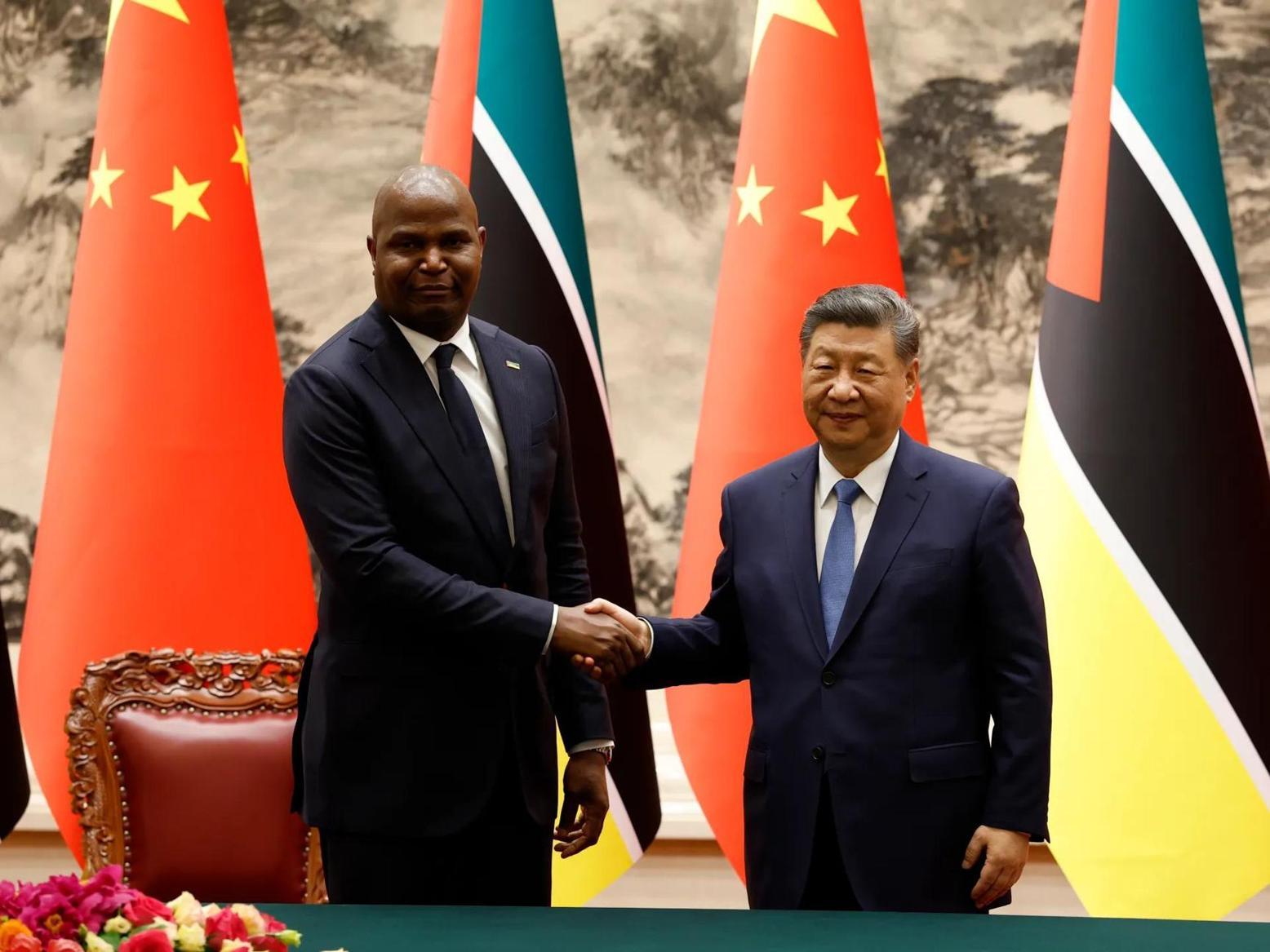
Africa-Press. In the first state visit by an African leader to China this year, Mozambican President Daniel Francisco Chapo concluded an official tour from April 16 to 22, culminating in talks at the Great Hall of the People in Beijing with his Chinese counterpart Xi Jinping. The discussions resulted in elevating the bilateral relations to a level described as a “Mozambican-Chinese community with a shared future in the new era,” and the signing of over 20 cooperation documents, according to a local source.
During their meeting, Xi characterized the relations between the two countries as a model of Chinese-African friendship and cooperation among global south nations. He emphasized, according to a statement from the Chinese foreign ministry, his country’s readiness to align development strategies with Mozambique and explore new avenues for cooperation in infrastructure, energy, and mineral development, alongside fostering new growth drivers in agriculture, renewable energy, the digital economy, and artificial intelligence.
Chapo, who assumed the presidency following elections in late 2024, expressed pride in being the first African leader to make a state visit to China in 2026. He reaffirmed his country’s “unconditional” commitment to the one-China principle and announced Mozambique’s support for the four global initiatives launched by Xi (development, security, civilization, and global governance), as well as the Belt and Road Initiative.
The two leaders witnessed the signing of more than 20 cooperation documents covering areas such as the new Silk Road, security, trade, cultural exchanges, healthcare, and media. They also issued a joint statement outlining a roadmap for building a “community of shared destiny” between their countries.
Gas and the $5.4 Billion Threshold
According to an analysis published by a local source, the trade volume between the two countries reached $5.4 billion in 2025, with raw materials and semi-processed products dominating Mozambican exports.
The visit cannot be viewed in isolation from Mozambique’s position in the liquefied natural gas sector; the China National Petroleum Corporation is involved in the giant Rovuma project led by ExxonMobil, which had its “force majeure” lifted in November 2025 in preparation for a final investment decision in 2026, with the first shipments expected by 2030, according to an American petroleum technology magazine. This makes diplomacy with Beijing a part of shaping the energy landscape in Southeast Africa.
Critical Readings
However, the image of a “successful partnership” presented by official data is met with more cautious interpretations. Chapo himself previously raised in July 2025, according to a local source, the idea of restructuring part of his country’s debt to “the largest bilateral creditor,” referring explicitly to China, amid a worsening external debt crisis that reached $9.8 billion by the end of 2024.
Data from the Mozambican central bank, according to a local news agency, reveals that China’s share of foreign direct investment did not exceed 1.5% in the third quarter of 2025, highlighting a significant gap between political rhetoric and actual figures.
Additionally, there is a sensitive political context, as opposition leader Financio Mondlani challenges the legitimacy of Chapo’s election. Western reports, including an analysis from the United States Institute of Peace, indicate that Beijing clearly stands with the ruling Frelimo party and is not in a position to mediate in political settlements.
According to a local newspaper, Xi used the meeting to extend beyond bilateral dimensions, calling for China and Africa to work together to demand a ceasefire in the Middle East and resolve disputes through equal dialogue, indicating Beijing’s desire to leverage its African relationships within a broader positioning in international system issues.
The visit follows the 2024 Forum on China-Africa Cooperation (FOCAC) summit in Beijing and intersects with efforts by a new Mozambican president seeking to diversify his country’s foreign partnerships amid security challenges in the Cabo Delgado region and a significant gas reserve that is hoped to recalibrate growth trajectories and service debt.
Mozambique has been navigating its foreign relations strategically, particularly in light of its natural gas reserves and the involvement of major players like China. The recent visit by President Chapo underscores a commitment to deepen ties with China, reflecting broader trends in African diplomacy where nations seek to balance relationships with global powers. The historical context of Mozambique’s economic challenges and political dynamics adds complexity to its engagement with China, particularly as it seeks to leverage investments for development.