What You Need to Know
Early Saturday, Mali experienced coordinated attacks in Bamako and other cities, leading to heavy gunfire and explosions. The Malian army is engaged in combat with unidentified armed groups targeting military sites. The US and UK embassies have advised their citizens to remain indoors as the situation unfolds.
Africa-Press. Gunfire and explosions shook Mali early Saturday as armed individuals attacked the capital Bamako and other cities in what appears to be a coordinated assault, prompting the American embassy and the British foreign office to advise their citizens to stay indoors.
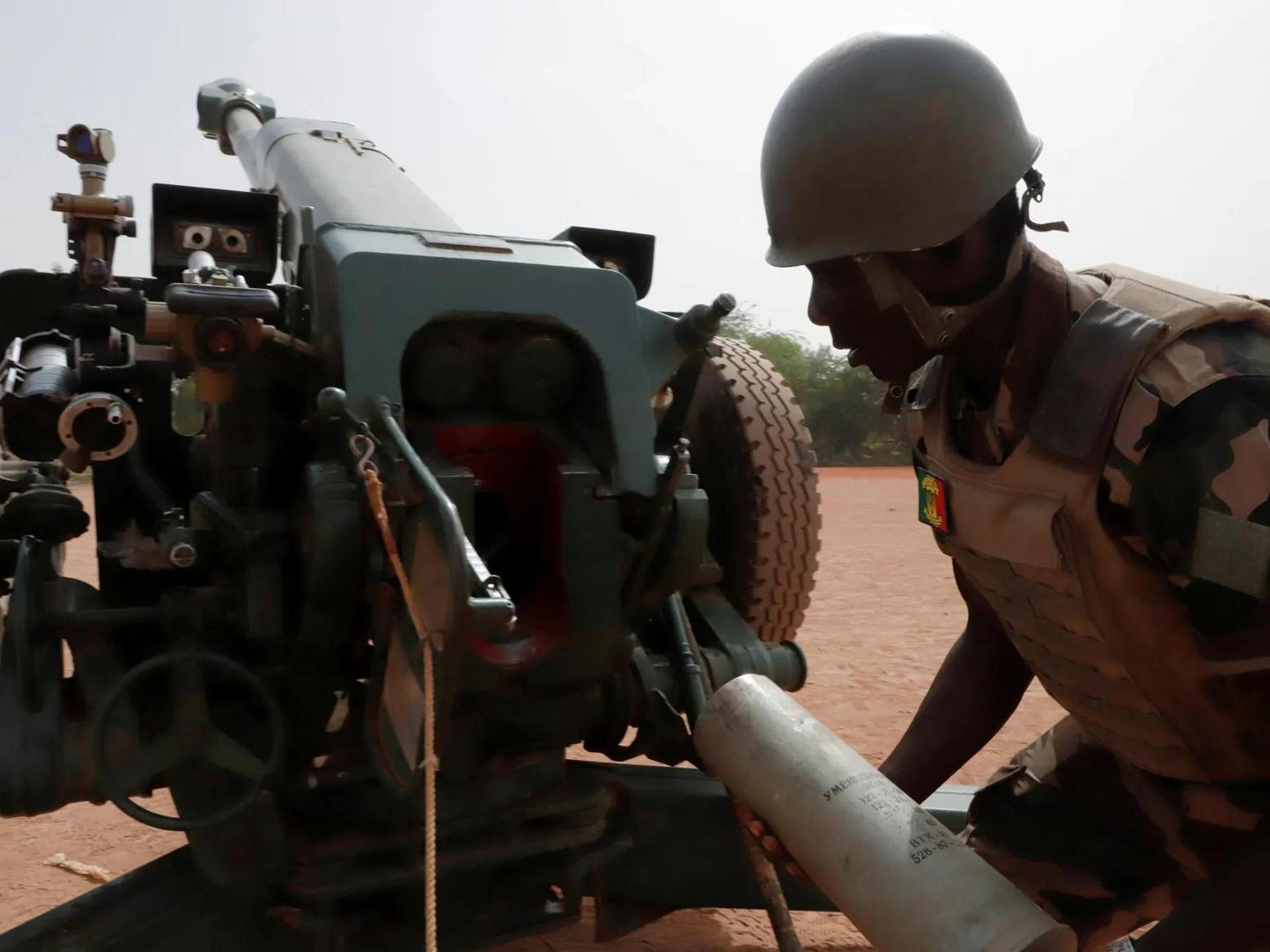
The Malian army announced that it is fighting “terrorist groups” that attacked military barracks in the capital Bamako and other areas in the military-ruled African nation.
In a statement, the army said, “Terrorist groups, armed and unidentified, targeted specific sites and barracks in the capital and interior regions early today,” adding that soldiers “are currently working to eliminate the attackers.”
A reporter from a local source in Bamako reported hearing heavy gunfire from heavy weapons and automatic rifles coming from Modibo Keita International Airport, located about 15 kilometers from the city center, and also saw a helicopter flying over nearby neighborhoods.
Details and testimonies
The airport is adjacent to a military airbase of the Malian Air Force. A resident living near the airport reported hearing gunfire and seeing three helicopters flying in the sky.
In a phone call with a local source, the former mayor of Kidal stated that armed individuals entered the city in the northeast and took control of some neighborhoods, leading to exchanges of gunfire with the army.
One resident told the same source over the phone, “The force of the explosions shakes the doors and windows of my house, and I feel very terrified.” He spoke on the condition of anonymity for safety reasons. He added that the gunfire was coming from the camp and the airport, which are adjacent.
Another resident from Kati, a town near Bamako that houses the main military base in Mali, reported waking up to the sounds of gunfire and explosions.
Meanwhile, Mohamed El-Mouloud Ramadan, a spokesperson for the Azawad Liberation Front, stated on Facebook that his forces have taken control of several areas in Kidal and Gao, another city located in the northeast.
The separatist Azawad movement has been waging a rebellion for years to establish an Azawad state in northern Mali. It had previously expelled security forces from the region before a 2015 peace agreement, which later collapsed, paved the way for the integration of some former rebels into the Malian army.
In 2024, a group linked to al-Qaeda claimed responsibility for an attack on Bamako airport and a military training camp in the capital, resulting in dozens of deaths.
Mali, along with its neighbors Niger and Burkina Faso, has been engaged in a long-standing war against armed groups affiliated with al-Qaeda and the Islamic State, a conflict that has escalated over the past decade.
After military coups, the military councils in the three countries shifted from Western allies to Russia seeking assistance in combating these groups.
However, the security situation in Mali, Niger, and Burkina Faso has recently deteriorated, according to analysts, with a record number of attacks carried out by militants. Government forces have also been accused of killing civilians suspected of collaborating with the militants.
Mali has faced ongoing violence from armed groups linked to al-Qaeda and the Islamic State for over a decade. The conflict escalated after military coups shifted alliances from Western support to seeking assistance from Russia. The deteriorating security situation has led to increased attacks and accusations against government forces for civilian casualties. The Azawad Liberation Front has also been active in the northeast, complicating the security landscape further. Recent events highlight the fragile state of governance and security in the region.