What You Need to Know
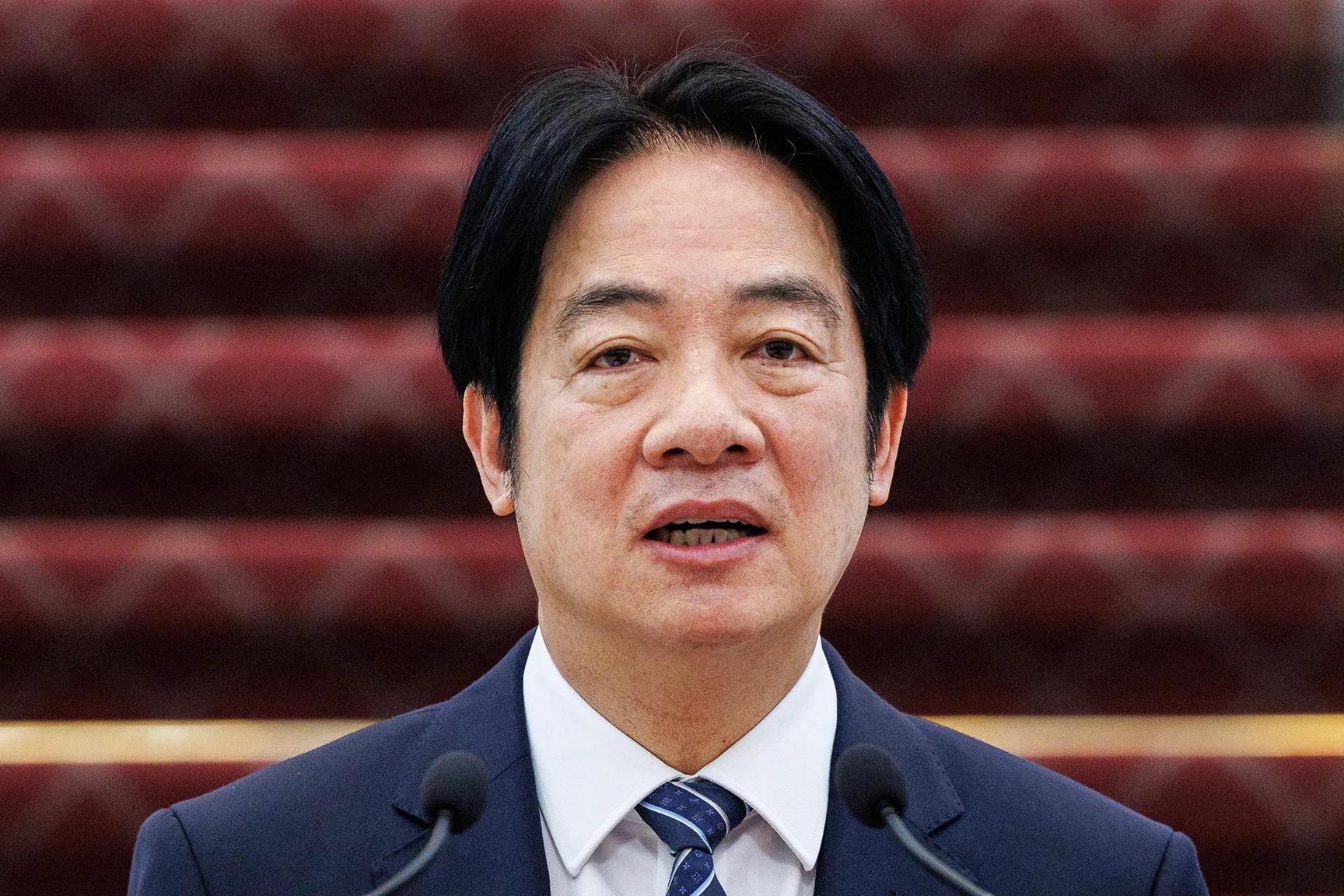
Taiwan’s President Lai Ching-te has postponed his visit to Eswatini after three African nations denied his presidential aircraft flight permits. This unprecedented development highlights China’s growing influence in Africa and the ongoing diplomatic struggle between Beijing and Taipei. Lai was set to attend celebrations marking 40 years of King Mswati III’s reign.
Africa-Press. Taiwan President Lai Ching-te has postponed his visit to the Kingdom of Eswatini after three African countries—Seychelles, Mauritius, and Madagascar—refused to grant his presidential aircraft permission to cross their airspace at the last minute. This unprecedented development highlights the expanding influence of China on the African continent and brings to the forefront the ongoing diplomatic legitimacy battle between Beijing and Taipei.
Lai had planned to travel to Eswatini, Taiwan’s only remaining African ally, on Wednesday to participate in the celebrations marking the 40th anniversary of King Mswati III’s ascension to the throne. However, the Taiwanese presidential office announced that the trip could not proceed due to simultaneous decisions from the three countries to revoke transit licenses without prior notice, according to a local source.
The secretary-general of the presidential office, Pan Ming-an, held China fully responsible, asserting that the decisions resulted from intense economic pressure exerted by Beijing. A Taiwanese security official reported that China threatened economic sanctions, including the cancellation of debt relief facilities, to pressure these countries. This marks the first time a Taiwanese president has had to postpone an overseas trip due to Chinese pressure.
Chinese Gratitude and American Criticism
In contrast, Seychelles and Madagascar denied that their decisions were influenced by external pressures, adhering to a “One China” policy. The Seychelles foreign ministry stated that the Taiwanese aircraft did not receive permission for transit or landing, in line with the government’s longstanding policy of not recognizing Taiwan’s sovereignty. A Madagascar foreign ministry official emphasized that Madagascar’s diplomacy recognizes only one China and that the decision was made within the framework of full sovereignty over the country’s airspace. Mauritius has yet to issue any official clarification.
On the other hand, the Chinese foreign ministry quickly expressed its “high appreciation” for the African countries that adhered to the One China principle, according to a statement from a local source. A spokesperson for the ministry stated that this position aligns with the fundamental rules of international relations, adding that the path to reunification in China is historic and cannot be stopped by anyone.
The Taiwan Affairs Office in Beijing also denied the accusations against China, praising what it described as the “position and practice” of the three countries in adhering to the One China principle, according to a local source.
Meanwhile, the U.S. State Department criticized what it termed a “campaign of intimidation” led by Beijing against Taiwan and its supporters, expressing concern over several countries withdrawing transit permits. The department stated that these countries acted at China’s behest by interfering with the safety of Taiwanese officials’ travel.
This U.S. stance comes despite Washington not officially recognizing Taiwan, while remaining its primary security guarantor, as President Donald Trump is set to meet with his Chinese counterpart next month.
Wider Context
Currently, Taiwan has official diplomatic relations with only 12 countries, most of which are small islands in Latin America, the Caribbean, and the Pacific, following intensified efforts by Beijing to woo Taipei’s allies through infrastructure projects and developmental financing. The latest shift occurred in Nauru in early 2024, following similar moves by Honduras and Nicaragua.
This incident reflects the escalating U.S.-China competition in Africa, where the airspace of African countries has become a testing ground for Beijing’s diplomatic and economic influence. As China’s presence on the continent grows, its recent message is clearer than a traditional diplomatic statement: the cost of alignment is becoming more apparent, while the margin for neutrality is narrowing for African partners.
Taiwan currently maintains official diplomatic relations with only 12 countries, primarily small nations in Latin America and the Pacific. This is a result of China’s increasing efforts to isolate Taiwan diplomatically through infrastructure projects and development financing. The recent denial of flight permits to President Lai underscores the intensifying competition between China and the U.S. in Africa, where African nations are caught in the middle of this geopolitical struggle.
The situation reflects a broader trend where countries are pressured to align with either Beijing or Taipei, with significant implications for Taiwan’s international standing and security. As China expands its 软