Africa-Press. In just a few days, rapid developments between Washington and several African capitals have revealed signs of a reshaping of the relationship map between the continent and major powers, intersecting with issues of health, mining, and data protection. In the background, attractive Chinese offers remind us that Beijing’s competition for continental influence has not diminished but rather intensified.
Accra announced its abandonment of a bilateral health agreement with Washington valued at approximately $109 million over five years, as confirmed by a local source citing a Ghanaian official who stated that the required access to health data “exceeded what is typically required for the stated purpose.” Meanwhile, another source noted that negotiations that began in November 2025 faced “increasing pressure in their final stages.”
The agreement falls under the “American First Global Health Strategy” launched by the Trump administration in September 2025, which, according to a local website, is based on a gradual transfer of funding burdens to beneficiary countries and a reduction in reliance on aid.
According to another local source, Accra was given a deadline of April 24 to finalize the agreement, but the authorities chose to express their rejection in diplomatic terms, affirming their continued pursuit of “better cooperation.” The Ghanaian health minister revealed in late 2025 that Ghanaian health records were stored on servers in India under a previous contract, prompting the government to launch an alternative national health information system, establishing a clear trend towards “sovereignty over data infrastructure.”
Zambia: Deadline Passes and Public Disputes Begin
In Zambia, the April 30 deadline passed without Lusaka signing the proposed memorandum of understanding from Washington worth over $1 billion, leading the two countries into a phase of public disputes. According to another source, the outgoing American ambassador launched an attack on the Zambian government in a farewell speech, stating that Washington faced “a lack of any substantive interaction” since January, with unanswered calls and canceled meetings. He described accusations linking health aid to access to critical minerals as “repugnant and completely false,” noting that Washington still funds the salaries of 23,000 Zambian health workers.
In response, the presidential spokesperson stated that the government “appreciates American support and remains open to dialogue, provided it occurs through the usual diplomatic channels.”
The draft memorandum revealed that the agreement requires Lusaka to inject $340 million of its own funding over five years, while a leaked memo from the Secretary of State indicated that the deal is linked to access to copper, cobalt, and lithium reserves. While American funding continues on a “conditional” basis limited to antiretroviral drugs and prevention of mother-to-child HIV transmission, the official Zambian position remains in a “negotiation silence” interpreted by the American side as a refusal, even if Lusaka has not explicitly stated so.
Experiences Across the Continent
Zimbabwe rejected a similar agreement in February 2026 for reasons related to “justice and sovereignty,” while a Kenyan court suspended the implementation of an agreement following a challenge from a consumer protection association. Another source highlighted reservations in Nigeria regarding the American agreement being limited to supporting health service providers with a Christian religious orientation. Conversely, another report indicated that the U.S. State Department signed 32 agreements under the new approach worth $20.6 billion by the end of April, suggesting that at least five African countries accepted the conditions, while others continue negotiations.
Among the notable agreements signed was a U.S.-Mozambique deal last week exceeding $500 million, reflecting a different reading from President Daniel Chapo’s government, which faces ongoing economic challenges and internal protests since he took office in January 2025.
Chinese Offer with “Zero Tariffs” Flavor
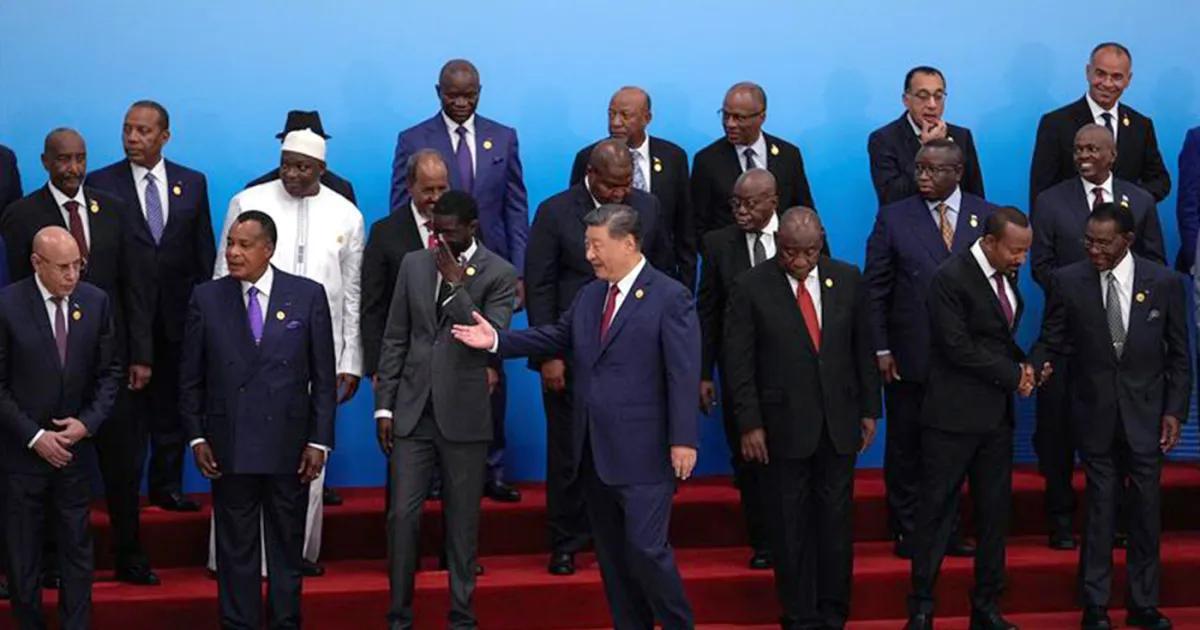
In a striking contrast to American conditionality, China announced the provision of a “zero tariff” system for African countries on their exports to the Chinese market for two years, as part of a broader package of initiatives within the China-Africa Cooperation Forum.
These developments reveal a turning point in the continent’s relations with its traditional partners. While Washington ties its aid to comprehensive strategic conditions (access to minerals, data, and funding sharing), Beijing offers a broad trade proposal without apparent conditionality. It seems that Ghana presents a model of “bargaining from a position of sovereignty” rather than outright rejection or full acceptance.
The open question remains: In an era where traditional aid mechanisms are declining following the dismantling of the U.S. Agency for International Development in early 2025, will African countries succeed in turning this moment of pressure into an opportunity to renegotiate the terms of international partnership, or will the continental divide—between countries that rejected and those that signed—weaken their collective negotiating position and reproduce the logic of “each country for itself”?