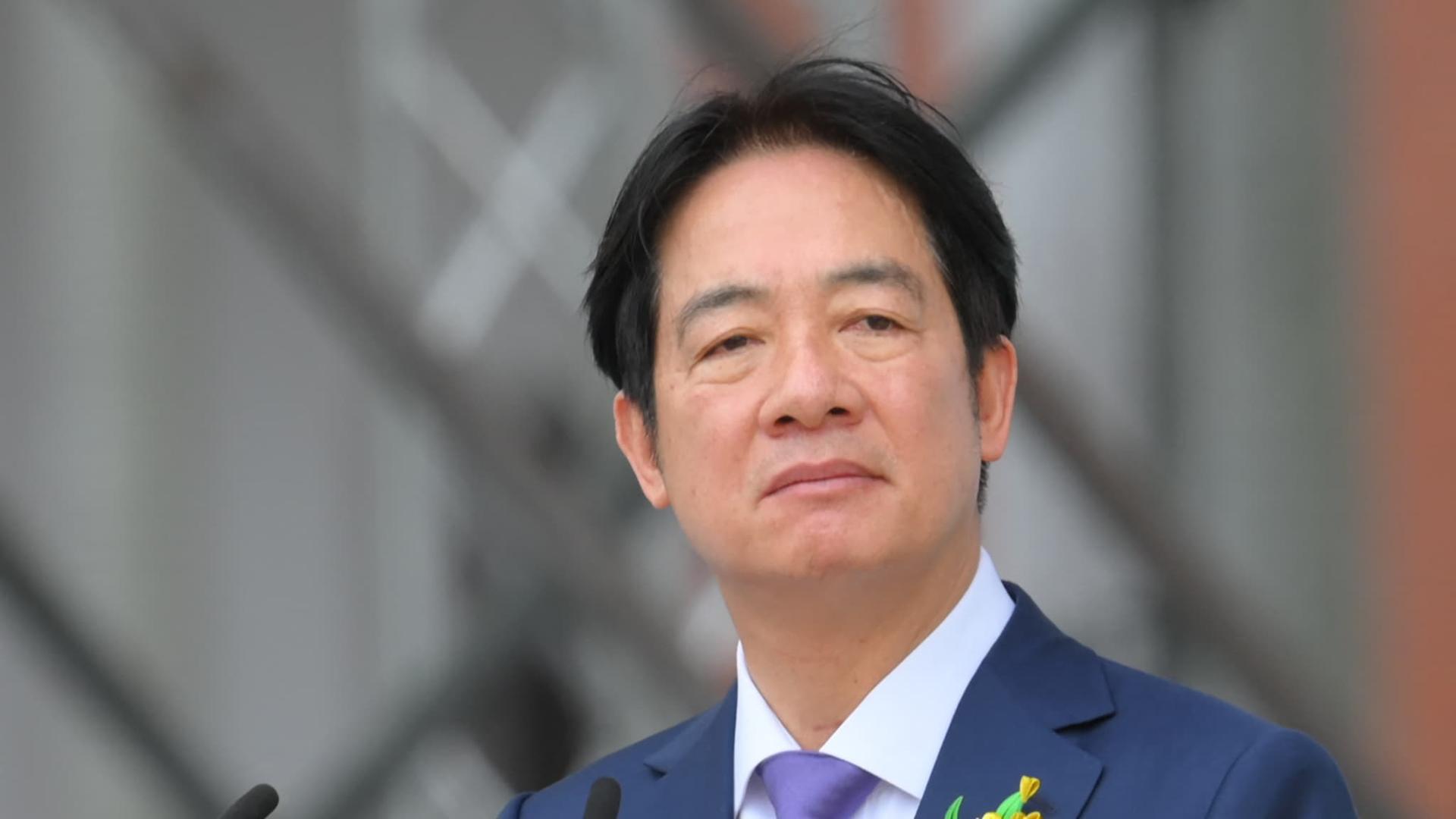
Africa-Press. Taiwan President Lai Ching-te has arrived in Eswatini, after having to postpone a trip to the last diplomatic allies in Africa two weeks ago.
According to reports, the previous visit was canceled after countries in the Indian Ocean prevented the president’s plane from passing through, a move that Taipei blamed on Beijing.
Eswatini, located in southern Africa, is one of only 12 countries, mostly in Latin America, the Caribbean, and the Pacific, that still maintain official diplomatic relations with Taipei.
China considers Taiwan an inseparable part of its territory, a “rebel province that must be reunified with the motherland,” which is a matter of national sovereignty for Beijing.
Lai was scheduled to visit Eswatini last month to participate in the 40th anniversary celebrations of King Mswati III’s ascension to the throne, but Taiwan announced at that time that Seychelles, Mauritius, and Madagascar had unilaterally revoked the presidential flight permits over their airspace due to Chinese pressure, according to Taipei’s account.
This marked the first complete cancellation of an overseas trip for a Taiwanese president due to airspace restrictions, which observers viewed as an indication of a new Chinese strategy aimed at restricting Taipei’s international movements.
China had excluded Mbabane from its “zero tariffs” initiative, which includes all African countries and came into effect on the first Friday of May, applying zero tariffs to all African countries except Eswatini, which maintains diplomatic relations with Taipei.
In a tweet on his account on the American platform X, President Lai announced his arrival in Eswatini, on a visit that had not been previously disclosed by either government.
He stated, “We will not be intimidated by any external pressures. Our determination and commitment are based on the belief that Taipei will continue to engage with the world, no matter the challenges.”
Neither Lai nor his office’s statement clarified how he arrived in Mbabane, but he posted a photo of himself disembarking from a plane that appeared to belong to the Mbabane government, which had transported Deputy Prime Minister Thulisile Dladla to Taipei earlier this week.
For its part, the Chinese Foreign Ministry stated that Lai “secretly boarded a foreign plane and left in secrecy, wasting public funds excessively.”
It added in a statement: “No matter how the Democratic Progressive Party authorities conspire with external forces or buy the loyalty of others, it will not change the fact that the province is part of China.”
These statements come as part of Beijing’s consistent stance that considers Taiwan a territory under its jurisdiction and opposes any international recognition or independent official relations with it.
The cancellation of Lai’s previous visit had drawn criticism from the United States, along with European concerns expressed by the European Union, the United Kingdom, France, and Germany regarding rising tensions related to Taipei’s diplomatic situation.
The U.S. State Department also expressed concern at that time over several African countries canceling flight permits for President Lai at China’s request, describing the incident as a violation of international civil aviation norms.
Taipei reaffirms its rejection of Chinese sovereignty claims, emphasizing that it has the right to establish relations with other countries and that its future can only be determined by its people.