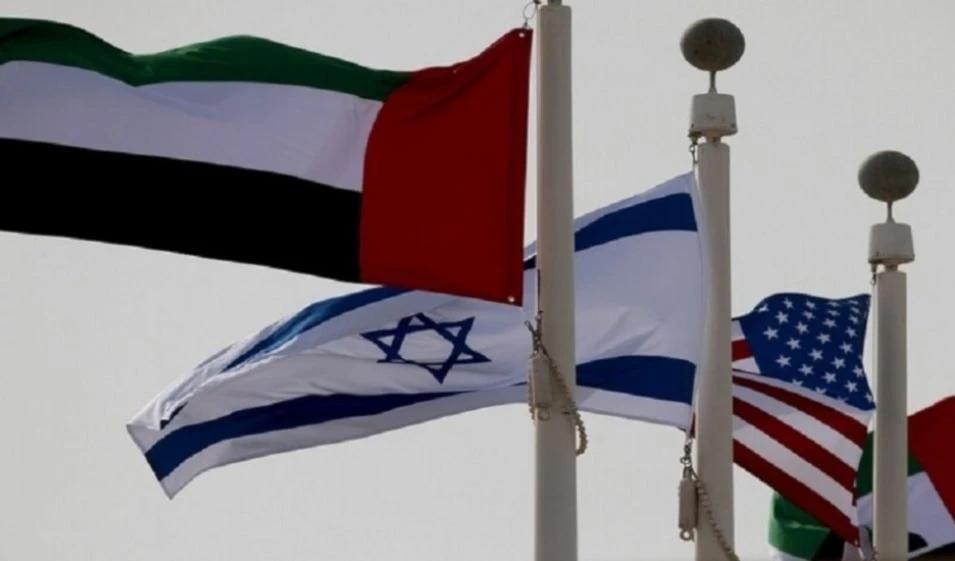
Africa-Press. Despite the silence of Arab capitals regarding the recent statements by the American president, Donald Trump, about expanding the “Abraham Accords”—in which he expressed his desire for Gulf countries and Egypt to join these accords, and his engagement with Sudan as a party already involved—this silence has not extended to discussions taking place behind the scenes. According to local sources, extensive consultations have taken place at intelligence levels, resulting in an agreement to avoid issuing official positions at this time to prevent any political clash with Washington.
The sources indicate that Trump’s statements were not spontaneous or improvised; rather, they came as part of ongoing discussions within the American administration, in which Egyptian officials have been involved on multiple occasions. This comes at a time when Trump is trying to gather as many signatures as possible on the “Abraham Accords,” while simultaneously accelerating partnership pathways between Israel and several Arab countries, particularly Saudi Arabia and Qatar, which Egypt believes are still hesitant to take this step in the near term.
These discussions, according to the sources, have revolved around transitioning from the model of “official normalization,” such as the “Camp David Accords” signed in 1979 amid popular Egyptian boycotts of Israel, to what the sources describe as “real normalization,” akin to the relationship between Israel and the UAE. According to Egyptian officials familiar with these discussions, Cairo has clearly informed the American side that “any talk of normalization at the popular level cannot be raised before achieving peace, which requires the announcement of an independent Palestinian state with East Jerusalem as its capital, within clear and geographically connected borders.”
In the view of Egyptian circles, the American administration sees Saudi Arabia’s potential joining of the normalization accords as a key to opening the door for other countries to follow suit. However, these circles estimate that the circumstances that made a Saudi signature on a normalization agreement with Israel seem imminent before the “Al-Aqsa Flood” operation have changed drastically. Egyptian officials believe that the repercussions of the war on Iran pose a barrier to this accession, as it has raised fundamental questions about American security guarantees and demonstrated Washington’s indifference to Gulf security, despite Trump’s recent attempts to show that Gulf security is a priority for him and the main reason for continuing the negotiation process instead of resuming war.
According to estimates presented to the Egyptian president, Abdel Fattah el-Sisi, during the Eid al-Adha holiday, discussions about a new wave of Arab normalization seem, under current circumstances, closer to impossible. This is attributed to the ongoing Israeli assaults in Palestine, Lebanon, and Syria, which leave political and popular repercussions that make any step of this kind highly costly for Arab governments. Estimates suggest that different agreements may be arranged between Lebanon and Israel on a security level, amid negotiation pathways sponsored by Washington with the Lebanese authority, noting that transitioning from these understandings to comprehensive normalization will require a “more complex and lengthy process, given the nature of the political balances in Lebanon.” As for Syria, the same estimates point to the possibilities of transitional authorities engaging in a normalization process, even though negotiations remain suspended at this time.
Regarding Gulf countries, Cairo expects that some Gulf capitals will show varying degrees of flexibility towards American pressures, without this translating into a swift push towards signing normalization agreements. It is also likely that discussions and negotiations will continue for a long time, while avoiding direct public objections to Washington, especially if Trump continues to exert pressure in this direction. In this context, Egyptian sources, based on communications with Gulf officials, convey “a state of unannounced tension in the relationship with the American administration, awaiting clarity on the outcomes of arrangements related to ending the confrontation with Iran.” They also indicate a growing Gulf conviction of the necessity to “avoid” engaging in any political negotiations with Netanyahu’s government amid ongoing war and Israeli assaults, especially since any step of that kind would only serve to strengthen Netanyahu’s internal position and provide him with leverage against his opponents ahead of the electoral deadline.
In conclusion, Egyptian estimates confirm the existence of significant obstacles to the accession of several Arab countries to the “Abraham Accords,” while sources speak of “the return of coordination between Cairo and Algeria in the file of opposing normalization,” indicating that this latter issue is one of the few files that still constitute common ground between the two countries, despite existing divergences on other issues.