Africa-Press. The security and political consultation committee between Sudan and South Sudan has reached new agreements aimed at containing the threat of fighters and mercenaries coming from South Sudan who are engaged in combat alongside the Rapid Support Forces, as well as calming tensions in the disputed Abyei area and preventing any party from taking unilateral steps that could alter its existing legal or administrative status.
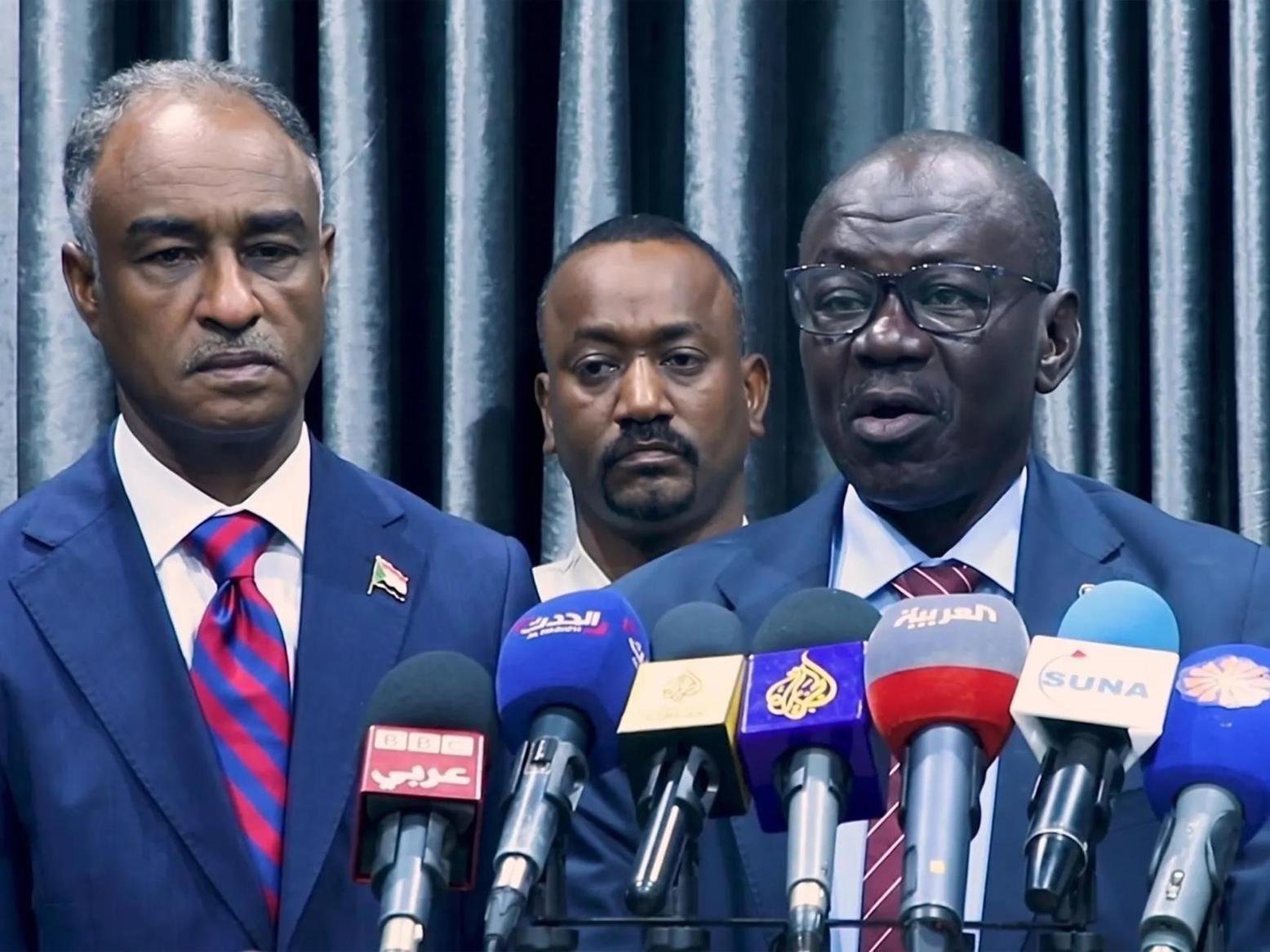
The committee concluded its meetings in Juba after three days of discussions, with its heads, the Sudanese Minister of Defense and the South Sudanese Minister of Defense and Veterans Affairs, signing the decisions and outcomes reached.
The return of the committee to work is particularly significant, as it marks its first meetings since the outbreak of war in Sudan over three years ago, at a time when the shared border between the two countries has become one of the most sensitive military and security overlap areas in the Sudanese war.
Containing Fighters and Securing Borders
The discussions focused on the issue of fighters coming from South Sudan who are fighting alongside the Rapid Support Forces, amid previous Sudanese accusations of the existence of recruitment and transport networks for fighters across southern territories.
In response, Juba confirmed its disconnection from these elements, considering that the armed groups operating in the border areas represent a common threat due to the spread of weapons and chaos, facilitating smuggling and illegal trade across the borders.
Both parties agreed to enhance security cooperation to prevent the infiltration of armed groups, activate previous security agreements, and not harbor any armed groups hostile to the other party, in addition to intensifying coordination between the military and security agencies in both countries.
The agreements also included securing oil facilities and crude oil transport lines from South Sudan through Sudanese territories to export ports on the Red Sea, a highly sensitive issue for Juba, which heavily relies on oil revenues.
This point indicates that border security is no longer viewed solely from a military perspective but is directly linked to the continued flow of southern oil, and thus to the economic and security interests of both countries.
Abyei: The Knot of Open Borders
The most sensitive aspect of the Juba meetings revolved around the Abyei issue, an oil-rich area located between Sudan and South Sudan, which has remained one of the most prominent flashpoints of conflict between the two countries since the south’s secession in 2011.
Both parties agreed to activate the Abyei Protocol and the temporary arrangements agreement signed in 2011, and to work on establishing a joint civilian administration, while committing to not taking any unilateral actions that could change the existing situation in the area.
This understanding carries significant political importance, especially in light of renewed disputes regarding the future of Abyei and the administrative and political measures related to it.
Khartoum asserts that any change in the status of the area must occur through the agreements signed between the two countries, while the final future of Abyei has remained in limbo for years due to disputes over voting rights in the referendum that was supposed to determine its affiliation.
The arrangements preceding South Sudan’s independence stipulated conducting a referendum for the residents of Abyei regarding the future of the area, but disputes over who is eligible to participate, particularly between the Ngok Dinka community and the Misseriya, have repeatedly stalled the referendum.
Both parties had previously resorted to international arbitration regarding the borders of Abyei, before a 2009 decision redefined the area and excluded several oil fields from its boundaries.
The Sudanese War Reshapes Calculations
The new agreements come at a time when the Sudanese war, which began in April 2023, has imposed a new security reality on the border.
The ongoing fighting between the Sudanese army and the Rapid Support Forces has led to increased movement of weapons, fighters, and smugglers across the borders, raising the risks of the conflict spilling over into South Sudan, which is already facing internal political, economic, and security challenges.
Khartoum accuses entities linked to South Sudan of allowing the passage of fighters, weapons, and military equipment to the Rapid Support Forces, while Juba is keen to distance itself from the war and emphasizes its lack of official involvement.
In this context, the agreement to prevent either country from using its territory to launch military actions against the other represents an attempt to prevent the borders from becoming a new front in the Sudanese war.
Moreover, South Sudan’s interest in preventing the war from escalating is clear; the closer the fighting gets to its borders, the greater the likelihood of an influx of refugees, weapons, and fighters, and the higher the economic and security pressures on Juba.
Oil: The Factor Driving Cooperation
In addition to the security and political dimensions, oil is one of the strongest motivations for rapprochement between Khartoum and Juba.
South Sudan relies on exporting its oil production through Sudanese infrastructure to the Red Sea, making the continued operation of pipelines and associated facilities a mutual interest that cannot be separated from border security.
The war has shown that any disruption in Sudan can quickly turn into a direct threat to the southern economy, especially given Juba’s limited alternatives for exporting its oil.
Thus, the agreement between the two parties to protect oil facilities and transport lines may be one of the most sustainable outcomes of the Juba meetings, as it is linked to a direct economic interest for both countries.
Borders Stretching 1,800 Kilometers
Disputes between Sudan and South Sudan are not limited to Abyei, as several border areas remain disputed or in contention over demarcation and affiliation, including Dabba al-Fakar, Al-Muqaynis, Kakaa al-Tijari, and Kafi Kenji-Hafrat al-Nahas.
The border, extending approximately 1,800 kilometers, holds significant strategic importance due to the presence of population clusters, livestock, water, and natural resources on both sides, in addition to commercial activity and traditional grazing movement.
These factors mean that any security vacuum in the border can turn into a conflict over resources or a corridor for smuggling weapons and fighters, making security cooperation between Khartoum and Juba a necessity that transcends traditional political disputes.
Do the Agreements Represent the Beginning of a New Path?
Despite the importance of the agreements resulting from the Juba meetings, their true test will not be in the statements and commitments but in their ability to withstand developments in the Sudanese war.
Both parties face significant pressures, and the Abyei issue has not been resolved for over a decade, while disputes regarding borders, fighters, and oil could resurface with any new military escalation.
Nevertheless, the resumption of the work of the security and political consultation committee carries an important indication: Khartoum and Juba recognize that the continuation of the Sudanese war without direct communication channels could turn the shared borders into an open conflict zone.
From this perspective, the Juba agreements can be viewed as an attempt to establish a political and security barrier between the Sudanese war and the southern borders, protect oil interests, and prevent Abyei from becoming a flashpoint of confrontation between the two countries again.
However, the success of this path will remain linked to a factor greater than the capabilities of Khartoum and Juba alone: the future of the war in Sudan. If the conflict continues and expands, controlling the borders will become more difficult; if the military influence map stabilizes, the current agreements could become a foundation for a broader settlement that includes Abyei and other disputed border areas.
In any case, Juba and Khartoum face a clear choice: either transform the borders into a space for cooperation that protects security, oil, and population movement, or allow them to become a new extension of the Sudanese war, with all the risks that entails for both countries.