Al-Mustafa Al-Mu’tasim
What You Need to Know
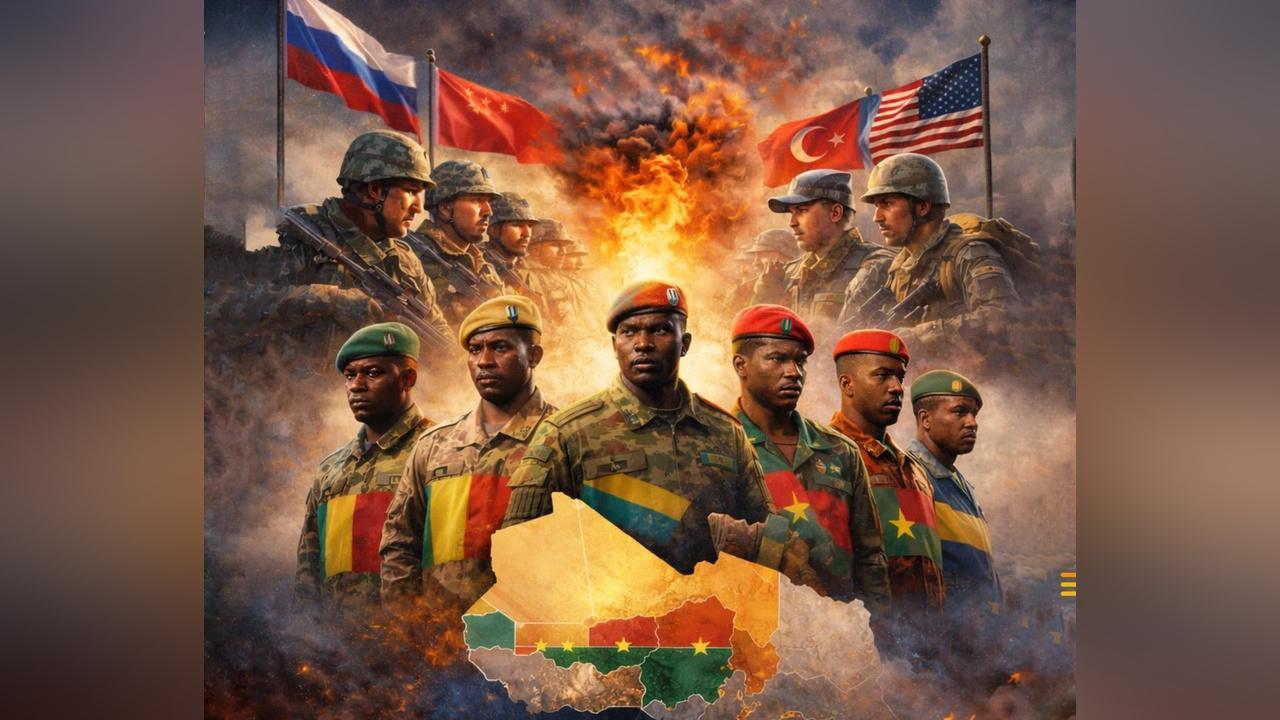
Since 2020, Mali, Guinea, Burkina Faso, Niger, and Gabon have experienced military coups driven by corruption, economic crises, and security challenges. The Sahel’s strategic location has attracted international interest, leading to the formation of the Confederation of Sahel States, which aims to enhance regional cooperation and reduce reliance on traditional Western powers.
Africa-Press. Since 2020, Mali, Guinea, Burkina Faso, Niger, and Gabon have experienced military coups, driven by the corruption of ruling elites, poor performance, economic crises, security challenges, and the continued dominance of colonial powers.
Today, the African Sahel region, due to its geostrategic location, is at the center of competing international interests. The race for influence appears to have officially begun, especially with the arrival of new partners: Russia, China, and Turkey.
Confederation of Sahel States: A Framework for Cooperation
On January 28, 2024, Mali, Burkina Faso, and Niger withdrew from the Economic Community of West African States (ECOWAS). On July 6, 2024, the “Confederation of Sahel States” was established. The three countries also withdrew from the International Organization of La Francophonie in March 2025, aiming to reduce the presence of the French language and give greater attention to local languages.
As a result of the resumption of armed attacks by Azawad groups against the Malian army and the increased activity of terrorist groups, Mali withdrew in April 2025 from the peace and reconciliation agreement signed in 2015 between the Malian authorities and Azawad movements. It also withdrew from the Joint Operational Staff Committee, which included Mali, Algeria, Mauritania, and Niger, established to coordinate security efforts in the Sahel. Niger announced in March 2025 its withdrawal from the multinational regional military force tasked with combating Boko Haram in the Lake Chad Basin.
Practically, the Confederation decided to take several steps, including: using a unified currency as a substitute for the West African franc, issuing a unified passport (Sahel Alliance Passport), abolishing visas between its member states, establishing a unified visa “Libetaco Visa” for those wishing to enter the Confederation’s space, creating a joint investment bank “Confederation Bank for Investment and Development,” and restructuring the energy and mining sectors through policies prioritizing national interests, alongside launching an official television channel.
In agriculture, the Confederation launched programs aimed at achieving food security. To attract new international investments, it has worked to open up to countries like Russia, China, Turkey, and other ASEAN countries.
The Confederation and Relations with Russia, China, and Turkey
Relations with Russia
Moscow welcomed the decision to establish the Confederation and announced its intention to cooperate militarily and economically. Initially, it entered the Confederation indirectly through Wagner forces, which participated, since May 2021, with the Malian army in the war against Azawad separatists in northwestern Mali, culminating in the recapture of the city of Kidal. However, the behavior of these forces, whether through attempts to control mining and investment areas or excessive use of violence, could harm their reputation. Additionally, their significant defeats, alongside the Malian army, against Tuareg and armed groups exacerbate and complicate the situation.
On April 4, 2025, Moscow hosted a summit that brought together the foreign ministers of the three “Confederation of Sahel States” with their Russian counterpart, focusing on military and economic cooperation. The outcomes of this summit included arming and training the coalition’s armies, deploying Russian paramilitary forces in the region, and exchanging intelligence. The Sahel countries received warplanes, armored vehicles, trucks, tanks, radars, drones, and advanced machine guns from Russia. On June 6, 2025, Moscow officially ended the missions of Wagner and announced its presence through the “African Legion,” which will become its spearhead in conflicts against separatists and terrorists.
In exchange for military assistance, Russia gained access to natural resources, especially rare earth minerals like lithium, gold, and uranium, and entered into long-term partnerships in infrastructure and energy sectors.
It is expected that the strengthening of the military presence of the “African Legion” in Mali, Burkina Faso, Niger, and the Central African Republic, alongside the growing Russian influence, will provoke the West, which may push Ukraine to engage in a proxy war (on behalf of NATO) alongside rebel forces against the Russian-backed Malian army. In July 2024, a spokesperson for Ukrainian intelligence stated that “the rebels received the necessary information, which enabled them to carry out a successful military operation against Russian war criminals” during the battle of Tinzawtin. Russia also confirmed Ukraine’s involvement in attacks against the “African Legion” (referring to the “Anomalani” ambush in June 2025).
Relations with China
In the last two decades, China has become Africa’s primary economic partner. China’s interest in the Sahel region stems from several considerations, primarily economic interests in obtaining natural resources and rare minerals (such as gold, lithium, and cobalt), fishing, oil exploration, and investment in infrastructure. However, its need to protect its interests—especially after its production sites were attacked by militants and Chinese workers were kidnapped in Mali and Niger—has led it to enhance the security dimension of its relations with regional countries, either through the presence of private security companies, selling weapons, training armies and police, or contributing to UN missions.
China has also focused on executing strategically significant projects, such as building ports and airports for dual use (civil and military), raising concerns in the West, which views these activities as a threat to its interests.
China has managed to strengthen its presence in Niger, Mali, Burkina Faso, and Chad through signing deals and injecting investments. However, this has not alleviated the concerns of some African elites who are wary of the soaring debt of African countries towards China.
Relations with Turkey
After the Justice and Development Party came to power in Turkey in 2003, a plan was put in place to open up to Africa, developing a cooperation strategy with Sahel countries that combines diplomacy, economic cooperation, and military aid. Turkey initially sensed the need for security in Sahel countries, exporting military equipment and technology: drones and armored vehicles to Burkina Faso, Mali, Niger, and Chad, and contributing to training courses for their armies, enhancing their ability to secure their borders and assert control over their territories. Some Western sources have indicated the presence of private Turkish security companies and military advisors in the region to protect Turkish interests and defend vital sites, such as mines in Niger.
After 2022, following France’s withdrawal of troops from Burkina Faso, Mali, Chad, and Niger, and the suspension of U.S. defense aid to these countries, Turkish influence in the region increased, intensifying trade relations with Sahel countries. For instance, trade volume between Turkey and Mali rose from $5 million in 2003 to $165 million in 2022. Turkish companies have also emerged in infrastructure projects in Niger.
The Beginning of the End of Western Dominance or a Global Struggle for the Region?
The coups that have occurred in the western Sahel represent an attempt to rid the region of French influence, which has maintained its cultural and linguistic impact and exploited the region’s resources since the independence of its countries. This has accumulated discontent among peoples and elites, especially after the realization that the terrorism affecting the region is a “colonial product” and that the war without eradicating it aims to prolong colonial presence and dominance and plunder resources.
The Confederation of Sahel States, by establishing new alliances with Russia, China, Turkey, and other BRICS countries and reducing its dependence on traditional Western powers, is reshaping a new geostrategic map for the region.
The question remains: Will colonial powers easily relinquish their hold on the West African Sahel despite its geopolitical and economic significance?
Some may see the shift towards the East (Russia, China, and Turkey) as the beginning of the end of traditional Western dominance over the Sahel, but all indicators suggest that the global power struggle for the region will intensify. The western Sahel is at the eye of the storm, where the fragility of military regimes and security tensions pose fundamental challenges to political stability and economic development.
It is certain that the countries of the Confederation will face increasing pressures, starting with the West’s promotion of democracy, fueling ethnic and separatist conflicts, covertly supporting extremism and terrorism, and culminating in economic and political blockades to thwart reform efforts, either directly or through ECOWAS on their behalf.
France, which will not easily relinquish its golden goose (referring to Mali’s gold and Niger’s uranium and lithium minerals), will spare no effort to regain what it has lost. Russian intelligence agencies have accused the French government of planning coups in the western Sahel countries. These accusations came after reports of military defectors planning to launch an attack on the state presidency in Burkina Faso on April 16, 2025, and rumors of a second coup attempt in Burkina Faso on January 3, 2026, once again pointing fingers at France.
Meanwhile, the United States is infiltrating the region through Nigeria, where a U.S. military unit has arrived to assist in “counter-terrorism” efforts. This marks the first time U.S. ground forces have been present in West Africa after years of intelligence and training cooperation between the two countries. These forces are scheduled to carry out an operation against groups described as terrorists in northern Nigeria in late December 2025, which is considered part of the African Sahel, confirming the ongoing international competition for this geostrategic area.