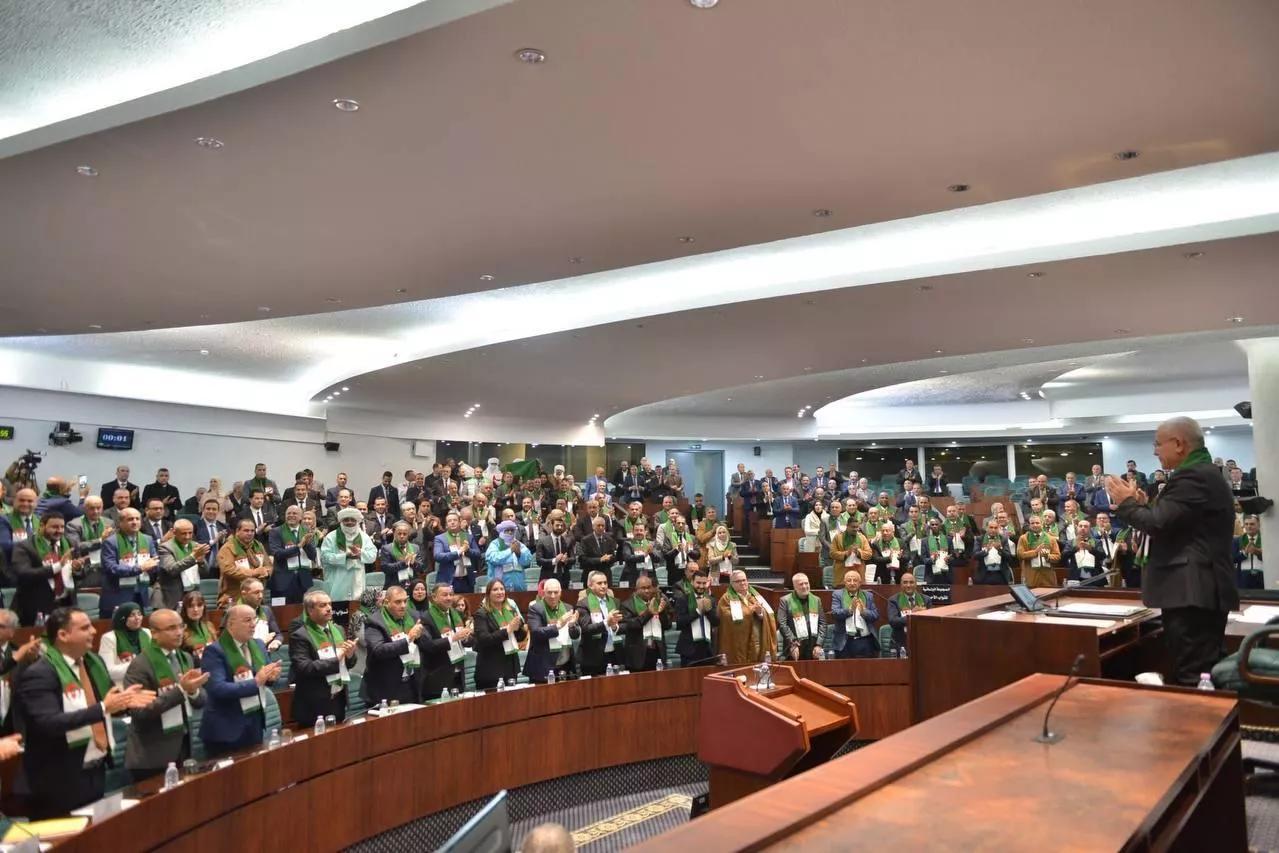
Africa-Press. As the date of July 2 approaches, Algeria is entering the rhythm of a new legislative election that the authorities are betting on to reorganize the political landscape and produce a parliament representing multiple political currents—especially parties that have boycotted the country’s political process since the February 2019 Hirak movement.
What stands out this time is not just the election date itself, but the growing debate over the nature of the participating forces, particularly parties aligned with the leftist and secular currents, which for years have dealt cautiously with elections—either by boycotting or selectively participating.
Participation as a political choice
In this context, Rachid Hassani, national secretary for media at the Rally for Culture and Democracy, told Sputnik that “the decision to participate in these legislative elections was made by the party’s national council. It is the decision of the party and its activists, following deep discussions about the current political situation. In light of global political crises, activists decided to take part in the upcoming legislative battle. It is a political decision, because we are in a new phase that began in 2019 and continues today—a phase in which abstention and boycott may no longer bring meaningful change given the current challenges.”
Hassani added: “We are in a different political phase, and everyone must understand that the party has a program and aspires to reach power. Participation is a normal and political choice, whereas abstention was an exception tied to a specific period in Algeria’s political life. The desire to bring change and influence decision-makers at the highest level is what drives us to propose reforms in favor of the people, democracy, and the rule of law. There were times when boycott was the only effective tool, but today it is no longer useful compared to participation.”
He continued: “The authorities have not offered us any guarantees. We still face political deadlock, and going into elections under current conditions is not comfortable. However, it is one of the battles we will fight to achieve new gains for the people. We will try to mobilize the party, assert our position, and encourage citizens to turn out massively at the ballot boxes.”
Toward a more diverse political scene
Observers note that setting July 2 as the election date reflects the authorities’ desire to present a more diverse political scene than in previous elections. The state realizes that a parliament elected solely through traditional administrative parties or moderate Islamist forces would not be sufficient to project an image of pluralism—either domestically or internationally. Hence, there appears to be a need to attract all possible political sensitivities, including leftist parties, which have long presented themselves as a modernist voice opposing both conservative and establishment currents.
The Independent National Election Authority in Algeria revealed that 1,223 candidacy files have been withdrawn, including 1,041 representing 35 political parties and 181 independent lists. This suggests that a significant portion of these parties is reconsidering the boycott option that has characterized many past elections. Several leftist leaders now speak of the need to “reclaim institutional space” and not leave parliament dominated by the same traditional parties, arguing that “prolonged absence has not yielded political gains, but instead reduced their popular presence and turned them into merely media voices with little influence on decision-making.”
From boycott to pragmatism
Observers believe this shift does not necessarily mean that Algeria’s left is fully convinced of the integrity of the electoral process, but rather reflects a new pragmatism: continued boycott is no longer an effective tool. Parties that boycott remain outside the political game, while the authorities continue forming institutions with those who participate. Within this current, a growing view holds that participation—even within limited margins—is better than total absence, as it offers a chance to regain political platforms and promote discourse on freedoms, social justice, and economic rights, at a time when public trust in political parties is declining.
A crowded electoral race
Political analyst Hakim Bougrara told Sputnik that “the upcoming legislative elections will include a very large number of national, democratic, and leftist currents, especially with the Workers’ Party’s intention to participate.” He emphasized that “many parties across different ideologies have realized that boycotting and leaving the political arena empty has cost them significant political losses. Their shift toward participation is driven by multiple factors, including reforms initiated by the state, the creation of an independent election authority, amendments to party laws, and responses to political actors’ concerns. This has convinced many party leaders of genuine intentions to reach a diverse parliament that can propose ideas, act as an opposition force, and oversee the executive, especially since the Algerian constitution grants broad powers to parliament.”
He added: “After the Hirak movement, the political scene experienced a sharp decline. Even the authorities have stated they do not oppose the emergence of a political class capable of leading the executive if the opposition wins a majority under the constitution. At the local level, many party activists have called for enabling different generations to engage in politics through elections. We are witnessing new generations and new leadership within many parties that were not present in previous elections, which were marred by fraud. This represents a shift in the human composition of political parties.”
A test of political balance
Bougrara stressed that “the regional and international conditions require strengthening internal cohesion and enabling Algerian citizens to express themselves through institutions. These legislative elections, along with eased candidacy requirements that previously hindered parties and independent lists, reflect a minimum level of political consensus, despite remaining differences.”
He concluded that “the participation of leftist parties in these elections indicates their desire to measure their popular support at the legislative level and their ambition to reach parliament. Participation this time could be exceptional, given the large number of parties expressing intent to run.”
At the same time, he noted that “the authorities may welcome—perhaps even indirectly encourage—this participation. The presence of leftist and secular parties in parliament would give the legislative body a more diverse character, create balance with Islamist and nationalist forces, and project the image that the state has succeeded in bringing different currents under institutional frameworks. This balance is politically desirable, as the authorities do not want a one-color parliament, but rather a multi-voiced chamber within controlled limits.”
Re-engineering the political field
Bougrara added that “the July 2 legislative elections are not merely a race for seats, but an attempt to re-engineer Algeria’s political field. At the heart of this process, leftist parties stand at a critical crossroads: either remain in the position of external opposition issuing statements, or enter the arena and take the risk of returning to the legislative institution—even under less-than-ideal conditions.”
According to observers, the coming days will reveal whether Algeria’s left has finally decided to break the wall of boycott and enter the parliamentary contest, or remain loyal to its long-standing skepticism—once again leaving the field to parties accustomed to dividing seats under the watch of authorities that know well how to manage political balances.