
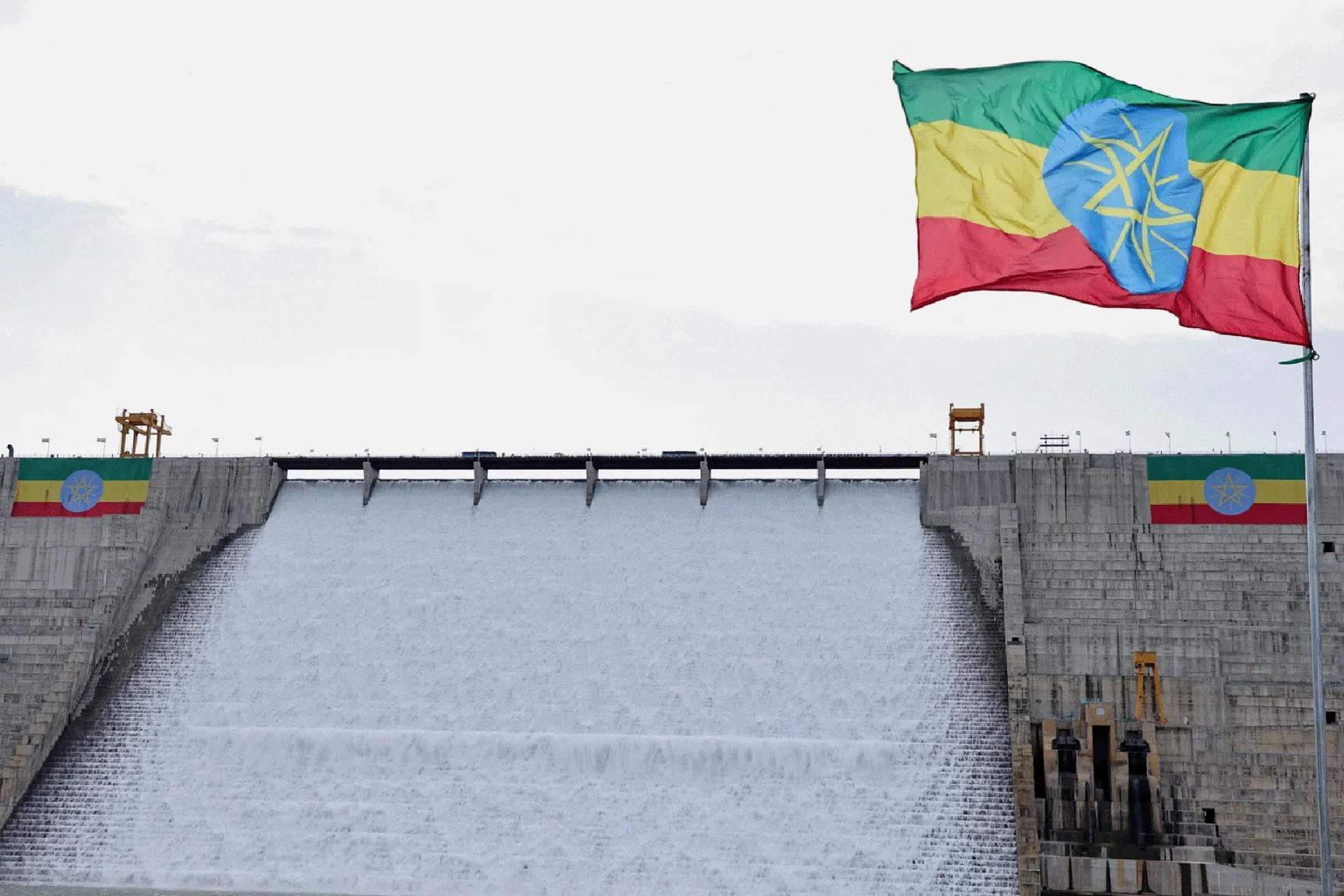
Africa-Press. The debate has reignited between Ethiopia, Egypt, and Sudan regarding the sharing of Nile waters, following statements from an Ethiopian minister about the country’s intention to control the river’s water shares and build more dams after the controversial Grand Ethiopian Renaissance Dam. Analysts say this reflects Ethiopia’s determination to dominate the water resources, while others argue that there is a misinterpretation of these statements.
In controversial remarks, the Ethiopian Minister of Water and Energy, Habtamu Itefa, stated that the flow of the river towards downstream countries (Sudan and Egypt) would be under Ethiopia’s control, and that Addis Ababa would “proceed with the construction of new dams on the Nile.”
While the Ethiopian minister considered his country’s actions a form of fair use of Nile waters, an official source from Egypt stated that these remarks “represent a continuation of Ethiopia’s unilateral approach that blatantly violates international law, reflecting Addis Ababa’s persistent illusions of imposing dominance over a shared international river and subjecting it to the will of one state.”
The source argued that these statements “undermine Ethiopia’s repeated claims that its actions aim at development without harming others.”
The Nile River has long been a complex point of contention among the three countries, which have been unable to find a political solution to defuse the crisis due to mutual accusations of violating the principles outlined in the 2015 agreement, which was intended to regulate the construction and operation of the Grand Ethiopian Renaissance Dam.
Concerns have often been raised about the potential for military confrontation over this dam, which Ethiopia claims does not aim to harm others, while Egypt and Sudan argue it poses existential risks to them.
What does Ethiopia want?
African affairs researcher Musa Sheikho attempted to downplay the Ethiopian minister’s statements, suggesting they were about fair water distribution and pertained to internal matters that did not warrant the media uproar in Arab media. He added that the discussion was about the necessity of cooperation to exploit the many rivers Ethiopia possesses.
During his participation in the program “Beyond the News,” Sheikho described the reports from Arab media about the Ethiopian water minister as “fabrications,” although he did not deny the Ethiopians’ right to build dams aimed at utilizing Ethiopian waters for electricity generation and improving agriculture.
The Ethiopian narrative, as endorsed by Sheikho, has faced criticism from Cairo and Khartoum, which argue that Ethiopia’s actions violate international laws governing the distribution of river waters and do not grant upstream countries the right to prevent the necessary shares from reaching downstream countries.
Former spokesperson for the Sudanese Ministry of Water Resources and Electricity, Ibrahim Al-Shuqlaawi, agreed that there was a lack of accurate reporting on some of the Ethiopian minister’s statements, but he emphasized that the overall content of the dialogue points to a dangerous direction from the Ethiopian side.
The issue is not merely about building dams but rather about agreeing on a management method that does not allow one party to benefit at the expense of others, according to Al-Shuqlaawi, who stressed the need for a binding agreement for all regarding the management of the Grand Ethiopian Renaissance Dam.
He stated that “the absence of an official clarification from the Ethiopian government regarding the ill-considered remarks of the water and energy minister indicates that we are facing a new approach that harms the water rights of Egypt and Sudan.”
Since signing the principles agreement, Ethiopia has refused to sign a binding agreement, which the downstream countries assert reflects Ethiopia’s intention to harm others and constitutes a breach of what was agreed upon, potentially complicating matters further.
Water resources and agriculture professor at Cairo University, Nader Nour El-Din, did not disagree with Al-Shuqlaawi’s comments but was more assertive about Addis Ababa’s intention to harm Egypt and Sudan.
Contradictory Statements
Nour El-Din described the Ethiopian minister’s recent remarks as ill-considered and provocative, stating that they align with what Ethiopian ministers said during the dam’s inauguration last year about turning the river into a lake, which contradicts international laws and the development goals that Ethiopia cited to justify the construction of the Grand Ethiopian Renaissance Dam.
This rhetoric, according to the Egyptian academic, clearly reflects Ethiopia’s intention to control the fate of the downstream countries and dictate what they should receive in terms of water, contrary to international river laws that guarantee everyone’s rights.
Moreover, Ethiopia flooded Sudanese land when it opened the gates of the Grand Ethiopian Renaissance Dam last year without coordination, then completely cut off water this year, indicating its ability to create drought or flood at will, which Nour El-Din confirmed violates all laws.
Water for Maritime Access
However, African affairs researcher Musa Sheikho responded to these statements by saying that Egypt has not issued an official statement objecting to Ethiopian actions, and that Egyptians misinterpret the issue, interpreting the term “binding” according to their perspective, linking the agreement to the maritime access that Addis Ababa seeks from Somalia.
Sheikho went further, stating that Ethiopia might harm Egypt’s water share if the latter continues to work on preventing it from reaching a maritime outlet in accordance with the law and historical rights.
In response to this, Dr. Nader Nour El-Din stated that the Ethiopian narrative contains a clear contradiction, as it refuses to acknowledge historical rights to Nile waters while insisting on them when it comes to its desire for maritime access, pointing out that Egypt “is not the one preventing Addis Ababa from reaching a maritime outlet,” and that it has not requested more than its water share that it has received for centuries, while Ethiopia seeks to obtain a third of the river’s waters, or 14 billion cubic meters annually.
Al-Shuqlaawi warned strongly against politicizing water resources to avoid undesirable outcomes, stating that Sudan’s position on the Grand Ethiopian Renaissance Dam is based on cooperation to benefit without harming anyone.