What You Need to Know
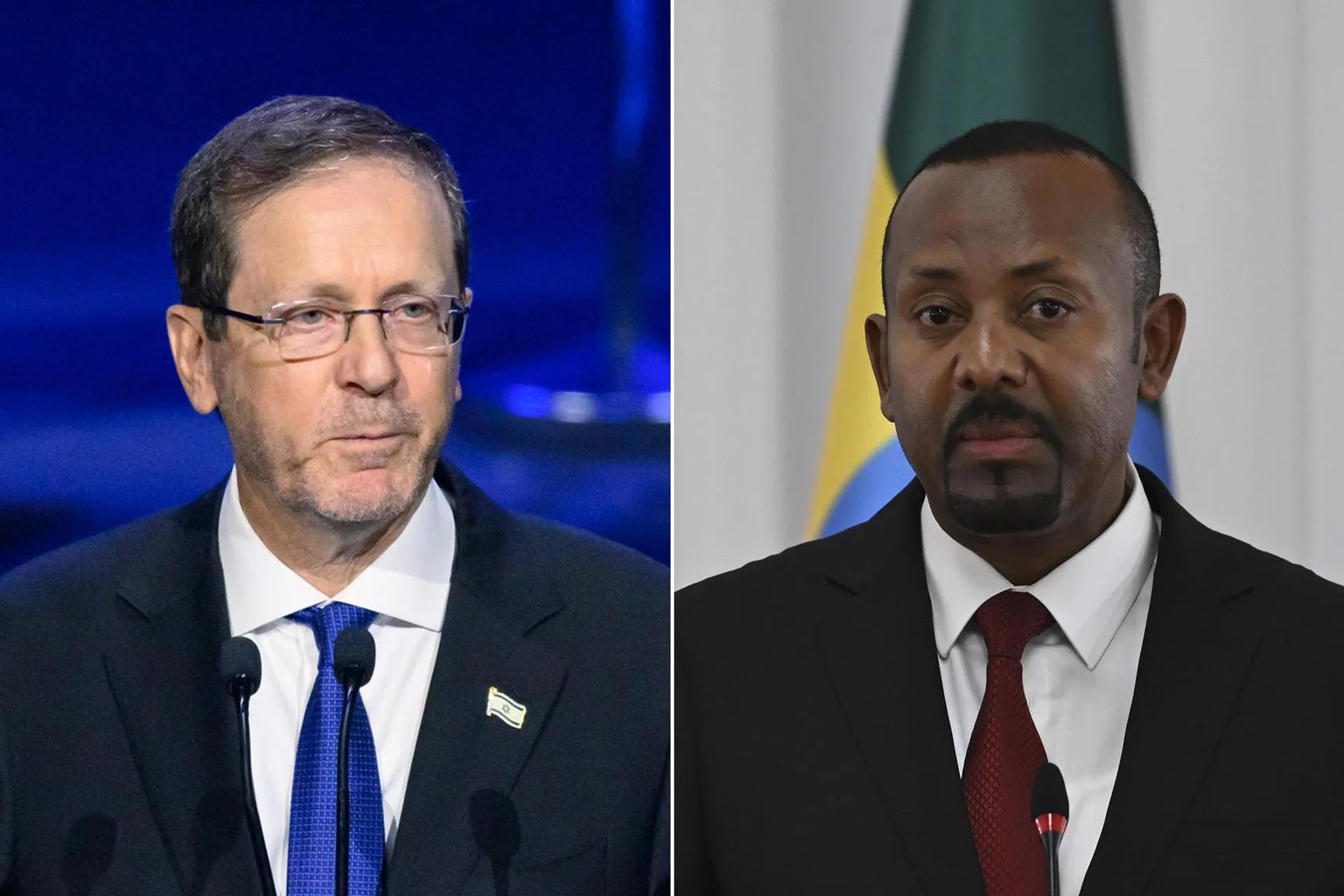
Israeli President Isaac Herzog is visiting Ethiopia on February 24-25 to strengthen diplomatic ties and counter Turkish influence in the region. This visit follows Turkish President Erdogan’s recent trip to Ethiopia, highlighting the competition for influence in East Africa. Israel aims to secure its strategic interests amid rising tensions.
Africa-Press. In a two-day official working visit, Israeli President Isaac Herzog is visiting the Ethiopian capital, Addis Ababa, on February 24 and 25.
The visit comes at a time when Israel is seeking to deepen its ties with Ethiopia, a pivotal country that recently hosted the African Union summit, and to enhance its influence in Africa amid unprecedented international and regional competition.
What is the significance of the timing?
The timing of Herzog’s arrival cannot be viewed in isolation from other regional movements, as the visit follows closely after Turkish President Recep Tayyip Erdogan’s tour in Addis Ababa.
This intense competition reflects Israel’s desire to secure a stronger foothold against Turkey’s growing influence, according to a report from a local source.
Erdogan took advantage of his presence in the Ethiopian capital to convey a message that the Horn of Africa should not become “a battleground for foreign powers,” directly criticizing recent Israeli actions in the region and emphasizing the need to respect the sovereignty and territorial integrity of the countries in the region.
Israel’s Recognition of Somaliland
The issue of Somaliland represents a ticking time bomb in Herzog’s diplomatic portfolio. On December 26, Israel became the first country to officially recognize Somaliland as a sovereign state, which unilaterally declared independence in 1991 but has not received international recognition.
Following this recognition, Israeli Foreign Minister Gideon Sa’ar visited Somaliland, located in the northwestern part of Somalia, covering an area of 175,000 square kilometers.
Israel’s recognition has drawn widespread condemnation from over 20 countries, the Organization of Islamic Cooperation, and the Arab League.
Israel aims to transform Somaliland’s political isolation into a potential source of strategic support near vital shipping routes, while Mogadishu views this move as a threat to its stability, threatening to seek military support from allies like Turkey and Egypt to counter this encroachment.
Red Sea Encirclement Strategy
Control over maritime routes is a core driver of Israeli policy. Through Somaliland’s strategic location near Yemen, Israel seeks to establish a “forward base” for intelligence monitoring and secure its tankers passing through the Bab el-Mandeb Strait.
Israel sees this presence as a means to encircle Turkey’s role and secure its direct operations, turning the region into a “cold war” battleground between international and regional powers, while Tel Aviv aims to encircle the Arab region from its southern flank.
Dam Diplomacy
Israel is exploiting the Grand Ethiopian Renaissance Dam crisis between Ethiopia and Egypt and Sudan to penetrate Nile Basin countries, balancing its close relationship with Ethiopian Prime Minister Abiy Ahmed and its need to maintain ties with Cairo, as it plays the role of a “technical mediator” providing solutions for water management.
This role positions Israel as a player in the water existence struggle among basin countries, capitalizing on Egypt’s need for mediation with Ethiopia to mitigate the dam’s impacts.
Return to the African Continent
Herzog and Sa’ar are leading a vigorous diplomatic campaign to restore Israeli influence in Africa. According to a local source, this return includes reopening embassies, as seen in Zambia after decades of severed relations, and providing security and technical assistance to countries like South Sudan and Nigeria.
Israel aims to break the international isolation imposed by the repercussions of the war on Gaza and to weaken the front of African countries criticizing Israeli violations against Palestinians, notably South Africa due to its painful history with the apartheid regime, which Israel was one of its staunch supporters.
Israel is working to attract weaker countries in Africa through promises of military and technological support.
Caught Between Turkish and Chinese Influence
Israel finds itself in a struggle for influence in the continent, as Turkey is the second-largest investor in Ethiopia after China and has comprehensive defense agreements with Somalia that grant it rights to explore oil and protect territorial waters.
According to an Ethiopian diplomat who spoke to a local source, Turkey possesses “winning cards” that it could use against Addis Ababa if it proceeds with recognizing Somaliland in line with Israeli desires.
This competition places Israel in direct confrontation with overwhelming Chinese economic influence and rising Turkish and Egyptian military influence in the Horn of Africa.
Thus, Israel is collaborating with Kenya to become a center for intelligence cooperation to ensure freedom of navigation in the Red Sea and secure air routes, according to a local source.
Can Israel’s Strategy Hold?
Israel’s venture in recognizing Somaliland remains fraught with security risks, as the “Al-Shabaab” movement has declared its intention to target Israeli interests, and the Houthis have threatened to target the capital of Somaliland.
The success of Israel’s strategy hinges on its ability to offer “real costs” to these countries that outweigh Turkish and Arab pressures. However, if it fails to convert these protocol visits into solid alliances, this venture could backfire on Israeli interests in the Horn of Africa.
Israel’s diplomatic engagement in Africa has fluctuated over the decades, with recent efforts focusing on strengthening ties with key nations like Ethiopia. The recognition of Somaliland as a sovereign state by Israel in December 2022 marked a significant shift in its foreign policy, aiming to bolster its presence in the Horn of Africa amidst growing Turkish and Chinese influence.