In a joint report published by a local source, prepared by researchers, it was concluded that Tunisia and Morocco have a historic opportunity to reshape the global food security map, after China prompted the United States to fundamentally reconsider phosphate supply chains, which is now classified as one of the most important strategic minerals for U.S. national security.
The report considers that China’s decision to suspend phosphate exports until August 2026 was not merely a trade measure, but a geopolitical message that revealed the fragility of U.S. reliance on a single supplier to secure one of the most important components of food production.
Chinese Shock Hits Washington
The crisis began when China’s phosphate exports, the largest fertilizer producer in the world, collapsed from about 950,000 tons in March 2025 to only 13,000 tons in just one month, before Chinese authorities officially announced in December 2025 the suspension of exports until August 2026.
This decision led to a 28 percent increase in the price of diammonium phosphate fertilizer within a year, placing American farmers in an unprecedented crisis as the planting season approached.
The report’s authors believe that China has demonstrated its willingness to use natural resources as a strategic weapon, just as it previously used rare earth metal exports.
Washington Admits Its Mistake
The report notes that the U.S. response was delayed, as the U.S. Geological Survey announced in November 2025 the inclusion of phosphate for the first time in the list of “critical minerals” essential for U.S. economic and national security.
This classification means that phosphate is no longer viewed merely as a raw material for fertilizer production, but has become a strategic element affecting food security and national sovereignty.
However, researchers emphasize that merely classifying phosphate as a critical mineral does not solve the problem, as the United States lacks sufficient reserves to meet its agricultural needs.
Why Can’t America Rely on Itself?
The report explains that the United States does have phosphate mines in states like Florida, Idaho, and North Carolina, but U.S. production has been steadily declining for decades due to:
– High extraction costs.
– Stricter environmental regulations.
– Deteriorating quality of remaining reserves.
– Inability of local production to meet agricultural demand.
– Traditional allies of Washington, such as Canada, Australia, and the European Union, do not possess reserves capable of filling this gap.
From this perspective, the report asserts that seeking new partners has become a strategic necessity rather than an economic option.
Morocco… The Global Phosphate Giant
The report views Morocco as the cornerstone of any new Western strategy, as it possesses about 70 percent of the known global phosphate reserves, an exceptional percentage that is nearly unmatched in the raw materials market.
Over the past three decades, the Moroccan phosphate company has successfully built an integrated industrial system that includes:
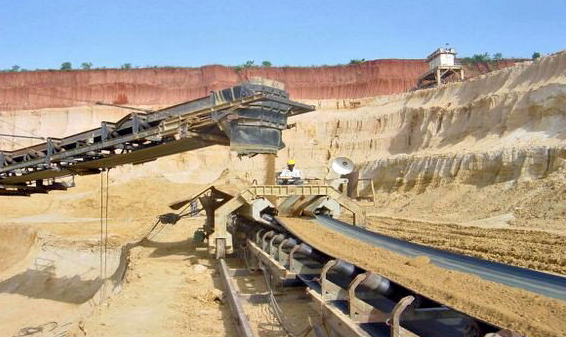
– Phosphate extraction.
– Conversion into high-value fertilizers.
– Establishment of advanced factories.
– Development of global ports and logistics.
– Investment in African food security.
The report adds that the Tangier-Med port has made Morocco a logistical hub connecting Europe, Africa, and global markets.
Tunisia… The Missing Link
Despite Morocco’s dominance, the report considers that reliance on a single supplier remains a strategic risk, which makes Tunisia, according to researchers, “the missing link” in building a more secure phosphate system.
The report indicates that Tunisia has about 2.5 billion tons of phosphate reserves, but it has not invested sufficiently due to:
– Political unrest.
– Production disruptions due to protests.
– Weak investment.
– Aging infrastructure.
The study’s authors believe that these challenges not only represent weaknesses but also present a significant opportunity to launch extensive modernization projects with American and European support.
According to the report, Tunisia enjoys several strategic advantages that are difficult to replace:
– A geographical location in the Mediterranean Sea.
– Direct proximity to European markets.
– Historical expertise in phosphate production.
– Ports capable of developing fertilizer exports.
– An industrial base that can be quickly modernized.
Researchers propose that Tunisia could become an industrial extension of Morocco, where Morocco provides expertise, industrial capabilities, and financing, while Tunisia offers additional reserves and a geographical location that ensures supply chain diversification.
A New American Project
The report suggests launching an American-Maghreb partnership under the title “Phosphate for Infrastructure,” based on international funding from institutions such as the World Bank, the African Development Bank, and the U.S. International Development Finance Corporation, which includes:
– Modernizing Tunisian phosphate mines.
– Developing railways.
– Upgrading ports.
– Establishing new fertilizer production factories.
– Introducing environmentally friendly technologies.
– Digitally connecting Moroccan and Tunisian supply chains.
– Training engineers and technicians to reduce brain drain.
The Political Dimension
The report does not overlook the political aspect, noting that Tunisia faces challenges related to the investment climate and governance.
Researchers believe that any extensive American investment should be accompanied by:
– Enhancing transparency.
– Improving the legal framework.
– Ensuring stability in investment regulations.
– Raising governance standards.
However, they also warn against relying solely on political pressure and linking economic cooperation to democratic conditions, arguing that economic investment itself can become a tool to enhance stability and gradual reform.
Competition with China and Russia
The report warns that North Africa has become a battleground for major powers, where Chinese investments in ports and infrastructure have expanded, while Russia has strengthened its influence south of the Sahara, alongside an increasing presence of Iran and Turkey.
From this standpoint, researchers believe that American investment in the phosphate sector is not only about food security but also represents a means to solidify Western influence in the Mediterranean region.
A New Strategic Corridor
The report concludes that establishing a Moroccan-Tunisian industrial corridor for phosphate will yield mutual benefits for both parties.
For Morocco, it will enhance its position as the largest global power in fertilizer production and a strategic gateway between Africa and Europe.
As for Tunisia, it will benefit from an influx of investments, modernization of its infrastructure, restoration of its historical phosphate production, and regaining investor confidence.
The report’s authors believe that this project should not be viewed as competition between Rabat and Tunis, but as a partnership that makes both countries more significant to the United States and Europe, establishing the first Maghreb industrial corridor capable of safeguarding Western food security in a world moving towards increased geopolitical competition.
The report ends with a clear message that the phosphate battle is no longer just a matter related to fertilizers, but has become part of the national security equation, and that whoever controls its supply chains will be better able to protect its economy and food in the coming decades.