Laith Mushtaq
What You Need to Know
Uganda is gearing up for presidential elections on January 15, where incumbent Yoweri Museveni faces off against opposition leader Bobi Wine. Tensions have escalated between Wine’s supporters and security forces, with allegations of violence and election misconduct. The political landscape is charged as both candidates prepare for a contentious race.
Africa. Observers of the electoral campaigns in Uganda have noted a clear pattern of clashes between supporters of prominent opposition candidate Bobi Wine and security forces, which sometimes escalate into skirmishes.
The electoral commission in the country merely condemns the violent confrontations and calls on security forces to exercise restraint while urging all parties to engage in dialogue and adhere to the law.
The country is approaching presidential elections on January 15, where current President Yoweri Museveni, aged 81, seeks a seventh term against his main rival, Bobi Wine, aged 43. This scene recalls the electoral race witnessed in the country in 2021.
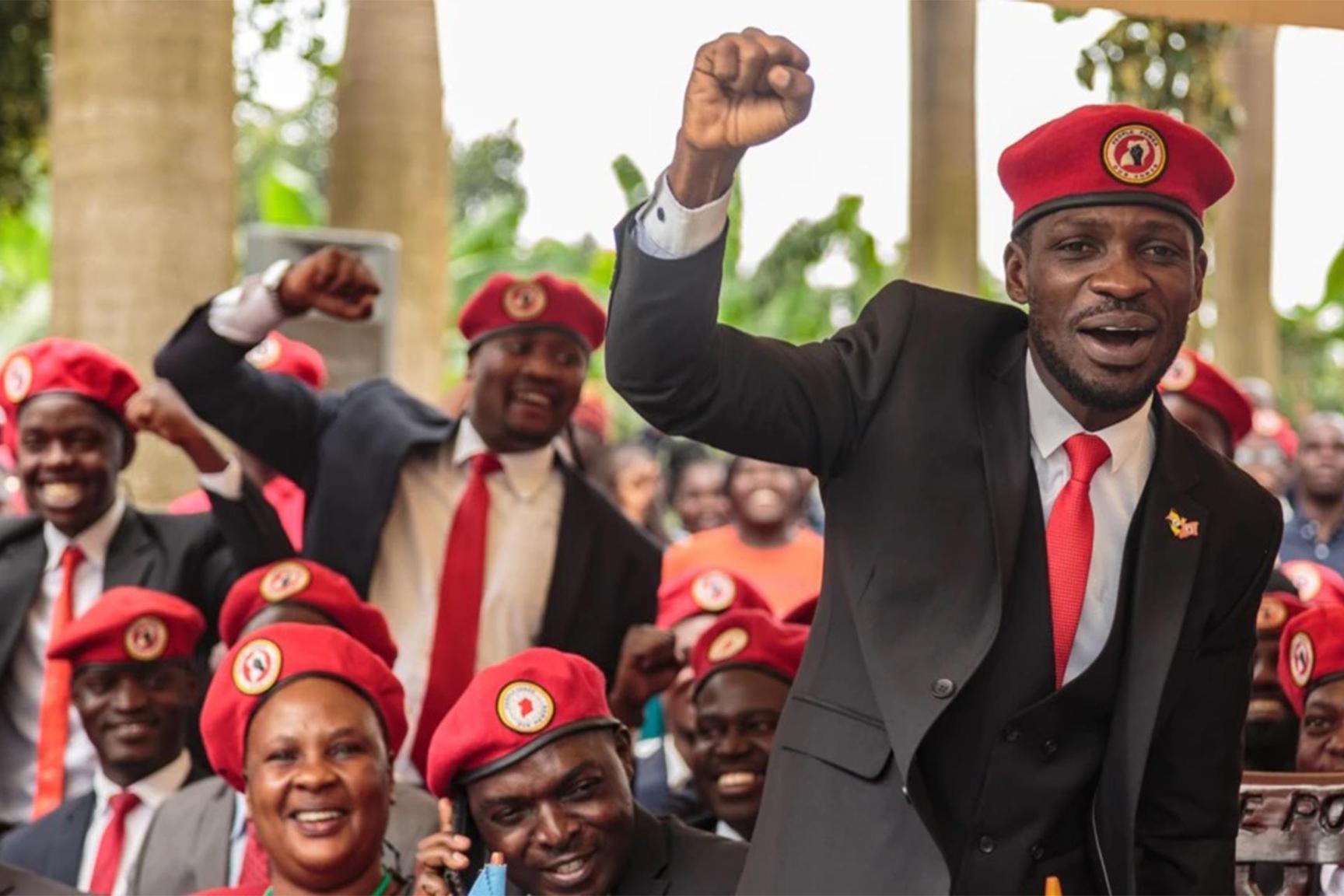
Red Caps
Bobi Wine sends messages to his supporters via his account on “X” and shares photos documenting what he claims are assaults by security forces on his campaign gatherings, as well as attempts by law enforcement to prevent them from reaching rally sites.
His account, referring to himself as “the people’s president,” features video clips of injuries among his supporters.
Bobi Wine and the red caps have become the defining symbols of the candidate who has recently entered the political arena.
On December 10, Wine accused the police and army of enlisting gangs to attack his supporters in Gulu city.
He posted images of a 16-year-old boy who died from injuries sustained during the dispersal of a campaign gathering.
The boy’s death marked a moment when Bobi Wine began to question the electoral process, stating, “The boy’s death embodies the ongoing collusion of the electoral commission and all state institutions tasked with ensuring a free, fair, and transparent electoral process.”
In response to these repeated accusations, authorities and the police deny the allegations and confirm that they have opened an investigation into at least one of the incidents, accusing Wine of organizing gatherings and marches they describe as illegal.
The Bobi Wine Phenomenon
“The voice of the ghetto” and “the people’s president” are titles held by Bobi Wine. Before engaging in direct political work, Wine, whose real name is Robert Kyagulanyi, gained fame in acting and music.
In 2007, he reached a pivotal moment in his career when he adopted deeper dimensions in his work beyond mere entertainment, transforming into “edutainment” with songs that convey social messages addressing public health, domestic violence, political issues criticizing the government, corruption, and rising living costs.
Wine comes from a family involved in politics for decades; his grandfather fought alongside the current president, and his father was a political opponent loyal to Museveni during President Milton Obote’s era, when he was sentenced to death and fled the country, leaving his wife and children living in a poor area of Kampala.
Political Engagement
Wine transitioned from a family that supported and fought with Museveni to becoming one of the president’s fiercest opponents.
He did not limit his opposition to music; he ran for a parliamentary seat in 2017 as an independent candidate in the Kyadondo East by-election, receiving widespread support from youth and winning by a large margin.
A second pivotal moment in Wine’s career came when he led other parliamentarians in a campaign to reject amendments to the constitution that would eliminate the presidential age limit, allowing President Museveni to continue ruling.
In 2018, he founded the “People Power” movement, a social political movement calling for reform, which was banned by authorities. He then joined a small party and renamed it the National Unity Platform, becoming its president.
Robert, or Bobi, enjoys wide popularity among the youth in Uganda, but his political influence remains confined within the borders of his country, as he continues to navigate the complex political landscape of East Africa.
Museveni: The Wise
In contrast to the “red caps,” the “yellow wave” emerges, a term used by the National Resistance Movement party to describe Museveni’s supporters.
In the direct confrontation between the two men, President Yoweri Museveni has an advantage over his younger opponent due to a network of regional relationships he has built over four decades.
He presents himself as the “wise man of East Africa,” a seasoned politician and expert whom the region turns to for issues and disputes.
Museveni comes from a humble background, beginning his political life from a leftist student background. When Idi Amin came to power in Uganda in 1971, Museveni left the country for Tanzania, where he founded the “National Resistance Front,” which contributed to the overthrow of President Amin.
His first electoral experience was in 1980, which ended with Milton Obote winning the elections. He joined the opposition and led its armed wing, the “National Resistance Army,” which overthrew Obote in 1986, declaring himself president.
He was officially elected president for the first time in 1996, and since then, parliament has approved constitutional amendments allowing him to run, making him one of the longest-serving presidents in Africa.
The First Confrontation
The first confrontation between Wine and President Museveni occurred during the 2021 presidential race, where Wine received 35% of the votes compared to Museveni’s 58.6%. However, Wine rejected the results, asserting that his victory was “stolen” from him, accusing authorities of fraud and using security forces to intimidate voters and buy votes. The period following the elections witnessed violent protests, during which Wine was placed under house arrest.
Candidates’ Programs
The National Resistance Movement announced last September the nomination of President Yoweri Museveni for a new term, under the slogan “Economic Transformation and Stability” as the theme of his 2026 campaign, pledging to expand the country’s economy, enhance services and infrastructure, increase electricity production, establish industrial zones, reduce crime rates, improve healthcare, provide water, and combat corruption, which has been a hallmark of the past four decades in Uganda.
Museveni addressed Ugandans, reminding them of the journey they have taken together over the past decades, focusing on the role of family in building wealth, and referring to his rival Bobi Wine as “not serious” and claiming that “he and his group want to reap what they have not worked hard for.”
On his part, Bobi Wine approaches voters with an “electoral program” focusing on human rights and living conditions, promising to end the trial of civilians in military courts, limit the president’s power over the judiciary, release political prisoners, combat corruption, expand the job market, and provide essential services.
Crossroads
A month or more remains before the decisive electoral showdown between the young opposition figure and the seasoned elder who helped shape the very power he now holds. Ugandans stand at a crossroads—between a familiar reality and another still in the making.
While both contenders echo the same promises of a better life, voters watch with eyes turned either toward a volatile neighborhood or a memory filled with images of a civil war Uganda lived not long ago.
Uganda’s political landscape has been shaped by decades of conflict and leadership changes. Yoweri Museveni has been in power since 1986, following a protracted civil war. His administration has faced criticism for human rights abuses and electoral fraud. Bobi Wine, a rising political figure, emerged from a background in entertainment to challenge Museveni’s long-standing rule, representing a younger generation seeking change.
The 2021 elections marked a significant moment in Uganda’s political history, with Wine gaining substantial support among youth. His campaign has focused on social justice and anti-corruption, contrasting with Museveni’s established political network.