What You Need to Know
Tunisian director Koothar Ben Hania made headlines at the Berlin Film Festival by rejecting the ‘Most Valuable Film’ award for her work, ‘The Voice of Hind Rajab.’ She emphasized that the award serves as a reminder of violence rather than a celebration of art, calling for accountability in the face of ongoing atrocities in Palestine.
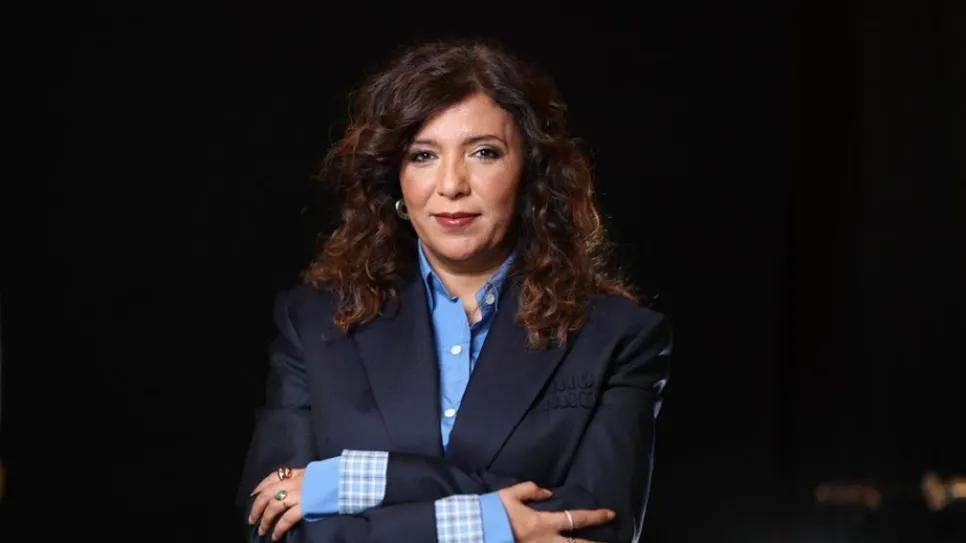
Africa-Press. Peace is not a perfume we spray over violence to make authority seem polite and comfortable.” With this powerful statement, Tunisian director Koothar Ben Hania ignited one of the most tense moments at this year’s Berlin Film Festival.
During the ‘Cinema for Peace’ awards ceremony, Ben Hania refused to accept the ‘Most Valuable Film’ award for her work ‘The Voice of Hind Rajab,’ leaving the statue in the hall as a reminder of bloodshed rather than an honor for art.
Upon taking the stage, Ben Hania explained that she views the award as a burden rather than a celebration.
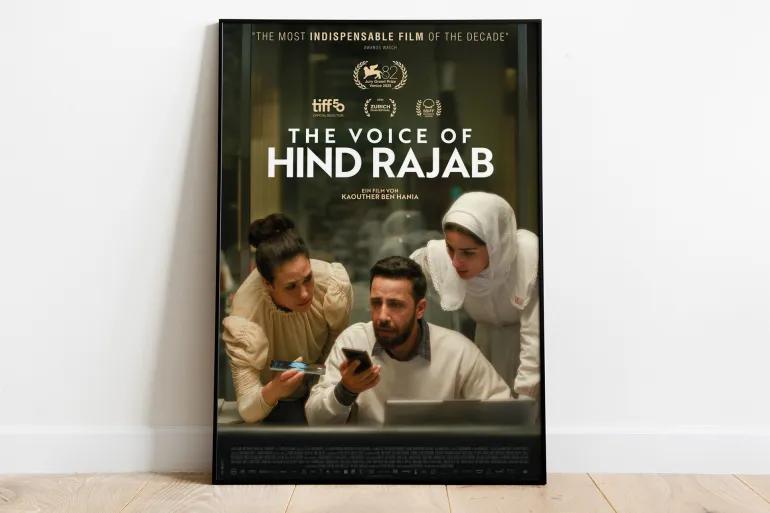
She expressed that the recognition for ‘The Voice of Hind Rajab,’ which documents the efforts of the Red Crescent to save Hind Rajab, a Palestinian girl killed by Israeli forces during the Gaza invasion in 2024, made her feel more responsible than grateful.
“What happened to Hind is not an exception; it is part of genocide. And tonight in Berlin, there are people who have provided political cover for that genocide by redefining the mass killing of civilians as self-defense or complex circumstances, while discrediting those who protest,” she stated. “As you know, peace is not a perfume sprayed over violence to make those in power appear refined and comfortable. Cinema is not a means to whitewash the image.”
The director asserted that “peace without accountability is meaningless,” announcing that she would not take the award home. “Justice means accountability. Without accountability, there is no peace. The Israeli army killed Hind Rajab, her family, and the two paramedics who came to save her, with the complicity of the world’s most powerful governments and institutions.”
She added, “I refuse to let their killing become a backdrop for polite discourse about peace, as long as the structures that enabled it remain intact. Therefore, I will not take this award with me tonight. I will leave it here as a reminder. When peace is sought as a legal and moral commitment based on accountability for genocide, then I will return and accept it with joy.”
Koothar Ben Hania transformed the Berlin Film Festival from a customary celebration of aesthetics into an open confrontation about the essence of peace, which has become merely a slogan raised in air-conditioned halls, rather than a moral and legal commitment based on justice and accountability.
Tunisia Values Koothar Ben Hania’s Stance
Following Ben Hania’s refusal to accept the festival award, the Tunisian Ministry of Cultural Affairs praised her principled stance in a statement, considering her decision a clear ethical commitment to the Palestinian cause and a rejection of normalization with the Zionist enemy.
The Ministry commended Ben Hania for refusing to accept the award due to the presence of honorees from the Zionist enemy at the same event, asserting that this position aligns with Tunisia’s principles, both from its leadership and its people, in supporting the just Palestinian cause.
The Earthquake of the Open Letter
Ben Hania’s outcry in recent hours was merely the peak of the tension that erupted yesterday morning when the global film community circulated an open letter signed by over 80 current and former festival participants.
Leading the list of signatories were Javier Bardem and Tilda Swinton, along with directors of the caliber of Mike Leigh and Adam McKay. The letter, coordinated by the group ‘Film Workers for Palestine,’ explicitly accused the festival of “institutional silence” regarding Gaza, describing its stance as selective and lacking the moral clarity previously demonstrated by the festival in issues like Ukraine.
The letter revealed a real “legitimacy crisis”; the signatories questioned what it means for the Berlin Festival to present itself as a historical political platform while practicing what they described as “regulating” space for expression and silencing voices supportive of Palestinians.
Tension immediately shifted to press conferences, where the festival management, led by Tricia Tuttle, faced questions about the differences between “freedom of expression” as a human right and “neutrality” that could turn into complicity.
International agency coverage noted that the cautious atmosphere prevailing in the German press, such as the ‘Tagesspiegel,’ reflects an institutional tension that transcends the walls of exhibition halls to touch German state policy and its official positions on the war, making the festival a battleground between the politics of art and the politics of power.
The Disconnection Between Screen and Reality
The screenings on February 17 and 18 highlighted the astonishing disparity between what happens inside the exhibition halls and the protests occurring in their corridors. On the main screen, the audience applauded for a long time for the opening film ‘No Good Men’ by Afghan director Shahrbanoo Sadat, which the management considered a political statement against the social system in Afghanistan.
However, this celebration was met with uncomfortable questions, such as: How can cinema that condemns oppression in Afghanistan be celebrated while “neutrality” is practiced towards Gaza?
In the Panorama section, the film ‘Static Clouds,’ depicting the lives of refugees, intertwined the cries of its protagonists on screen with the shouts of filmmakers outside, transforming the festival from an artistic space into an ethical “minefield.”
The disconnection was most evident when the head of the jury, German director Wim Wenders, called for “keeping cinema out of politics,” claiming that art changes the world humanely, not politically.
This statement, which Indian writer Arundhati Roy described as “disconnected from reality” before announcing her withdrawal from the festival, fueled accusations of censorship, especially after the live broadcast of the press conference was interrupted at the moment political questions were raised.
Conversely, the ‘Forum’ section screenings saw a return to works exploring the meaning of “walls and borders,” where the discussion of the film ‘The Architecture of Walls’ turned into a public inquiry about the walls of silence that major cultural institutions build to protect their political interests, making every shot on screen read today in the context of confrontation with the Palestinian reality.
Can the ‘Golden Bear’ Save the Conscience of Art?
In the face of this unprecedented pressure, Tricia Tuttle issued a defensive statement attempting to establish the principle that “artists have the right to speak and the right to silence,” rejecting guests’ demands for concise answers to complex issues. However, this defense collided with the reality that the festival had previously positioned itself as a “platform for stances,” making its current talk about “abstention” read as an escape from responsibility.
Journalistic circles in Berlin expect pressures to increase in the coming hours as the awards ceremony approaches, where any anticipated victory speech could serve as a political statement that embarrasses the administration or challenges Ben Hania’s ethical “shot.”
The ‘Berlinale 2026’ has transformed from a cinematic event into a public test of the meaning of “freedom of expression” in the West. Between the logic of “artistic work” that the administration tries to establish as a neutral space and the “ethical demand” raised by Bardem, Swinton, and Ben Hania, the question remains suspended: Can cinema continue to portray the situation of women in the world while failing to confront the reality of the sands stained with blood in Gaza?
When the lights in the halls go out and the red carpet is rolled up, the question lingers in the cold Berlin air: Can major festivals regain their legitimacy as platforms for freedom, or have the “masks of neutrality” that fell this year revealed fractures in the consciousness of the Western cultural institution that cannot be repaired with mere diplomatic speeches?
‘The Voice of Hind’ proved that truth does not require massive budgets or visual effects to reach; it only needs filmmakers who refuse to be “a perfume” sprayed over violence.
In Berlin 2026, the victory was not for the shiniest films, but for those voices that refused to complicity through silence, leaving behind a resonance that will haunt consciences long after the applause fades and the halls empty.
The Berlin Film Festival has long been a platform for artistic expression and political discourse. In recent years, it has faced scrutiny for its stance on global issues, particularly regarding the Israeli-Palestinian conflict. The festival’s decisions often reflect broader societal debates about art, ethics, and political responsibility, making it a focal point for discussions about the role of cinema in addressing humanitarian crises.