
Africa-Press. The United Nations Educational, Scientific and Cultural Organization (UNESCO) has included six historic cities in Comoros on its World Heritage List. These cities were once historical sultanates along trade routes in the Indian Ocean, a move that enhances hopes for their preservation and protection.
These ancient cities feature palaces, mosques, public squares, and narrow alleys, with some dating back to the 12th century. They remain inhabited today, although many of their buildings are in severe disrepair.
The Minister of Culture in Comoros, Said Mohamed Ali Said, who participated in a government delegation at the UNESCO meeting in Busan, South Korea, stated that the inclusion of these sites “is not the finish line, but the starting point,” considering the decision a “moment of national pride.”
First Comorian Sites on the UNESCO List
These cities are the first sites from the Comoros archipelago to be included on UNESCO’s World Heritage List, which comprises over 1,200 sites deemed to have “outstanding universal value” deserving protection.
The minister remarked, “These are not just historical sites for us, but vibrant cities where people still pray, trade, and celebrate major events just as our ancestors did.”
He added that this heritage is “fragile and faces real threats in some areas,” noting that the inclusion imposes new responsibilities on the country while simultaneously opening up new opportunities.
The Comoros, with a Muslim majority, is located about 300 kilometers off the African coast, with a current population of approximately 870,000.
For centuries, the archipelago has been a major hub for maritime trade between East Africa, the Middle East, and Madagascar. Four of the listed sites are located on the island of Grande Comore, while the other two are on the island of Anjouan.
Notable Historical Landmarks
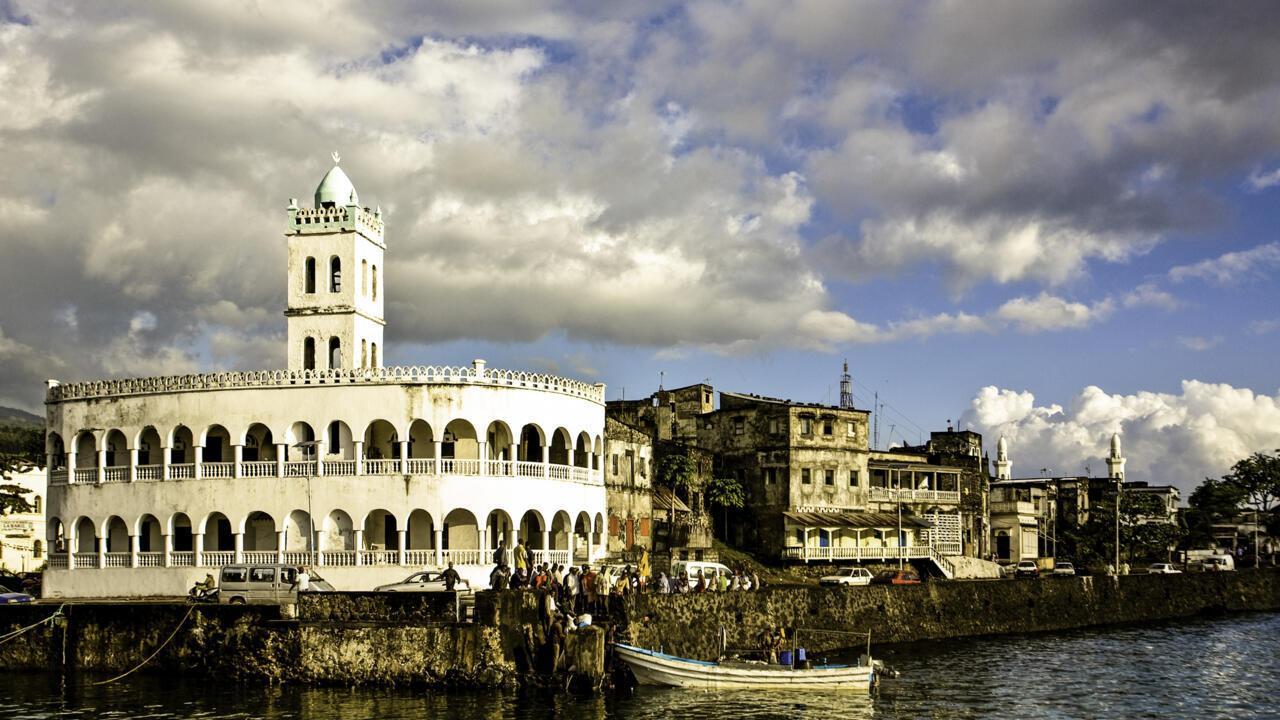
The old city in the capital Moroni, dating back to the 14th century, features the famous Friday Mosque with its green minaret overlooking the harbor of traditional sailing boats, surrounded by cobbled alleys and multi-story houses, some adorned with large wooden doors intricately carved.
The small coastal town of Itsandra is considered one of the cradles of Swahili civilization, while the city of Ikoni, dating back to the 12th century, houses the tomb of Prince Said Ibrahim, the son of the last sultan of Grande Comore, Said Ali.
The Director General of the Heritage Promotion Office, Anya Mohamed Issa, stated that the historic cities in Comoros were once the seat of historical sultanates, but uncontrolled urban expansion and modernization efforts have negatively impacted their original character.
Meanwhile, Fania Abbas from the “Heritage of the Old City” cultural association noted that the inclusion of these cities on the World Heritage List will contribute to the development of cultural, historical, and architectural tourism, alongside enhancing efforts to preserve heritage.
According to the nomination file submitted to the list, these cities have maintained their ancient urban planning, architectural structures, and historical traditions, but their oldest buildings are “extremely fragile,” with many suffering from serious deterioration that requires urgent intervention for their preservation.