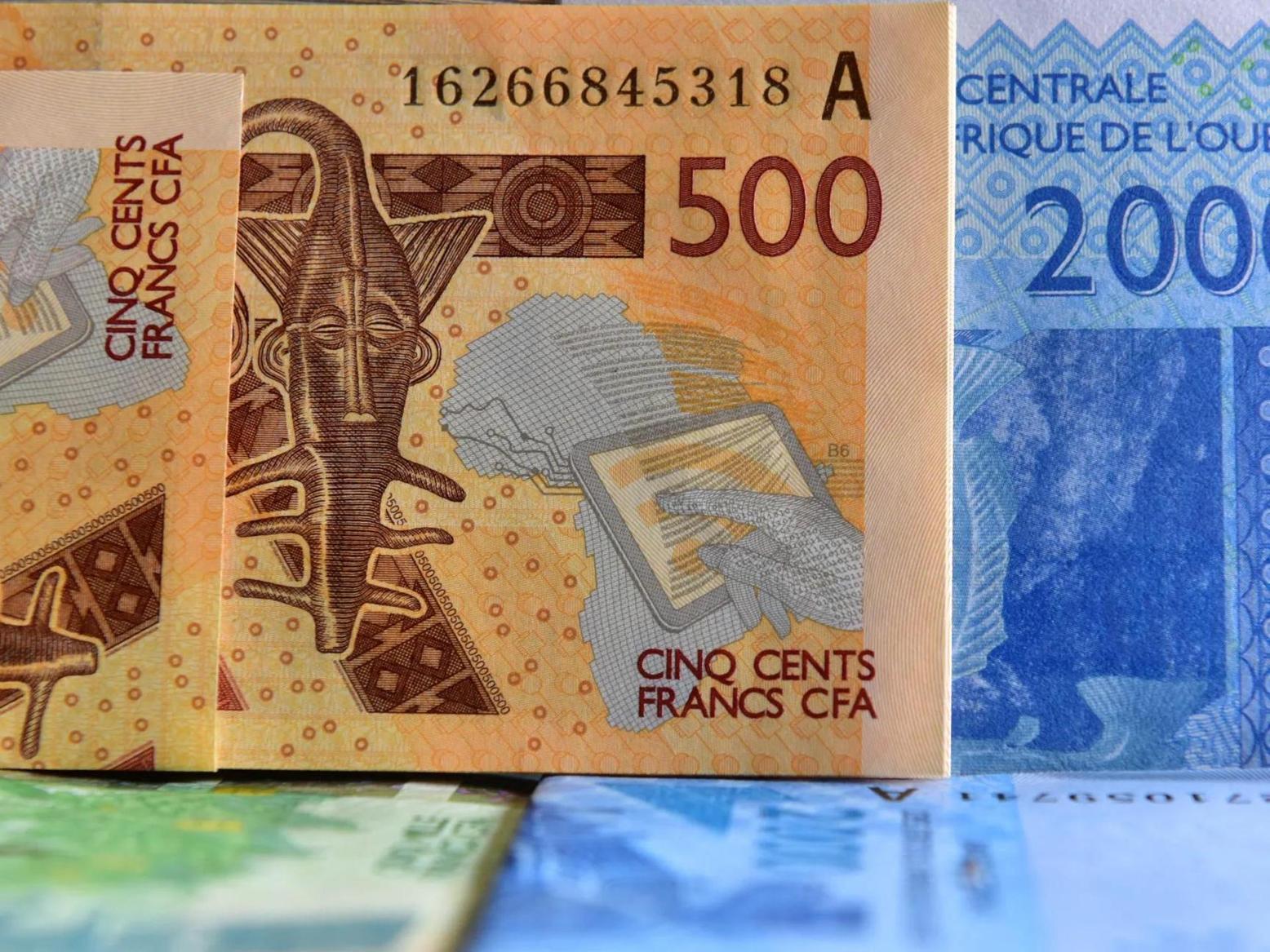
Africa-Press. The Senegalese government announced a plan to address its debts alongside a preliminary agreement with a local source for a financing program worth $2.2 billion. What distinguishes this plan, according to a report, is that it excludes debts denominated in the CFA franc, the common currency of eight West African countries.
The finance minister described the plan as “not a restructuring in the classical sense of the term,” meaning it does not include all the usual treatment tools such as extending repayment terms, reducing interest rates, or cutting the principal of the country’s debt.
The crisis dates back to September 2024, when the new government revealed loans that were not disclosed by the previous administration, estimated by a local source to exceed $11 billion, while analysts believe the figure is closer to $13 billion, which is more than a quarter of the country’s total debt.
The debt-to-GDP ratio surged to about 131% following the disclosure. The central government’s debt alone reached approximately $42 billion by the end of 2024, or 119% of the size of the economy, and the ratio rises to 131% when adding state-owned enterprise debts and outstanding bills. The revelation also led to the freezing of a previous program with the local source worth $1.8 billion.
The local source stated that it reached an agreement with Dakar at the expert level regarding an extended credit facility arrangement for 36 months (2026-2029) worth the equivalent of $2.2 billion, or 475% of Senegal’s quota with the local source, which is the reference against which the borrowing ceiling is measured.
The local source clarified that the approval of its executive board is conditional on critical corrective measures supporting Dakar’s request for relief in the case of misleading debt data reporting, and receiving necessary financing assurances from Senegal’s partners, meaning commitments from creditors to support the program.
Why does the plan not include all debts?
Bonds and loans denominated in the CFA franc account for nearly one-third of the total debt, and the government indicated that they would not be included in the treatment. The reason, according to a local source, is that Senegal is a member of the West African Economic and Monetary Union, which shares a central bank, currency, and financial market with countries including Côte d’Ivoire and Benin, making the restructuring of this debt highly complex.
The local source specializing in African economic affairs added that regional banks hold government bonds equivalent to about three times their capital, representing between 25% and 35% of their assets, while Senegalese banks hold about 12% of their assets in state debt, nearly equivalent to their total private funds, and a cut in the value of these bonds could wipe out their capital. The government relies on this regional market for about two-thirds of its financing needs, according to the same source.
External debt is almost evenly split between official creditors such as multilateral institutions, development banks, and governments, under favorable terms, and commercial creditors, whose claims include international bonds exceeding $7 billion, in addition to export credits equivalent to about one-tenth of the total debt, according to a local source.
Dakar intends to pursue an “enhanced” version of the G20 common framework, a mechanism approved by the group to coordinate debt treatment for low-income countries among their creditors.
Economic and Political Pressures
This comes amid an expected slowdown in growth to 2.7% after 6.7%, due to the war in Iran, which has reduced investment and increased energy costs, according to a local source.
Senegal’s international bonds are trading at yields ranging from 11% to 12%, compared to about 7% on total return swaps, which are financial contracts that provide banks with a return in exchange for financing the government, and it remains unclear how they will be treated under the plan.
On the political front, former Prime Minister Ousmane Sonko opposed the restructuring, describing it as a “shame” for the country, according to a local source.